The Verkhovna Rada is blocked: how do sanctions against Poroshenko affect Ukraine’s parliament and politics?
13 February 2025 17:20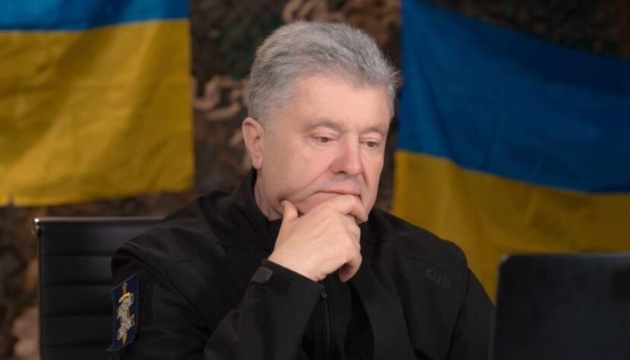
on February 13, the National Security and Defense Council of Ukraine decided to impose sanctions on five prominent individuals, including the fifth president of Ukraine, Petro Poroshenko. In response to these measures, Petro Poroshenko accused Volodymyr Zelenskyy of provocation. Moreover, MPs from European Solidarity blocked the rostrum of the Verkhovna Rada. What consequences will the NSDC’s decision have for the country as a whole and what responsibility awaits the sanctioned persons – in the article "Komersant Ukrainian".
Petro Poroshenko, Ihor Kolomoisky, Hennadiy Boholyubov, Kostyantyn Zhevago and Viktor Medvedchuk have been sanctioned by the National Security and Defense Council. According to the decision, the sanctioned persons will lose their state awards and decorations, their assets will be blocked, and a temporary ban on the disposal of property will be imposed. Additionally, the law provides for:
- restrictions on trade operations;
- prohibition or restriction of transit of resources, flights and transportation through the territory of Ukraine;
- preventing the withdrawal of capital from the country.
The day before, the Ukrainian edition of Forbes Ukraine cited two sources as saying that the National Security and Defense Council was preparing to impose sanctions against Poroshenko. One of the sources noted that the sanctions could be related to suspicions of treason.
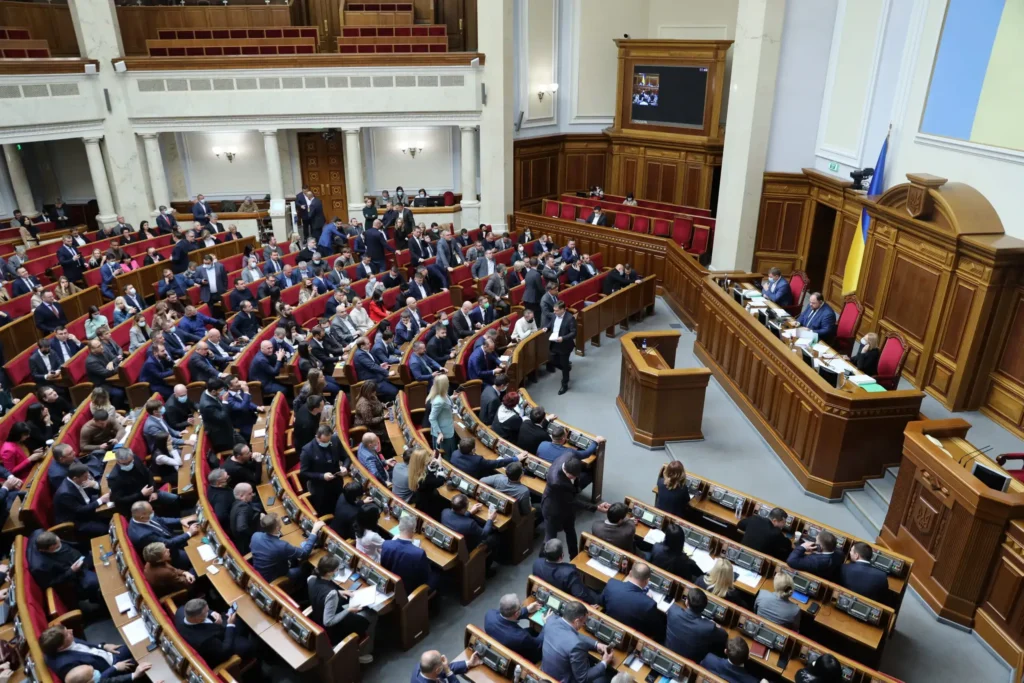
On Thursday, February 13, MPs from the European Solidarity party blocked the rostrum of the Verkhovna Rada of Ukraine, effectively disrupting the parliamentary session. This was reported by MP from the Voice party Yaroslav Zheleznyak. The reason is the decision of the National Security and Defense Council to impose sanctions against Poroshenko.
Video :
0:07 This media is not supported in your browser VIEW IN TELEGRAM
Oleksiy Honcharenko, a representative of the EU, also provided details of the protest.
“The Council meeting has opened. The European Solidarity faction came to the rostrum with posters. The Rada meeting closed. It took just a couple of minutes,” Oleksiy Honcharenko
The Chairman of the Verkhovna Rada, Ruslan Stefanchuk, sharply criticized the actions of the MPs, calling them a threat to the work of the parliament and the country’s defense capability.
“This is not just a parliamentary dispute, it is a direct threat to the country’s defense capability. And it is definitely not what Ukrainian society expects in times of war,” said Ruslan Stefanchuk.
He emphasized that blocking the parliament is unacceptable, especially in times of war, and stressed that democratic processes involve decision-making through dialogue and voting.
“The Parliament has always made difficult decisions through dialogue and voting. This is how democracy works, and this is how the Verkhovna Rada should continue to work,” Stefanchuk added.
At the same time, he drew attention to the fact that the European Solidarity faction makes up only 6% of the total parliamentary membership.
Petro Poroshenko’s reaction
The fifth president of Ukraine and leader of the opposition, Petro Poroshenko, reacted sharply to the decision of the National Security and Defense Council (NSDC) to impose sanctions against him. In his statement, he called it a politically motivated provocation initiated personally by Volodymyr Zelenskyy. According to Poroshenko, he knew about the impending sanctions in advance, but he hoped that the authorities would not take such a step.
“This crime has many accomplices: Zelenskyy’s entire team, the Cabinet of Ministers, which was bent on an absurd request, members of his National Security and Defense Council. But there is only one customer, executor and signatory – Zelensky personally,” Poroshenko emphasized.

According to Poroshenko, instead of focusing on the war with Russia and supporting the international coalition, the authorities have opened a “second front” inside the country, launching political purges.
Despite the sanctions, Poroshenko assured that he would continue to support the Armed Forces of Ukraine. He expressed concern that the restrictions could hamper the activities of his charitable foundation, which provides the military with equipment and weapons. Poroshenko also hinted that the NSDC decision could have negative consequences for Ukraine’s European integration.
The politician emphasized that he would stay in Ukraine and continue to fight for its European future.
“Why are they doing this? Hate, fear and revenge. And because they have elections. Not ours. In the government,” Petro Poroshenko summarized.
Statement by Volodymyr Zelenskyy
on February 12, President of Ukraine Volodymyr Zelenskyy announced that important decisions had been made at a meeting of the National Security and Defense Council (NSDC), which he chairs. In his evening address, the head of state said that sanctions were aimed at individuals who undermined the country’s national security and promoted Russia’s interests.
Although the president did not name specific names, his statement hinted that the restrictions could affect people who have made billions of dollars in wealth thanks to Ukraine but at the same time have harmed its sovereignty.
“I have just held a meeting of the National Security and Defense Council, the decision has been made and will be published tomorrow. We are protecting our state and restoring justice,” Zelensky said.
According to him, everyone who worked to the detriment of the state and helped the aggressor must be held accountable. And the funds earned at the expense of Ukrainian interests will be frozen and used for the country’s defense.
“The billions that were earned by actually selling Ukraine and Ukrainian interests, Ukrainian security, must be blocked and used to protect Ukraine and Ukrainians. This will be mandatory,” Volodymyr Zelenskyy said.
Political strategist Vitaliy Bala believes that the decision may be counterproductive for President Zelenskyy, because on the one hand, he supports the front and the military, and on the other hand, he helps Poroshenko to get additional political bonuses.
Bala notes that while the sanctions may cause a lot of controversy, claims that they will cause critical damage to Ukraine seem exaggerated.
“Look at the negative rating of Poroshenko, he is definitely not a ‘unifier’ of the country, although he is doing a lot for the frontline now,” Vitaliy Bala
The authorities are confident that the imposition of sanctions against five prominent individuals, including Petro Poroshenko and his allies, was an important step in the fight against corruption and the protection of Ukraine’s national interests. However, there are already tensions among the political elite that accompany this process and different views on the appropriateness of such measures. Poroshenko and his supporters consider the sanctions to be politically motivated, while the government claims to be protecting national security and restoring justice. This issue is not only of domestic political importance, but may also affect international support for Ukraine and its European integration aspirations.