He was one of Ukraine’s moral authorities. Semen Gluzman has passed away.
16 February 16:36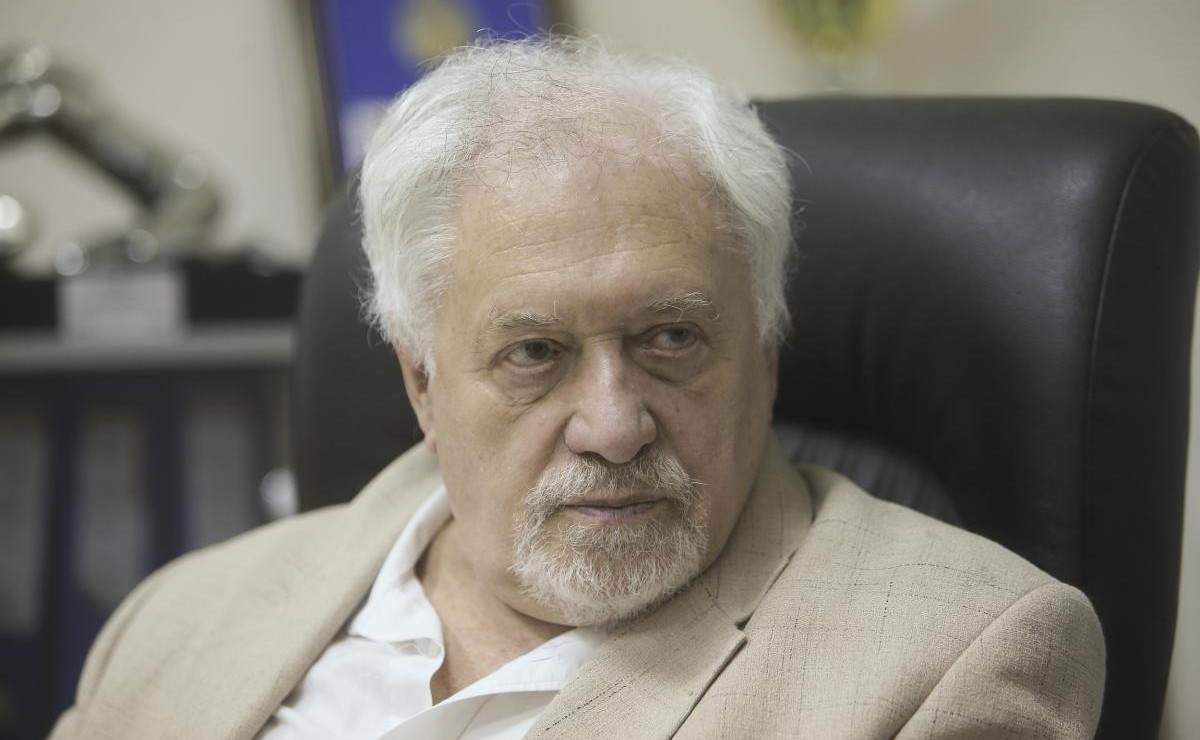
Today, at the age of 79, Semеn Gluzman, a renowned psychiatrist, human rights activist, Soviet dissident, and political prisoner, passed away at the Oleksandrivska Hospital in Kyiv.
This was reported to BBC News Ukraine by Semen Gluzman’s daughter Yulia, according to "Komersant Ukrainian".
“We just arrived; he was taken to the hospital by ambulance. And half an hour ago, we were informed that he had died. That’s all the details we have at the moment,” she said.
Earlier, former MP Boryslav Bereza and MP Mykola Knyazhitsky reported this.
“He had a difficult and categorical character and a light and clear conscience. Semеn Gluzman has passed away. During the Soviet era, he claimed that General Grygorenko was mentally healthy and was subjected to repressive psychiatry. Gluzman himself was imprisoned and served his “sentence” together with Myroslav Marynovych and other heroes of conscience,” Knyazhitsky wrote.
Human rights activist and psychiatrist Semеn Gluzman is considered one of Ukraine’s moral authorities. He was imprisoned in the 1970s when he was only 25 years old. Back then, during the Brezhnev era, he sought the truth and paid for it.
In 1971, having just graduated from the Kyiv Medical Institute, Gluzman prepared an independent forensic psychiatric examination in the case of General Petro Hryhorenko, a dissident who was punished by the Soviet system for his activities as a defender of the rights of the Crimean Tatars. Gluzman found him to be mentally healthy and argued that the use of repressive psychiatric methods against him was illegal, contrary to the official conclusion.
In 1972, Gluzman was sentenced to seven years in prison camps and three years of exile for this. He served his sentence in the Perm and Tyumen regions of Russia, and his cellmates were dissidents Levko Lukyanenko, Yevgeny Sverstyuk, and many others.
“I was surrounded by ghosts. Young men from the UPA who had grown old in Soviet camps, former Ukrainian writers Ivan Svitlychny and Ihor Kalynets, journalist Valery Marchenko, Armenians, Lithuanians — we were all ghosts. We had a past, but no future. There, in the bright Soviet future, there was no place for us. Except, perhaps, in prison. Again, in prison,” recalled Semеn Gluzman in his essay “The Smell of Hatred.”
He went on dry hunger strikes several times, lasting several months. And he found many friends among the prisoners. It was thanks to them that the young doctor’s worldview was finally formed.
“I wanted truth. Sincerity. It was difficult for me to live among normal Soviet people who saw new clothes on a completely naked king. I said, ‘The king is naked.’ I was very scared. But I couldn’t not say it,” he wrote.
After his exile, he worked in Kyiv, first at a factory, then as a doctor, later as a pediatrician and head of a polyclinic department. At the same time, he was involved in scientific and public activities, wrote articles about the abuse of psychiatry, and participated in television programs.
He spoke before the US Congress as a human rights expert and led joint American-Ukrainian research in the field of children’s mental health and alcoholism. In 1998, he was one of the authors of the Law of Ukraine “On Psychiatric Care.”
In 1978, Amnesty International declared it the Year of Semеn Gluzman. In 2008, he received the Geneva Human Rights Award in the field of psychiatry for his courage and dedication to humanism.
Semyon Gluzman was president of the Association of Psychiatrists of Ukraine and sought to reform psychiatry in Ukraine. He believed that in all the years since independence, no intermediate facilities had been created for mentally ill people who did not require inpatient treatment.