A war with no respite: Russia shifts to round-the-clock attacks — what does this mean for Ukraine
4 April 10:12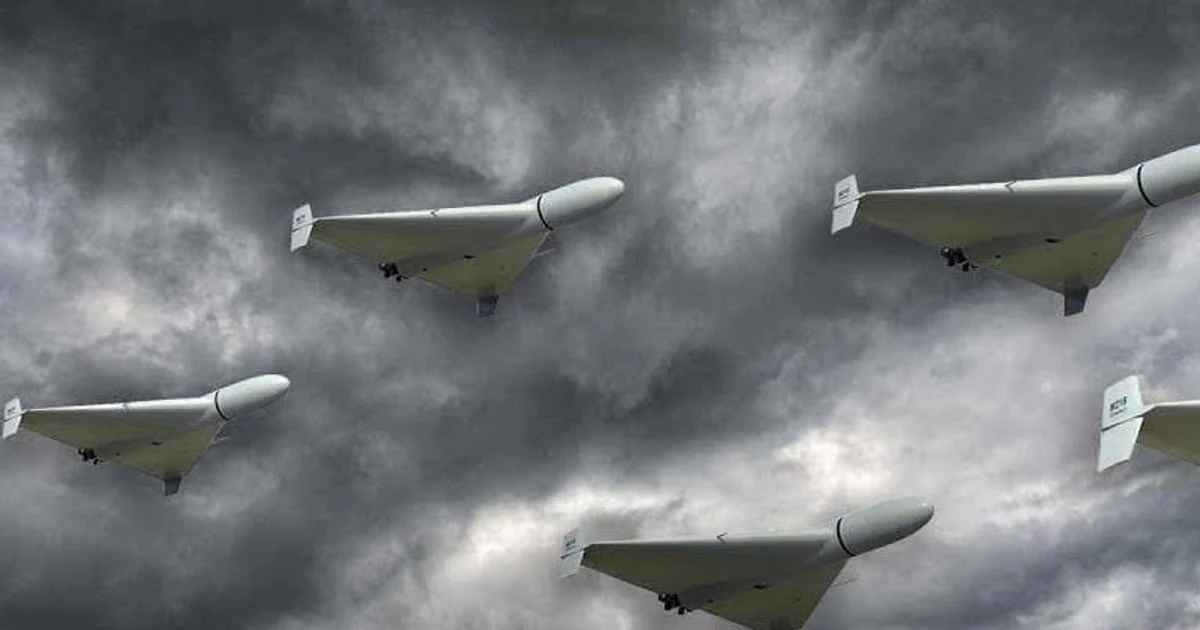 ANALYSIS FROM
Ukrainian President Volodymyr Zelenskyy has publicly warned of new potential targets for Russian attacks—bridges, dams, hydroelectric power plants, pumping stations, and even drinking water supply systems. At the same time, the enemy is already changing its tactics for massive attacks. New strikes are occurring not only at night but also in broad daylight. And increasingly often, the same refrain follows: the target could have been civilian infrastructure. This refers to the energy sector, residential buildings, and kindergartens. Kyiv residents are reporting direct hits in neighborhoods where there are no military facilities whatsoever. Is Russia really changing its tactics? Are strikes on civilians becoming part of a systematic strategy? And does this mean a transition to a war without pause?
War without pause: Russia is testing a pattern of continuous attacks
Recent attacks demonstrate not just an increase in intensity, but a shift in the logic of warfare. Whereas strikes used to come in waves with intervals, those intervals are now rapidly shrinking. It appears that Russia is gradually shifting to a mode of constant pressure. Aviation expert Konstantin Kryvolap draws attention to this very trend. In an exclusive comment
“I would say that the Russians have already shifted to this round-the-clock format. If they had more resources, they would be hitting us with a greater number of assets and carrying out such attacks constantly. They can’t do it constantly, but they’re doing what they can,” says Kryvolap
During late March and early April, the average number of “suicide drones” increased significantly. And this allows them to carry out attacks with shorter intervals between major strikes, adds the aviation expert.
Daytime Under Attack: There Will Be No More “Safe Hours”
Until recently, Ukrainians viewed nighttime as the primary period of threat. However, this pattern is now breaking down. Daytime attacks, which were previously sporadic, are becoming regular.
The expert emphasizes that this is no coincidence, but part of a new tactic. Russia is deliberately expanding the time frame of its strikes to deprive Ukrainians of any sense of security, while also using missiles—both cruise and ballistic.
“In some cases, they strike a single geographic location, such as western Ukraine. And then they may launch attacks across the entire country so that we don’t let our guard down anywhere,” — Kostyantyn Kryvolap
Scale is key: drone production has surged
This shift in tactics was only made possible by an increase in resources. And kamikaze drones play a key role here. We are no longer talking about limited batches, but about systematic production.
Kryvolap explains: the current pace of attacks indicates stable logistics and scaled-up production, not just stockpiling.
“The number of ‘suicide drones’ in daytime and nighttime attacks is almost the same. This means their logistical capacity remains at around 150–200 per shift, that is, per 12 hours. That’s a very high rate. And for us, frankly speaking, it’s not the most pleasant figure,” — Konstantin Kryvolap
Combined strikes: betting on overload
Another element of the new tactics is the combination of different types of weapons. Russia is not just increasing the quantity but complicating the very structure of the attacks.
This puts additional pressure on the air defense system, which is forced to respond to different types of threats simultaneously.
“Both ballistic ‘Iskander’ missiles and X-101 cruise missiles were used. At the same time, we are shooting down most of the cruise missiles—the effectiveness is very high,” says Kryvolap
However, even with a 90% interception rate, given the sheer volume of attacks, what does reach its target still causes serious consequences.
Strikes on civilians: an effect, not a coincidence
The expert draws particular attention to the nature of the targets. This is not just about energy facilities or infrastructure, but about targets that have a strong emotional impact.
This indicates a shift in priorities: from the military to the psychological aspect of the war.
“There has been a significant increase in strikes near schools, hospitals, and maternity wards. These are sites that evoke strong emotions. I won’t even mention residential neighborhoods—that’s already history. Today, for example, there were strikes on Sumy—both in the morning and during the day, when people were there,” says Kostyantyn Kryvolap
Despite the variety of weapons and targets, Russia’s strategy remains multifaceted. It combines military, economic, and psychological tools.
And it is precisely the psychological factor, according to the expert, that comes to the forefront.
Are scenarios of strikes on dams realistic?
Against the backdrop of statements about possible strikes on hydroelectric power plants and dams, the question arises: is Russia capable of carrying out such scenarios? We are no longer talking only about destruction, but about potential man-made disasters. However, the aviation expert assesses these risks more cautiously.
“When it comes to large dams—they are very difficult to destroy. Most likely, it is practically impossible. Smaller structures—theoretically, they could be vulnerable. But I don’t think the Russians will go down this path right now. Their main objective is psychological pressure,”—Konstantin Kryvolap
The most important thing is the shift in the nature of the war. Whereas attacks previously required a long buildup of resources, this cycle has now been reduced to a few days. This means Ukraine is entering a phase of sustained, long-term pressure.
“Previously, they needed a week or more to build up their forces. Now—just a few days. If they amass 600 ‘suicide drones,’ they can already launch an attack. I don’t want anyone to be wearing rose-colored glasses. We’ll have to live like this for a long time yet,”—Konstantin Kryvolap
Thus, Russia is changing the nature of the war—from sporadic massive strikes to systematic, almost continuous pressure. This is a war not only for territory but also for the psychological resilience of society.
And while the question used to be “when will the next attack come,” now it sounds different:
Is there even a pause between them—and how long can the country survive at this pace?