The war will last not weeks, but months: An IDF officer revealed a “target bank” and a new front against Iran
24 March 11:38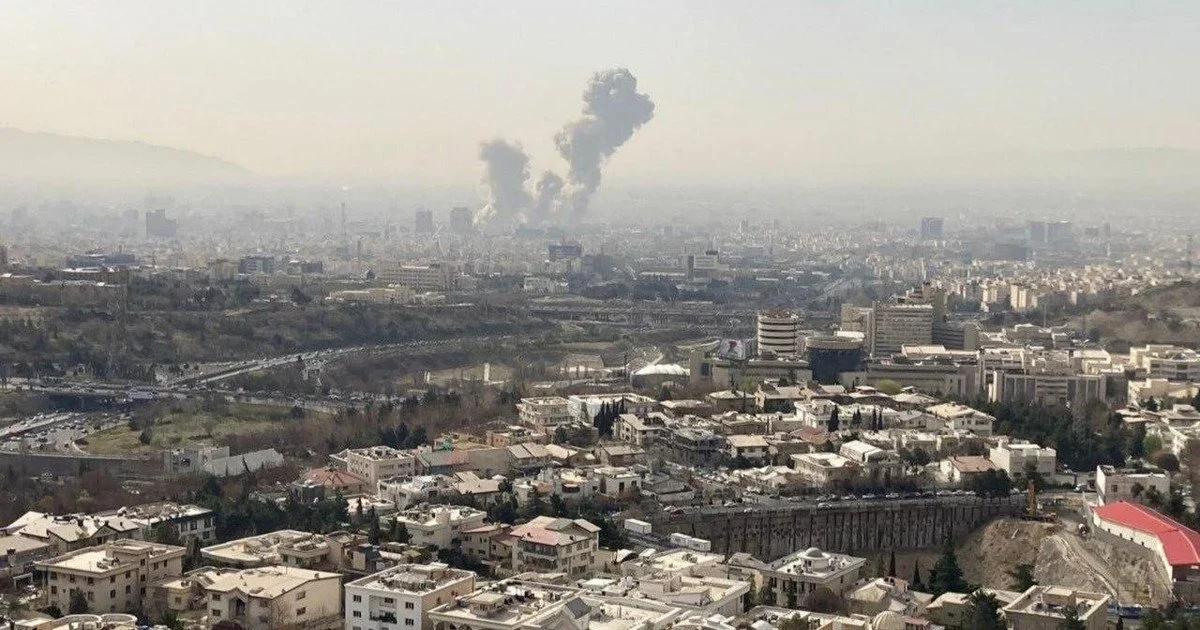 ANALYSIS FROM
Ships carrying Russian weapons destroyed in the Caspian Sea, Iran’s logistics routes cut off, a “target bank” for at least the next month and a half, and the unprecedented closure of the Church of the Holy Sepulchre due to the threat of mass casualties—the fourth week of the war between the U.S., Israel, and Iran demonstrates that: the conflict is entering a new phase.
This is no longer a series of precision strikes, but a systematic military campaign with a clear timeline spanning months and an expanding theater of operations. Strikes are reaching targets previously considered out of reach, and the involvement of Russian and Chinese interests in the conflict indicates the gradual internationalization of the war. How realistic are the combat plans, already calculated months in advance, and does this point to a protracted conflict scenario?
Does the destruction of ships carrying Russian weapons in the Caspian Sea signal the beginning of broader involvement of other states in the war? [Kommersant] investigated.
A War Without a Quick-Win Scenario
The first days of hostilities were accompanied by expectations of a quick result or at least a clear strategy for ending the conflict. However, by the fourth week, it has become clear that these assessments were premature. Grigory Tamar, a reserve IDF officer and military historian, notes in a commentary that the very approach to assessing the war was flawed from the start.
“The war is unfolding in its own logical way. I see no grounds for the hysterical reaction displayed by some journalists as early as the third day—claiming that the goals are unclear, the objectives are unclear, and it’s unclear how to get out of this. There are always only two ways out of a war: either victory or defeat. There are no other options,” says Grigory Tamar.
According to him, no one in Israeli political and military circles expected a short campaign.
“None of the decision-makers ever said this war would be quick. Iran is a massive country, with a population comparable to Russia’s, and with colossal resources and territory. Wars like this don’t end in a few days or even weeks,” said Grigory Tamar.
Israel’s strikes are partly aimed at undermining internal stability. According to an IDF officer, estimates suggest that up to 85% of the population does not support the current regime. Israeli strikes on control structures are an attempt to weaken it as much as possible and create the conditions for internal change. Meanwhile, the situation in the country is already deteriorating:
“There are serious problems with water supply and food provision. These are the initial signs of internal destabilization,” says Tamar.
A campaign of attrition
A sign of the transition to a protracted phase is the scale and systematic nature of the strikes. According to Tamar, the Israeli army has a long-term operational plan:
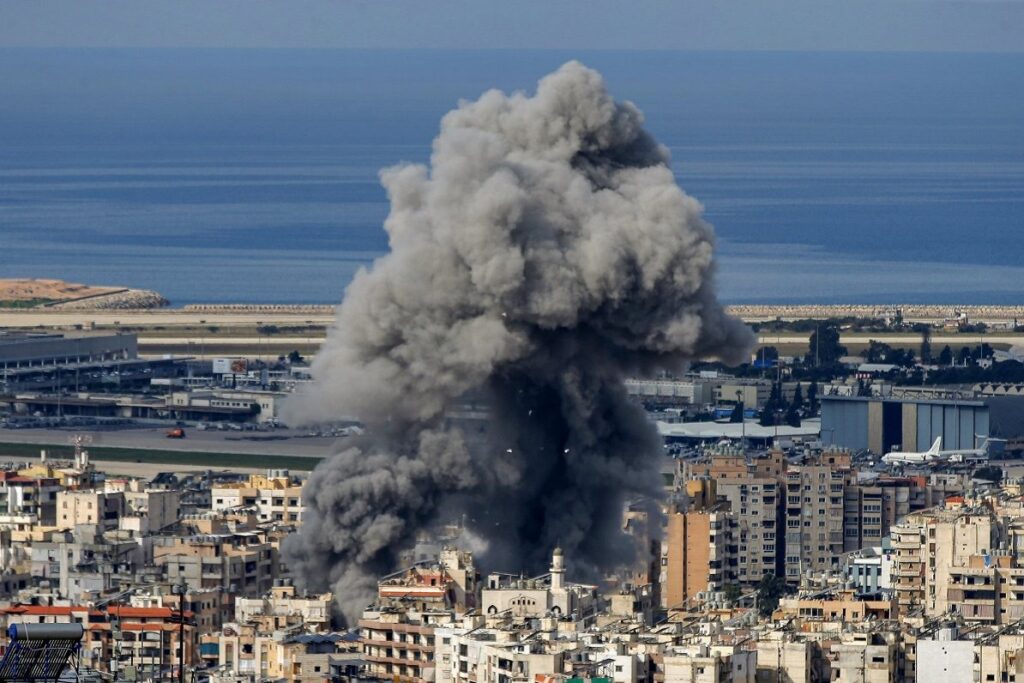
“A few days ago, our General Staff announced through the press service that there is a so-called target bank sufficient for at least a month and a half of bombing. And this is despite the fact that this bank is constantly being updated. In other words, we are not talking about one-off strikes, but about a systematic campaign in which dozens, and sometimes even hundreds, of targets are hit every day,” Tamar noted.
In effect, this means that the intensity of hostilities will not decrease in the near future, and the conflict itself is taking on the characteristics of a classic war of attrition.
Different Goals for the U.S. and Israel
Despite their joint participation in the war, Israel and the U.S. are pursuing different strategic goals. And this difference, according to experts, could be decisive for the further course of events.
“The goals of Israel and the United States differ significantly. Israel, in particular, is striking not only military targets but also structures that ensure the regime’s stability—police stations, checkpoints, and Basij units. This is done to weaken the regime as much as possible and create conditions for an internal uprising,” Tamar explains.
At the same time, he says, the U.S. operates within a broader geopolitical logic. The American goal is strategic control over the region and control over energy resources. And, to be honest, this isn’t really being hidden, adds the reserve IDF officer.
Global Context: More Than a Regional War
A war against Iran automatically affects the interests of other states—primarily Russia and China.
“It’s clear that they’re helping Iran—both with weapons and technology. But if Iran is knocked out of this framework, it will be a very serious blow to the entire system of alliances in which it operates,” Tamar believes.
One of the events signaling the escalation of the conflict was the attack on facilities in the Caspian Sea region—an area previously considered relatively safe for Iran. According to the military historian, this route was critical for supply lines.
“We’re talking about a port that was effectively the last safe transport artery connecting Iran with Russia and China. Military cargo and equipment were stockpiled there, and a fleet carrying out combat missions was stationed there,” said Grigory Tamar.
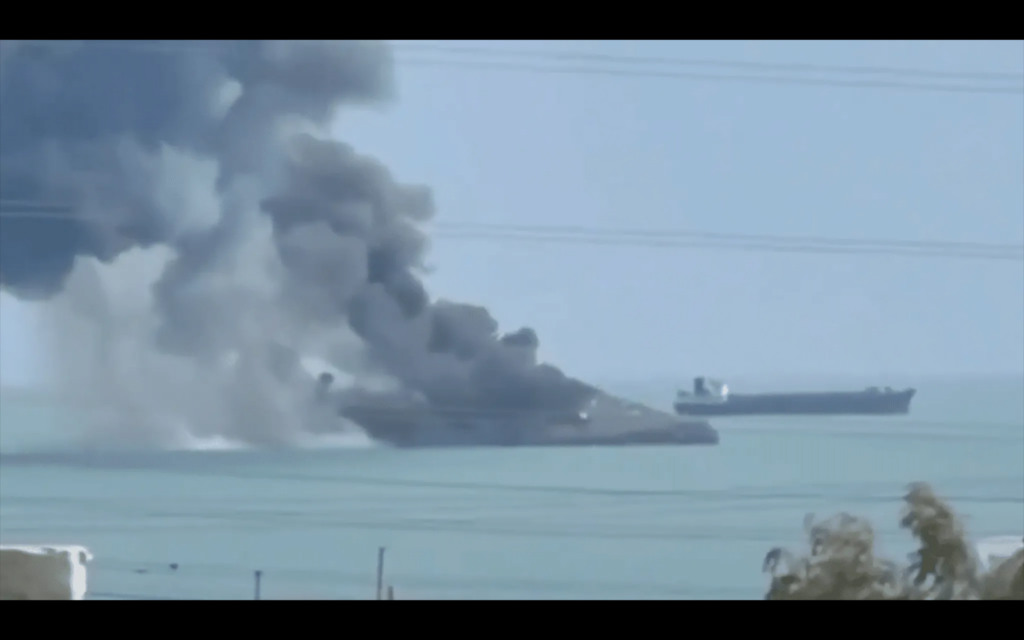
As a result of the strike, preliminary estimates indicate that five to six ships and vessels were destroyed. Some of them were in the roadstead, others in the water area. Storage facilities containing cargo, including Chinese equipment, were also destroyed.
“There is information that one of the vessels may have belonged to the Russian Federation and was loaded with weapons, including drones and electronic warfare equipment,” said Grigory Tamar.
This strike has not only military but also political significance. Now this artery is effectively cut off. And if this succeeded once, it means that any attempts to resume supplies will be destroyed again.
Global implications: from diplomacy to security
The conflict is already extending far beyond the Middle East. It is not just about economic risks, but also about the intensification of diplomatic processes. Tamar draws attention to the intensity of contacts between Ukraine and Israel.
“When foreign ministers hold confidential talks three times in a short period, the content of which is not disclosed, it’s not about ‘the weather or the environment.’ This is serious diplomatic work that requires coordination at the level of administrative apparatuses and governments,” – Grigory Tamar.
An additional signal is the request for direct contact between the leaders of the two countries. The Office of the Prime Minister of Israel has sent a request for a conversation with the President of Ukraine. This means there are specific issues that require discussion at the highest level.
The Church of the Holy Sepulchre has been completely closed for the first time in history: this is a signal
One of the strongest indicators of the threat level has been the unprecedented security situation in Jerusalem.
“The Church of the Holy Sepulchre was closed—and this is an extremely rare occurrence. As far as I recall, something like this happened only during the pandemic,” notes Tamar.
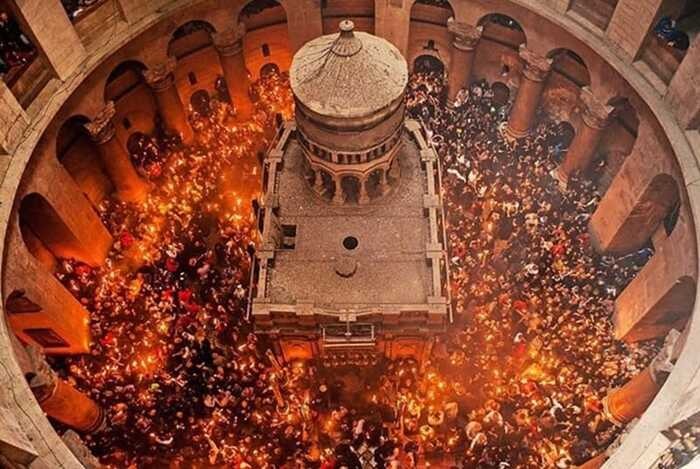
The reason is not politics, but the risk of mass casualties.
“Imagine the situation: 10,000 people on the Temple Mount, and a warhead falls there. That means hundreds of dead, thousands of injured, panic, and a stampede. And the blame will fall on Israel. So the decision is simple—if safety cannot be guaranteed, access is closed to everyone,” says Grigory Tamar.
This decision has become a symbol of just how close the conflict has come to the point where military action could trigger global religious consequences.
Thus, the fourth week of the war shows that the conflict between the U.S., Israel, and Iran goes beyond a local confrontation. It is now a multi-layered crisis encompassing the military, economic, and political spheres. And, according to experts, this is only the beginning of a longer process.
“We still have a long way to go before the major milestones. Anything can happen in that time—from a radical turning point to a complete reversal of the situation. We are only at the beginning of a major process,” concludes Grigory Tamar.
The world seems to have already entered a phase where the consequences of this war will shape the global order not for months—but for years.