War with the Shadow: Are cash registers “heavy artillery” of the state?
7 January 17:01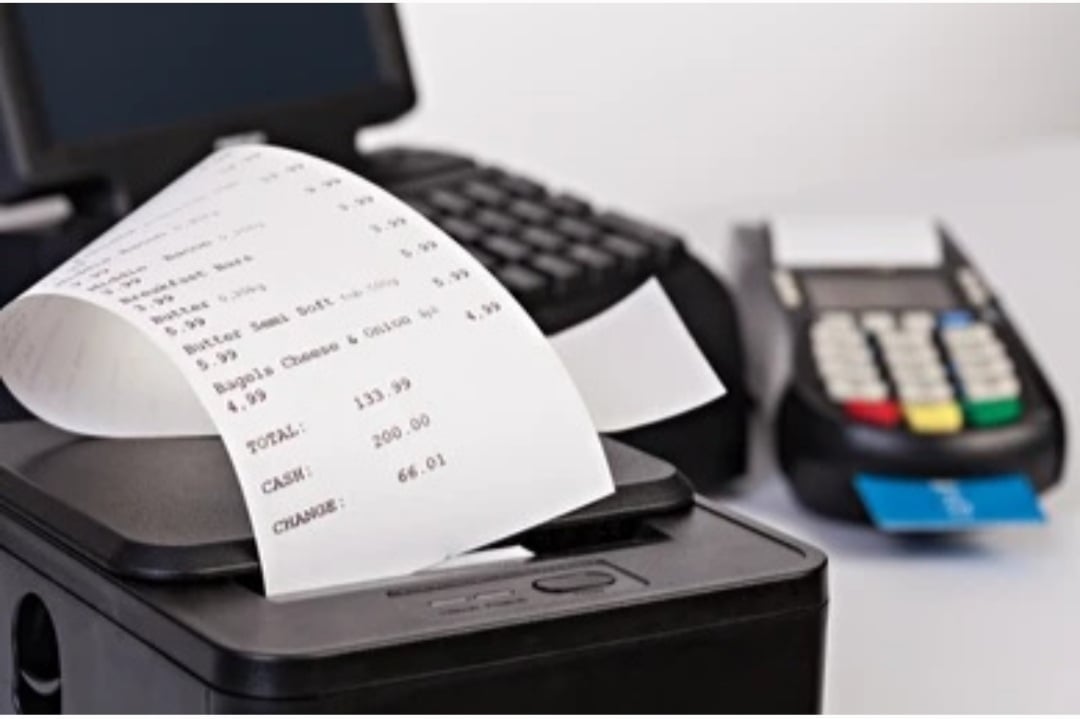 ANALYSIS FROM
According to the results of 11 months of 2025, the indicators of the use of cash registers/pressors, cash registers, show a steady increase compared to the same period in 2024. As MP Danylo Hetmantsev reported on his Telegram channel, the total revenue from cash registers amounted to UAH 5,130.2 billion, which is UAH 1,135.3 billion (28.4%) more than last year, when UAH 3,994.9 billion was spent through them. What is the reason for this growth, we analyzed
The number of payment documents (checks) for 11 months of 2025 reached 9.5 billion, which is 0.85 billion (9.8%) more compared to the same period in 2024 (8.6 billion). And the average daily number of checks in January-November 2025 amounted to 28.4 million, which is 2.6 million (10.1%) more than in the same period last year.
“These results indicate a change in priorities in society. People realize the importance of counteracting schemes and tax evasion and join our fight against the shadow economy. At the same time, schemes, violations and work for cash continue to be widespread. In 2026, there is definitely something to work on,” the MP said.
Fighting the shadow economy
According to experts, the data cited by MP Hetmantsev is interesting, but it is not clear where it came from. The results of 2025 have not yet been summarized, so it is too early to draw conclusions. But, of course, cash registers (cash registers/payment transaction registers/cash registers) are one of the key tools of the state in the fight against the shadow economy.
Each receipt is sent to the State Revenue Service (SRS) in real time via a fiscal server. This means that tax authorities can see the entire turnover of a business online, not six months later through a declaration. It’s impossible to “miss” revenue, as money accepted through the cash register automatically becomes part of the company’s official revenue.
The larger the official revenue, the larger the tax base:
Corporate income tax (for companies).
Single tax (for individual entrepreneurs).
VAT (if the business is a payer).
Unified social contribution (USC) – since payroll and legal salaries are usually tied to official turnover.
“Buyers win, as they have a legal tool to protect their rights (return, warranty, complaint). This forces unscrupulous sellers to also work officially in order not to lose customers. And the data set of billions of receipts (“big data”) allows tax authorities to see average prices and margins by industry. Find anomalies: for example, if the average check in a cafe is suspiciously low for its location and assortment. To compare the revenue dynamics of a particular business with the average figures for the segment,” says financial analyst Ivan Verbnyi in a commentary to
"Komersant Ukrainian" .
“It is more difficult for businessmen to ‘exchange’ money when all revenue goes through the cash register, to withdraw money from the business ‘in the shadows’. But even if we take into account the figures cited by Hetmantsev, the victory over the shadow is still far from being achieved, the expert emphasizes. And this is not to mention the fact that even the presence of a cash register does not guarantee against manipulation of checks through so-called gray schemes. However, penalties encourage businesses to follow the rules.
There will be more fines
It is worth recalling that from January 1, 2022, all Ukrainian individual entrepreneurs were obliged to work with cash registers. Fines for violation of the requirements of Law No. 265/95-VR (making payments without a cash register/payment transaction recorder, failure to issue a receipt, not making payments in full, etc.) will be applied in full in 2026:
100% of the amount (value) of goods/services sold in violation for the first violation detected.
150% – for each subsequent violation.
Entrepreneurs will also be fined by the State Tax Service for:
absence of a cash register/press register at the point of sale and/or conducting payment transactions without using a registered cash register/press register;
making payments not for the full amount of the purchase (provision of services);
failure to issue a receipt of the prescribed form and content (in paper and/or electronic form) to the buyer;
generating a receipt in violation of the requirements for mandatory details (including for excisable goods).
Additionally (along with financial sanctions of 100%/150%), administrative fines may be imposed for certain violations of cash discipline (depending on the nature of the offense). For example, the use of an unregistered cash register/violation of the procedure for its use may result in administrative fines under the Code of Administrative Offenses (the specific amount depends on the offense and the frequency of the offense), says Tetiana Andreeva, a lawyer and specialist in legal issues of entrepreneurial activity.
If a check is drawn up in violation of the mandatory details, the tax authorities may not recognize it as a payment document. In this case, the risks for the business are the same as if the check was not issued: 100% (first) / 150% (subsequent) of the amount of the transaction with the violation.
Author: Alla Dunina