Military police in Ukraine: powers, risks and who can serve
21 October 2025 21:09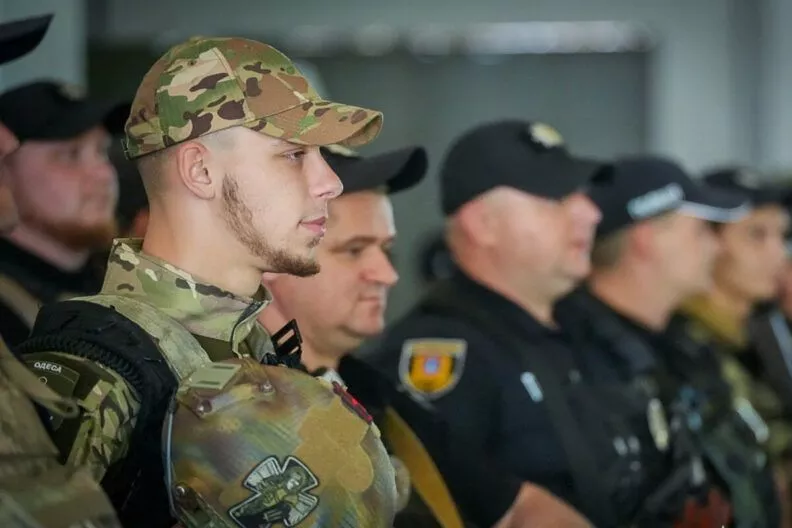 ANALYSIS FROM
The draft professional standard “Military Police Officer” developed by the Main Directorate of the Law Enforcement Service of the Armed Forces of Ukraine has already been approved by both the public and military trade unions. This means that the day is not far off when it will be adopted and military police officers will appear on the streets of cities and villages. Komersant found out what law enforcement officers in military uniforms will do and how they will differ from the police of the Ministry of Internal Affairs.
The purpose of the new police will be to ensure law and order and maintain military discipline among the members of the Armed Forces of Ukraine. However, the standards of work of the military police are actually copied from the National Police of Ukraine. That is, military police officers are allowed to conduct operational and search activities, use force and weapons. However, there are differences from the National Police.
It is planned to create a patrol and checkpoint service, including a mobile one, or rather a car service. A security platoon, because detainees will need to be held and guarded somewhere. For this purpose, a disciplinary battalion will be created. In addition, military traffic safety inspectors will work separately to check army-related vehicles.
Who will be recruited to the military police?
Those who have a certificate and a certificate of completion of professional training courses for privates and non-commissioned officers of the basic level in the field of law enforcement (for sergeants) will be hired.
And also:
- a professional junior bachelor’s degree with the qualification of “technician-technologist (mechanic), sergeant of the middle level” in the specialization “Organization of transportation and management in road transport”;
- a certificate and appendix on completion of training for contract servicemen to fill regular positions of sergeant (sergeant major), which provides for higher education in the specialty “Organization of transportation, management in road transport”.
To enter the service as a private, as in the National Police, it is enough to have
- basic or complete secondary education or vocational education;
- fitness for military service for health reasons (for contractors);
- a conclusion on professional and psychological fitness;
- a physical fitness test grade of at least “satisfactory” (for contractors);
- no criminal record;
- basic military training or military service.
Police officers are allowed to hit, kick, baton and even shoot
The following skills are required to perform official duties
- to check identity documents;
- demand compliance with the rules of wearing military uniforms;
- conduct personal searches, inspect belongings, and seize documents and items that may be evidence or pose a threat;
- detain and deliver military personnel (or other persons, if necessary);
- draw up protocols on administrative detention and administrative offenses (within the limits of their powers).
The military police are also authorized to use physical force, special means and even weapons.
First, it will be allowed to use self-defense techniques (without the use of special means and weapons), namely, to throw a person to the ground. Hitting with hands and feet if the person resists or does not comply with legal requirements. It is also allowed to use painful methods. Before doing so, it is recommended to warn the person of the intention to use physical force.
Secondly, it is allowed to use special means, the list of which is impressive:
- metal bracelets (handcuffs), binding means
- batons of various types;
- tear gas and irritants (aerosol cans, hand gas grenades, gas grenade cartridges, etc;)
- electroshock devices (spark arresters, tasers);
- means for firing cartridges with rubber or similar non-lethal projectiles;
- devices for forced stopping of vehicles.
It is up to the police officer to decide what to use.
Thirdly, if the above does not work, the use of firearms is allowed: assault rifles, pistols. And in each case, the use of force, special means or weapons is entirely at the discretion of the military police officer, as well as whether to provide medical care to the detainee or not.
Search for deserters and weapons
In addition to being able to approach anyone in uniform on the street or stop military equipment at checkpoints, military police are obliged to search for and detain members of the Armed Forces and other formations established under the laws of Ukraine who
- left the military unit or place of service without permission,
- failed to report for duty without good reason,
- hiding from investigation or court,
- convicts who evade punishment.
Their whereabouts will be established through cooperation with the National Police (district police), CCCs, relatives, neighbors, shops, entertainment venues, religious organizations, village heads, etc. Military deserters will be persuaded to surrender and cooperate with the Law Enforcement Service.
The military police will also be tasked with searching for firearms, ammunition and explosives stolen or lost in military units. They are also tasked with stopping and inspecting military vehicles.
Military police are inexperienced and uncontrolled
The creation of the military police in this form requires the immediate creation of a temporary investigative commission of the Verkhovna Rada to investigate violations of the constitutional rights of citizens by the military police, said lawyer Oleh Leontiev. Otherwise, arbitrariness will begin.
According to Article 17 of the Constitution of Ukraine, military personnel are prohibited from violating the constitutional rights of citizens, but this is already being violated. The Military Law Enforcement Service (VSP) is already conducting raids, detaining civilians, and inflicting bodily harm. If they officially create a military police and authorize the use of force, they will simply say: “We thought it was a deserter, but he didn’t show his documents, he wanted to escape, so we used force.” That’s all, the lawyer emphasizes.
“Police officers are taught something by experienced investigators and operatives. “But who will teach the military police how to act in a given situation? It’s tantamount to giving them a weapon but not a brain. The problem is that no one will control their actions. You cannot rely on a specialized military prosecutor’s office, because it has nothing to do with the prosecutor’s office or anything else. They will not be able to exercise normal supervision over the military police,” said Leontyev.
“But the most interesting thing is that, according to the lawyer, some TCC employees are already thinking of joining this military police, even though they are now earning good money on bribes.
Meanwhile, there are only a few days left before the military police is launched.
Author – Alla Dunina
Read us on Telegram: important topics – without censorship