Water as a new war front: how Russia destroys vital infrastructure
23 July 2025 16:25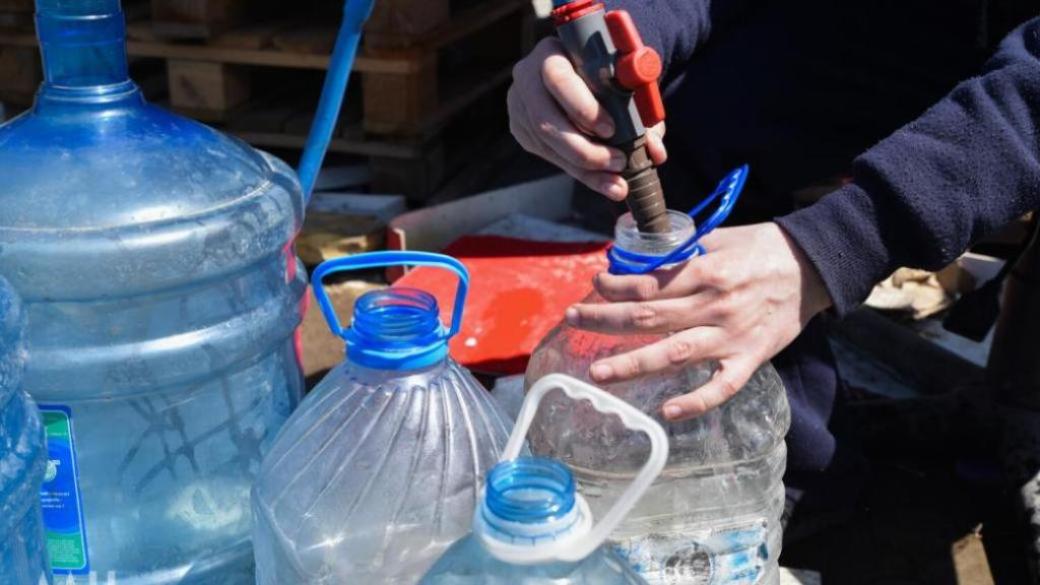 ANALYSIS FROM
Occupied Donbass is on the verge of a humanitarian catastrophe – the region is running out of water. The large Volontsovo reservoir in Yenakiyevo has completely dried up due to a lack of precipitation, which is about 12 million tons of water. In addition, the level in the Khanzhenkovo reservoir has dropped by four meters. Water reserves in Verkhnekalmiuske, Makiivka and Olkhivske reservoirs have fallen to a critical level – not even enough to supply the population. The Siversky Donets-Donbass canal is destroyed. Water is supplied on schedule for a few hours every few days. Journalists
In Donetsk, water was supplied for two hours every two days, and in Makiivka – for three hours every three days. The situation is no better in Yasinovataya, not to mention the mining villages around these cities. There is a lack of water even in the neighborhoods where it used to be supplied, and the pressure was so low that it was not supplied above the third floor. Schedules often do not work: people cannot wait for water even at the set time. It is impossible to flush the toilet.
It’s a common thing: Donetsk residents put a ball in the toilet. And then those balls are taken to the trash by those who are normal, while those who are not throw them out under the windows,” said former MP Oleg Tsarev.
According to Water of Donbass, there is a water shortage in at least 10 cities in the region, including Donetsk, Makiivka, Yasynuvata, Horlivka, Yenakiyevo, Debaltseve, Kirovske, Torez, Zhdanivka, Shakhtarsk, and Snizhne. Previously, water used to come there through the Siversky Donets-Donbas canal.
All destroyed by the “liberators”
Donetsk Oblast is a low-water region with the only major river, the Siversky Donets. To ensure water supply, an extensive network of reservoirs and a water transportation system was created. It worked more or less stably until 2022, and after the full-scale invasion, constant shelling and damage to pumping stations, power lines and the canal itself, water supply stopped, and the region was left without water.
On May 1, occupied Donetsk announced the start of water supply from the Don River for 200 km through two branches of the water pipeline to the Siverskyi Donets-Donbas canal with a volume of about 4,000 m³ per day. But this is a drop in the bucket. This is only three minutes of full operation of the canal, which was in place before the occupation of part of Donbas by Russia.
The canal was built in the 50s. It started a few kilometers from the village of Rayhorodok in the Kramatorsk district of Donetsk Oblast and ended near the Verkhnekalmius Reservoir, south of Yasynuvata, and then branched out with water pipes. The length of the canal was 133.4 km, of which 107 km was an open trapezoidal canal and 26.4 km were pipe bridges (dukes) with pumps. The canal included 4 pumping stations and 5 reservoirs (total volume – 64 million cubic meters). Before the war, it supplied water to Donetsk and Luhansk regions. But today it is destroyed: at the beginning of the year, Russian troops in the Chasovyi Yar area blew up two-meter-long canal pipes in several places to allow armored vehicles to pass through. Since May 2023, the canal has been supplied with water from the Don-Donbas water pipeline, but this is not enough to fully restore the volume of water supply.
The reservoirs remaining in the occupied territory do not help the situation either. The reservoir in the village of Nyzhnya Krynka in the Makiivka district has become shallow. According to local media, the water level in the Krynka River has dropped by 15-20 meters, exposing the bottom and revealing dead fish. In some places, the water disappeared by more than 25 meters. The river used to be full of water. The reservoir in Nyzhnya Krynka was one of the key reservoirs for Donetsk and the surrounding areas. The Hedra River, which fed the region, has become shallow. However, water continues to flow from it through damaged pipes and does not reach the cities, but flows directly onto the road.
Almost all of Donbass’s reserve reservoirs are shallow. Only their remnants remain, which are undesirable for drinking water supply because of the large volumes of silt. The Starokrymske or Kalchytske reservoir in Donetsk Oblast, which fed Mariupol, has also become critically shallow – the water level has dropped by more than 10 meters (70%), although it was full four years ago. By the summer of 2025, Mariupol was left without water in the taps. For several months now, the city has been living on a per-second water supply schedule.
The head of the so-called DPR, Denis Pushilin, has proposed the following measures to combat the water crisis
- set the maximum price for drinking water at retail at 3.5 rubles per liter;
- revise water consumption standards for houses without meters;
- calculate how many water tanks should be installed in the yards of apartment buildings with water supply interruptions.
The situation in Luhansk region is slightly better, thanks to wells, but large water intakes outside the so-called LPR are not functioning. The region’s water supply system is virtually inoperable. In Luhansk, there is a water shortage of 70-80 thousand cubic meters per day. The situation is similar in and around the cities: Stakhanov, Kirovsk, Bryanka, Zorynsk, Artemivsk, Pervomaisk, said Sergey Makhurenko, General Director of Luhanskvoda. As a result, the settlements are facing a sanitary and epidemiological disaster: the normal operation of the sewerage network is disrupted when there is a lack of water.
Without water – neither here nor there
The main reasons for the lack of water in Donbass are the damage or complete destruction of main water pipelines, pumping stations, and filtering stations (e.g., Carbonite, Verkhnekalmiuska, Donetsk filtering station). The shelling makes regular repairs impossible. Donbas does not have a sufficient number of local sources of drinking water (few rivers and lakes, high groundwater pollution).
Most cities in the region used to receive water through the Siverskyi Donets-Donbas canal, but now it is damaged, and the entire region is suffering. The equipment is still Soviet-era, with large water losses and high energy consumption. Accidents on water pipelines happen all the time. There is another factor: as a result of the hostilities, groundwater and surface water are contaminated due to destroyed mines and chemical plants. There is a risk of toxic substances getting into drinking water sources (for example, from mine water). And now, to provide water to the population, local authorities are doing everything possible,” says environmentalist Tetyana Stepanchyk for
[Kommersant] .
The solution to this problem requires a comprehensive approach that takes into account both short-term and long-term measures, the expert believes.
The first priority is to restore the infrastructure: repairing pumping and filtering stations, water pipelines – most of them are damaged or destroyed. But it is impossible to do this without the cessation of hostilities. Further, water supply facilities need to be protected from shelling (or demilitarized under the control of international organizations).
The second stage is to find alternative sources of water: drilling artesian wells in areas where it is geologically possible; mobile water treatment stations are especially important for small settlements; even collecting and treating rainwater is a temporary but useful solution in the absence of other sources.
Another option is to create “water corridors” through the mediation of the UN or ICRC to repair and maintain critical infrastructure. Attracting funding from international donors, agencies (e.g., UNICEF, UNDP), the EU, and other countries. Create local water supply systems that can operate autonomously. In Syria, Yemen, and Lebanon, during the conflict, international organizations created temporary systems with mobile filters and tankers. In Georgia, after the conflict in South Ossetia, programs to restore water supply were implemented with the participation of the EU. But there is one “but” – as long as the fighting continues, it is impossible to implement all this,” emphasizes the environmentalist.
In the current situation, due to problems with water supply, Donbas may soon be left without electricity. Denis Epifanov, Minister of Coal and Energy of the so-called DPR, said that the water situation threatens the normal operation of power plants, as water is needed for cooling. According to him, the level of process water in the cooling pond of Zuivska TPP should be at least 7-8 meters, and the critical level is 5 meters. Currently, the level is 6.95 meters, which poses a threat of stopping the pumps and disrupting the plant’s operation.
Author – Alla Dunina
Читайте нас у Telegram: головні новини коротко