Against all odds: how Ukraine extracts and imports gas under enemy fire
23 January 14:39 ANALYSIS FROM
The enemy continues to strike at Ukrainian gas production, limiting its capabilities but not stopping gas supplies to Ukrainian homes, heating companies, and thermal power plants. This is largely thanks to sufficient gas imports. Komersant investigated the situation with gas for Ukraine.
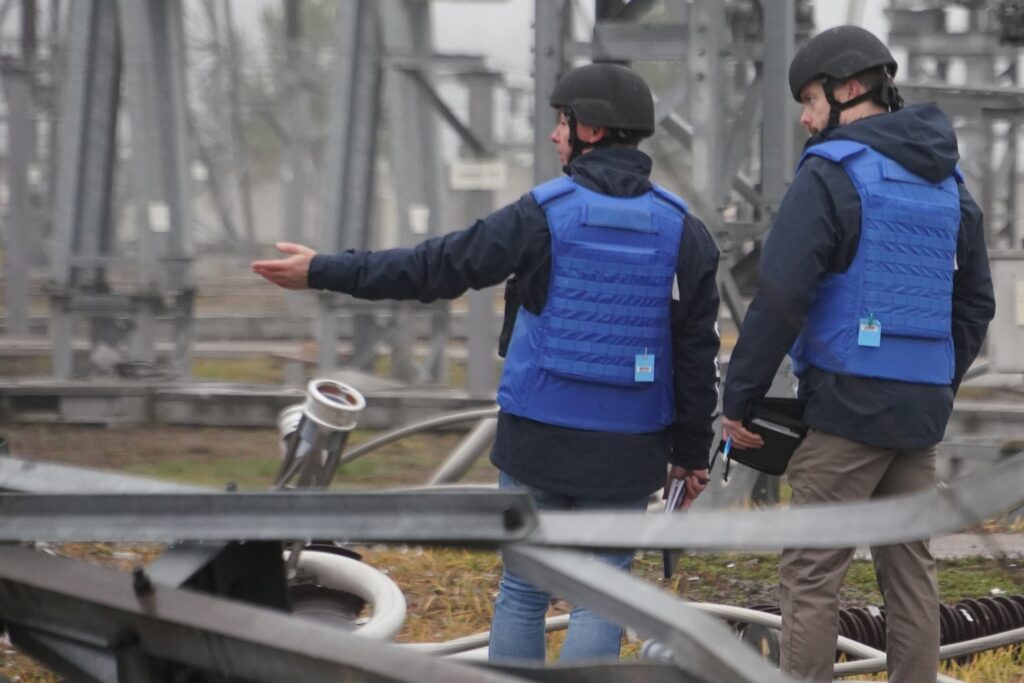
The beginning of the year was particularly tense for energy companies. The Ukrainian energy sector was constantly under attack. Naftogaz Group facilities also suffered numerous attacks. Earlier this week, the company’s CEO, Serhiy Koretsky, reported another attack that took place on the night of January 17 on equipment used for natural gas production. In total, the company recorded six such attacks in the first few days of January.
Gas production continues
In fact, gas production facilities have been under Russian attack since the first days of the full-scale invasion, but since 2025, the shelling has become particularly powerful, targeted, and destructive. This is emphasized by Artem Petrenko, executive director of the Association of Gas Producers of Ukraine.
“Last year alone, there were more than 25 massive attacks on gas production and gas infrastructure: fields, gas processing, transportation, and storage facilities. Rockets and drones struck both state-owned and private production facilities. There were significant hits and damage to equipment, and unfortunately, some of the damage was critical. After each attack, companies have to deal with the consequences, restore damaged facilities, and make enormous efforts to stabilize gas production,” Artem Petrenko notes.
According to him, domestic production remains the basic resource on which the functioning of Ukraine’s gas system depends.
“Despite the full-scale war and constant attacks on the industry, the gas production sector retains its ability to consistently cover a significant part of domestic needs. Independent companies account for 20% of production, while state-owned enterprises provide 80% of the total,” the expert notes.
Nevertheless, enemy attacks are negatively affecting natural gas production volumes, forcing Naftogaz to compensate for losses by increasing imports.
Gas imports continue
Just a few days ago, with the participation of Prime Minister Yulia Svyrydenko, the situation with the import of additional gas volumes was discussed. The prime minister said that thanks to the 8 billion hryvnia allocated from the state budget and the help of international partners, the government, together with Naftogaz, secured the import of 5.7 billion cubic meters in 2025. According to her, this made it possible to replace the domestic production volumes lost due to massive rocket strikes. During the meeting, the parameters for gas imports were also determined, which would allow the current particularly difficult heating period to be overcome. Recall that back in December, Naftogaz stated that the company needed to import 4.4 billion cubic meters of gas to get through the winter.
But how much gas is currently in Ukrainian gas storage facilities? The publication
“According to rough estimates, there was over 12 billion cubic meters of gas in gas storage facilities as of January 1, 2026. Let me remind you that as of November 1, over 13.2 billion cubic meters had been pumped in: in fact, from November to early January, we used a little over one billion cubic meters from storage facilities. That is, there is no longer any accumulation as such. In essence, the withdrawal season has begun, and gas is being withdrawn. But gas imports continue, and part of it is being pumped into storage facilities. However, withdrawals exceed total injections, so we are essentially gradually using up the resources that were accumulated during the summer season. The injection process is quite dynamic: at the beginning of the year, it was about 30 million cubic meters per day, now it exceeds 60 million cubic meters on some days,” the expert notes.
According to him, Naftogaz, which imports natural gas, is mainly responsible for replenishing reserves in order to maintain balance and create additional reserves. However, private companies also import certain volumes of gas.
“In January, we can say that private companies slightly reduced their import volumes compared to December and November, when there were record volumes of private imports over the past year or two. This was due to the price that had formed on the market. Now we see that natural gas prices in Europe have risen sharply, while prices in Ukraine are not reacting as sharply. Therefore, importing gas is becoming less economically viable,” the expert explains.
Mykhailo Svyzho also reported that in 2025, the main import sources of gas to Ukraine were Hungary, which supplied more than 2.9 billion cubic meters, and Poland, which supplied 2.1 billion cubic meters. LNG gas was also supplied from the United States.
Last year’s experience raises another question that should be addressed to the expert. In the spring of 2025, the gas withdrawal season from storage facilities ended at record low levels, meaning that there was critically little gas left in storage at that time. What do we have now and what can we expect? Mykhailo Svyzho answers.
“We currently have 12 billion cubic meters of gas in underground storage facilities. If we talk about so-called buffer gas, although it is now divided into several other categories, approximately 4.8 billion cubic meters should remain in storage. Last spring, when the gas withdrawal season from storage facilities was coming to an end, we had approximately 5.4 billion cubic meters there. And that was indeed the lowest level in many years. Currently, the situation looks fairly under control, and most likely, by the end of the heating season, we will have more gas in storage facilities than last year. But, of course, the situation may change. On the one hand, we see that the weather is quite cold now, which leads to an increase in gas consumption. Unfortunately, the risk of shelling remains high, which may also have an impact. But so far, the situation seems far from critical and quite stable,” the expert notes.
How stable is the situation in another area – finance? Money from the budget, bank loans, and funds from international partners helped Naftogaz purchase gas on time and in sufficient quantities last year. This year, there should be no surprises either. In December, for example, it became known that the Naftogaz Group had received a new loan of UAH 5 billion from PrivatBank. These funds will be used to purchase imported gas to ensure a stable heating season. Another thing is that the loans will have to be repaid. This is pointed out by ExPro analyst Mykhailo Svyzho.
“There are no critical financing problems, but, of course, Naftogaz has some difficulties with the fact that the funds that the company has already raised during 2025 will have to be repaid, because these are loan funds. And, accordingly, in 2026 and subsequent years, the company will first need to repay the loans it has already received and secondly, it will also need to attract new loans or some kind of grants, i.e., seek funds to import additional gas. As we understand, imports will continue in 2026, although perhaps in smaller volumes than in 2025. And finding funds to import gas will, in fact, be Naftogaz’s main task for the coming years,” the expert notes.
And there is one more fact worth mentioning as evidence that the industry is holding on and continuing to operate. As Artem Petrenko, executive director of the Association of Gas Producers of Ukraine, points out, despite constant shelling, destruction, and a generally difficult situation, gas production companies are managing not only to maintain production but also to continue investing, including in new drilling.
“In 2025, producers reached a total of 500 gas wells, which were started drilling in 2022. More specifically, 136 new wells were laid last year, 140 in 2024, and 2023 was a record year, with companies starting to drill 150 wells, and 74 wells in the first year of the full-scale invasion,” the expert notes.
According to him, it is thanks to new drilling and rapid restoration that gas production companies are able to maintain and stabilize gas production amid massive Russian shelling.
Author: Serhiy Vasilevych