Recognition of Palestine: meaning and consequences
26 September 2025 15:11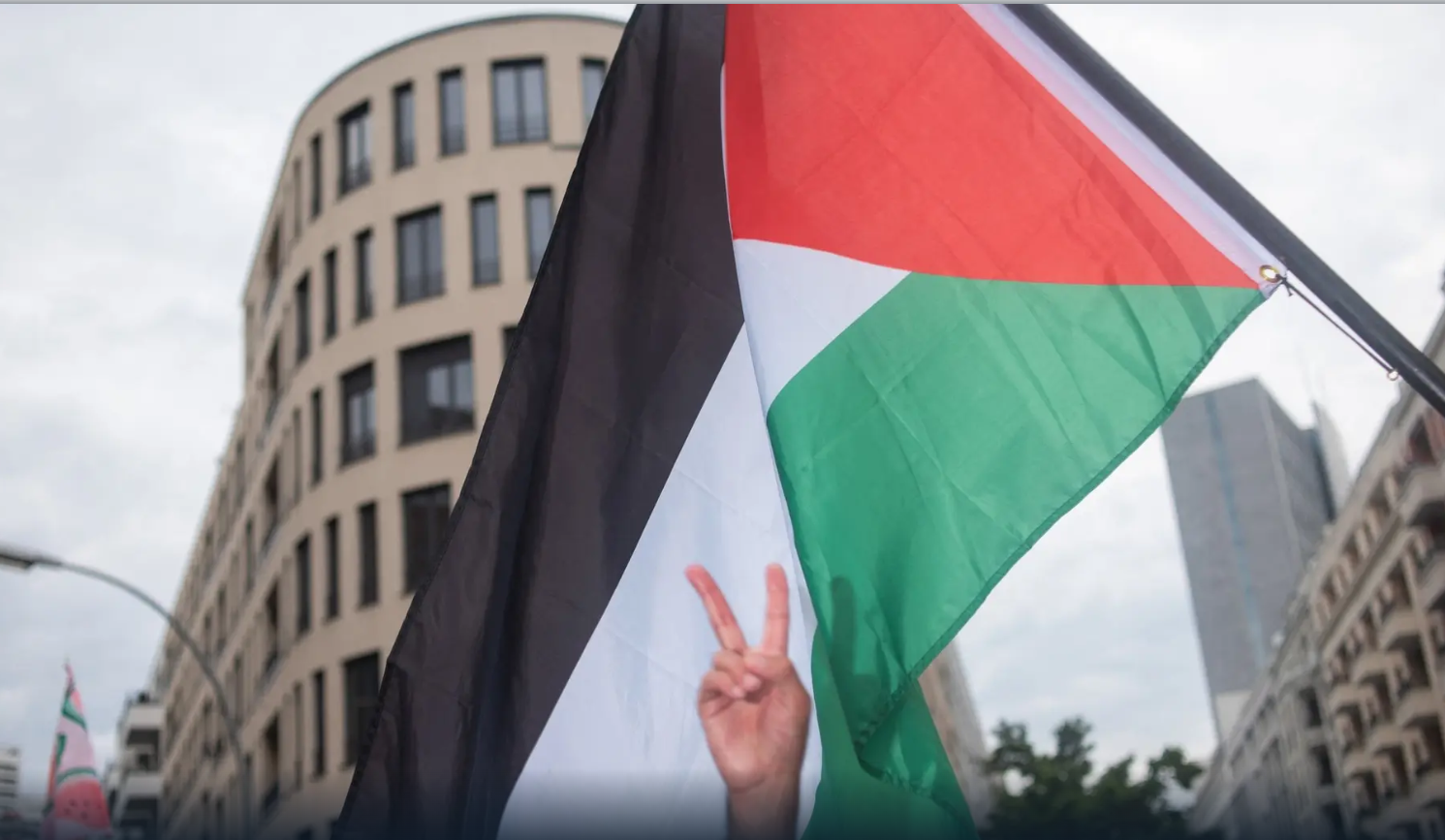
What contributed to the sharp interest of Western countries in the Palestinian issue
Recent weeks have seen a significant shift in Western policy toward the Palestinian issue. More and more states are recognizing Palestine as an independent state, which could have far-reaching consequences for international relations and the situation in the Middle East.
UN position
UN Secretary-General Antonio Guterres emphasized that the Palestinians’ right to their own state is unconditional. He warned that denial of this right would be a “gift to extremists” and would actually block the path to peace. Guterres emphasized that the two-state solution is the only realistic scenario for achieving lasting peace between Israelis and Palestinians.
His statement came just after the United Kingdom, Canada, and Australia officially recognized Palestine on September 21. The move was a demonstration of a departure from the previous line, when these countries gravitated toward the American position, which during the Donald Trump administration was sharply pro-Israel.
Western reaction
London, Ottawa, and Canberra explained their decision by the need to restore confidence in the peace process. British Prime Minister Keir Starmer said that the recognition of Palestine should revive hope for the implementation of the two-state solution. Canadian Prime Minister Mark Carney assured that he sees a future in which “both Palestine and Israel exist side by side.” His Australian counterpart, Anthony Albanese, also supported the creation of an independent and sovereign Palestinian state.
France, Belgium and Portugal joined this step. All of them emphasized that Israel’s policy in Gaza and the expansion of settlements in the West Bank undermine the prospect of peace.
“This is done for the sake of peace between the Israeli and Palestinian peoples,” said President Emmanuel Macron.
Context of the war in Gaza
However, the main reason for the recognition of the Palestinian state by Western countries was the military operation in Gaza, in particular the humanitarian catastrophe.
Since October 7, 2023, since Israel’s military operation, the death toll in the Gaza Strip has exceeded 60,000 people, most of them civilians. At the same time, the United Nations has recognized the facts of famine and food shortages in Gaza: most agricultural land is destroyed or impassable, food prices are extremely high, and access to water and medicine is severely limited.
These dire conditions, and especially the reports of starvation among children and infants, have caused a wide public outcry in Western Europe and other Western countries.
In protest, thousands of people have taken to the streets, organized demonstrations, and students have occupied university buildings, demanding immediate humanitarian aid, a ceasefire, and recognition of Palestinian rights. It is because of public pressure and international outrage that Western governments are reconsidering their positions and recognizing the Palestinian state as a means of responding to the crisis.
The recognition also took place against the backdrop of a new report by a UN commission, which qualified Israel’s actions in Gaza as genocide. The document claims that at least four of the five acts envisaged by the international definition of genocide took place during the latest escalation of the conflict with Hamas.
Israel’s reaction
Official Jerusalem reacted sharply. Prime Minister Benjamin Netanyahu called the decision of the Western powers “a gift to Hamas” and said that a Palestinian state “will never be established west of the Jordan River.” He promised to announce retaliatory steps after returning from the UN General Assembly in New York.
Israeli Minister of National Security Itamar Ben-Gvir called for the immediate annexation of the West Bank and the complete destruction of the Palestinian Authority.
He said that he would present a proposal for “expanding (Israeli – ed.) sovereignty” at the next government meeting.
Symbolism and political weight
According to experts, the recognition of Palestine is primarily symbolic, but it opens up new political and diplomatic opportunities. For example, in the UK, the Palestinian mission has so far functioned only as a “diplomatic mission.” Granting it embassy status will provide it with additional rights and privileges under the Vienna Conventions.
From a legal point of view, this step puts Palestine and Israel on the same level in relations with states that recognize both sides.
Recognizing Palestine as a state could provide stronger arguments for reaching a truce within the existing diplomatic, bureaucratic, and legal structures.
The situation in Palestine
Palestine consists of two territories – the West Bank and the Gaza Strip, which are separated by the territory of Israel. Within Palestine itself, there is a political division: in the West Bank, Fatah, headed by Mahmoud Abbas, holds power, while in Gaza, Hamas is in charge.
Mahmoud Abbas is recognized as the legitimate authority, and he is the President of the Palestinian Authority.
Also, due to Israel’s military occupation of the West Bank, the Palestinian Authority (PA), created after peace agreements in the 1990s, does not have full control over its territory or population.
Like the Gaza Strip, which is under complete siege by Israel, the PA is also constrained. The Authority issues Palestinian passports and runs the Palestinian health and education system.
However, some trade, investment, educational and cultural exchanges are restricted by Israel.
Palestine does not have its own airports. The landlocked West Bank is accessible only through Israel or the Israeli-controlled border with Jordan.
Who recognizes Palestine?
Today, Palestine is recognized by about three-quarters of UN member states, including most countries in Africa, Asia, and Latin America. Among them are China, India, and all Muslim countries.
Palestine has permanent observer status at the UN. Thanks to the recent decisions of Britain and France, it is now supported by four of the five permanent members of the Security Council – along with China and Russia, who took this step back in 1988. Only the United States remains a consistent opponent.
Algeria was the first country to recognize Palestine after its independence in 1988.
The Ukrainian context
Ukraine was also among those who supported Palestinian independence back in 1988, when it had its own seat in the UN as a union republic. After gaining independence, Kyiv maintained this position and developed bilateral relations.
The second president of Ukraine, Leonid Kuchma, visited the West Bank twice, met with Yasser Arafat, and initiated a political dialogue. Viktor Yushchenko also visited Ramallah and signed an agreement to open a Ukrainian mission.
Palestine, in turn, opened an embassy in Kyiv in the 1990s. At the same time, the Ukrainian government has repeatedly condemned the construction of Israeli settlements, and Palestinian leaders have supported Ukraine’s territorial integrity since 2014.
Since the outbreak of a full-scale war in 2022, official Ramallah has avoided publicly condemning Russia. Despite this, Kyiv has not changed its position and continues to insist on the need to implement the two-state solution as the only possible formula for peace.
In June, during a meeting with Palestinian Ambassador to Ukraine Hashem Hassan Dajani, Ukraine’s Special Representative for the Middle East and Africa, Maksym Subkh, confirmed Kyiv’s unwavering course and expressed hope for more active support for Ukraine from its Palestinian partners.
Author: Asif Aliyev