From Clinton to Trump: how relations between Ukraine and the US have changed over 30 years
26 December 2025 14:54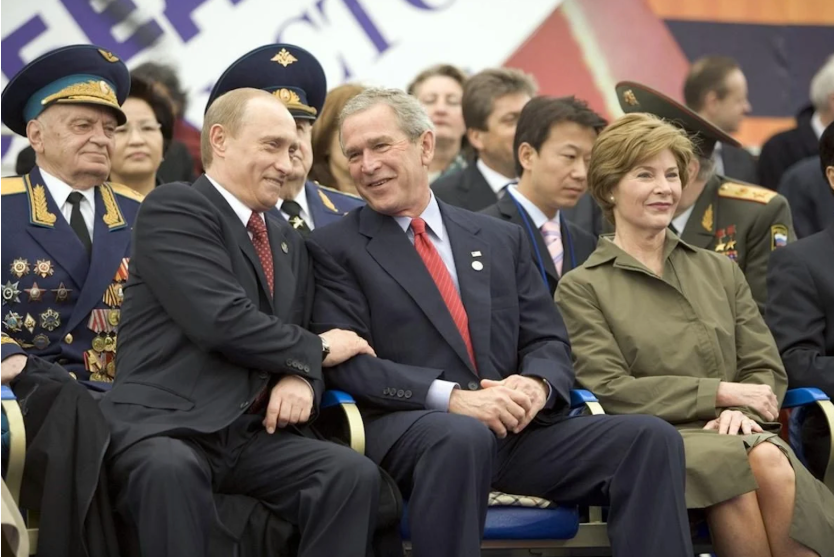 ANALYSIS
From nuclear disarmament to full-scale war, from hopes for security guarantees to the struggle for survival, Ukraine’s relationship with the United States has been a key factor in its place in world politics over the past three decades.
Each American president – from Bill Clinton to Donald Trump – has shaped his or her own vision of Ukraine: as an element of global stability, a partner, an outpost of democracy, or a complex geopolitical dilemma.
Declassified documents, policy decisions, and public statements allow us to see not only the evolution of Washington’s position, but also systemic mistakes, missed opportunities, and moments when history could have taken a different path.
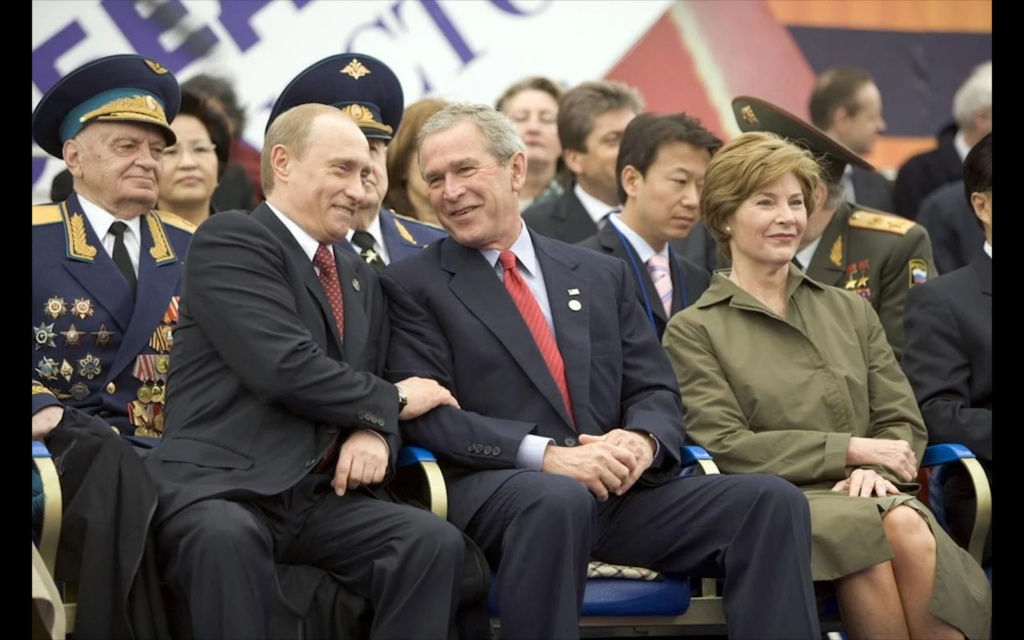
Russian leader Vladimir Putin in the early 2000s allowed for the possibility of Russia joining NATO, while simultaneously stating that Ukraine’s membership in the Alliance could lead to conflict between Russia and the United States. This is evidenced by transcripts of Putin’s meetings and telephone conversations with the 43rd President of the United States, George W. Bush Jr. released by the U.S. National Security Archive. The documents cover the period 2001-2008.
During their first face-to-face meeting in June 2001 in Slovenia, Putin told Bush that Russian society allegedly felt “cheated” after the collapse of the Soviet Union.
“People in Russia feel cheated by the sweeping changes that brought more freedom, which they cannot enjoy. Not only the poor, but also the elite are feeling disillusioned. What really happened? Soviet goodwill changed the world voluntarily. And the Russians voluntarily gave up thousands of square kilometers of territory, which was unheard of. Ukraine, which had been part of Russia for centuries, was given away. Kazakhstan was given away. The Caucasus too. It’s hard to imagine, and the party bosses did it,” Putin said.
These words once again demonstrate that even at the beginning of his presidency Putin publicly voiced a revisionist vision of history, questioning the sovereignty of post-Soviet states, particularly Ukraine.
At the same time, it was Ukraine’s NATO membership, he said, that may have been a factor in the direct conflict between Russia and the United States – a position that later evolved into the Kremlin’s open aggression against Ukraine.
Nuclear disarmament, pressure and the Budapest Memorandum: what were the relations between Ukraine and the United States under Bill Clinton?
The period of Bill Clinton’s presidency (1993-2001) was one of the key periods for the formation of Ukrainian statehood and security system in Eastern Europe. It was in the 1990s that Ukraine found itself at the center of global geopolitics as the state that inherited the third largest nuclear arsenal in the world after the collapse of the Soviet Union.
At the same time, a new post-Cold War security architecture was taking shape, and the United States set a strategic priority for itself – to prevent the proliferation of nuclear weapons. In this context, the relationship between Kiev and Washington was strategically important but asymmetrical: the United States had a much stronger negotiating position.
Bill Clinton publicly recognized Ukraine’s independence and sovereignty, calling it an important component of European and world security. In his statements, he repeatedly emphasized that:
- Ukraine must be an independent, stable and democratic state;
- ukraine’s security is directly linked to the security of all of Europe;
- The United States supports Ukraine’s territorial integrity.
At the same time, in practical politics Ukraine was often viewed not as an equal partner, but as an element of a broader geopolitical formula:
nuclear disarmament → stability → Western partnership with Russia.
In 1994, with active US participation, the Budapest Memorandum was signed, under which the US, UK and Russia reaffirmed Ukraine’s sovereignty and territorial integrity and pledged to refrain from the use of force or economic pressure.
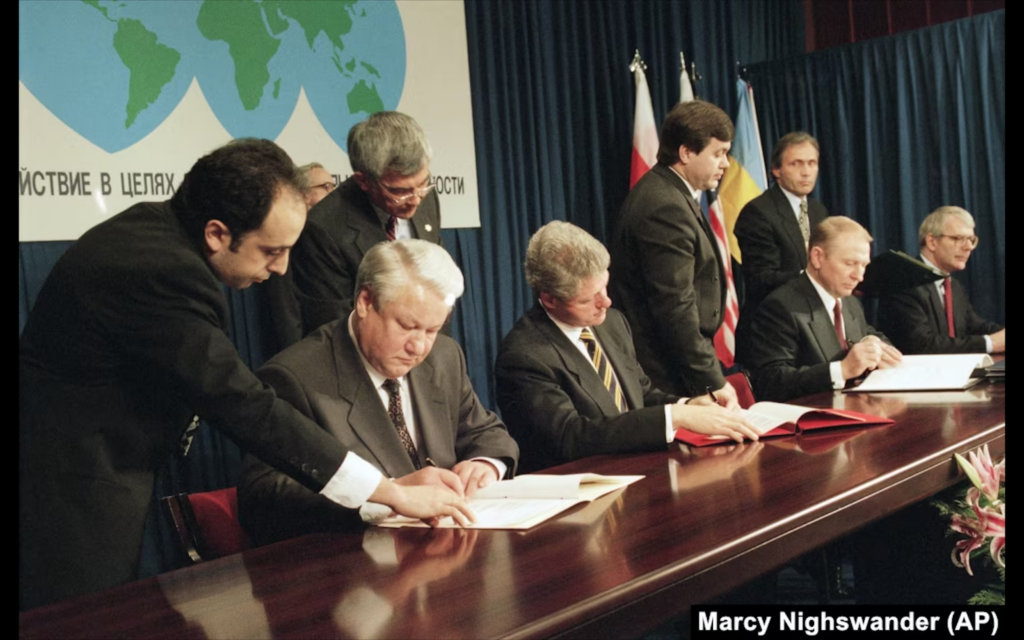
Ukraine gave up nuclear weapons inherited from the USSR in the 1990s and pledged to become a nuclear-free state in exchange for security guarantees.
After 2014, Bill Clinton publicly recognized that Russia had violated all of its commitments and Ukraine was in an extremely vulnerable position. In an interview with Irish television channel RTÉ, he said.
“I feel personally involved because I got them [Ukraine] to agree to give up nuclear weapons. And none of them believe that Russia would have gone along with that if Ukraine still had its weapons” – Bill Clinton
Who is George W. Bush to Ukraine?
George Bush Jr. led the United States from 2001-2009 – before the annexation of Crimea and the war against Ukraine, so there was no direct Russian-Ukrainian conflict in the modern sense then. At the same time, this was the period of active strengthening of Ukrainian independence in the post-war world.
The George W. Bush Presidential Center notes that Bush has consistently advocated for Ukraine’s freedom and opposition to authoritarian pressure from the Kremlin.
“The American government and people must stand in solidarity with Ukraine and the Ukrainian people who seek freedom and the right to choose their own future. We cannot tolerate the authoritarian pressure and threat posed by Putin. Ukraine is our friend and democratic ally and deserves our full support in these difficult times,” George W. Bush declared.
One of the key points was Bush’s position on NATO expansion. At the 2008 Bucharest summit, he openly supported granting Ukraine a Membership Action Plan (MAP). However, due to opposition from individual Alliance countries, this decision was never made – the compromise language merely promised that Ukraine would “someday become a NATO member,” with no clear timeline or guarantees.
Transcripts of meetings and telephone conversations between Russian President Vladimir Putin and the 43rd President of the United States George W. Bush Jr. made public by the National Security Archive of the United States show that the American side was clearly aware of the Kremlin’s outlook and intentions, particularly regarding Ukraine and NATO expansion, as early as the early 2000s.
The content of these documents is not a surprise for the Ukrainian political leadership, as Putin made similar statements back in the early 2000s. This was stated by the chairman of the NGO “Ukraine in NATO” Yuriy Romaniuk
“These words of Putin about Ukraine – that it is allegedly a “fictitious country” – were passed on back in the days of Kuchma, then Yushchenko, Poroshenko, the top political leadership of the state. Ukrainian presidents and prime ministers were aware of these statements, as was George W. Bush’s reaction. It was repeatedly discussed in the political press,” Romanyuk said.
Moreover, Putin made it clear back then that he considered not only Ukraine, but also the Caucasus, Kazakhstan and other former republics of the Soviet Union to be part of Russia. This is an attempt to restore the spheres of influence of the USSR, Romaniuk explained .
“These documents once again prove that the war against Ukraine was planned long before it began, and the denial of Ukrainian sovereignty is the foundation of the Putin regime’s ideology,” Romaniuk summarized.
Obama and Ukraine: sanctions, deterrence and a contradictory explanation for the annexation of Crimea
The period of Barack Obama’s presidency (2009-2017) was one of the most complicated in the relations between Ukraine and the United States. It was during his second cadence that the annexation of Crimea and the beginning of the war in Donbass took place in 2014.
These events forced Washington to form a new policy of containment of Russia, which subsequently became the basis of Western support for Ukraine in the following years.
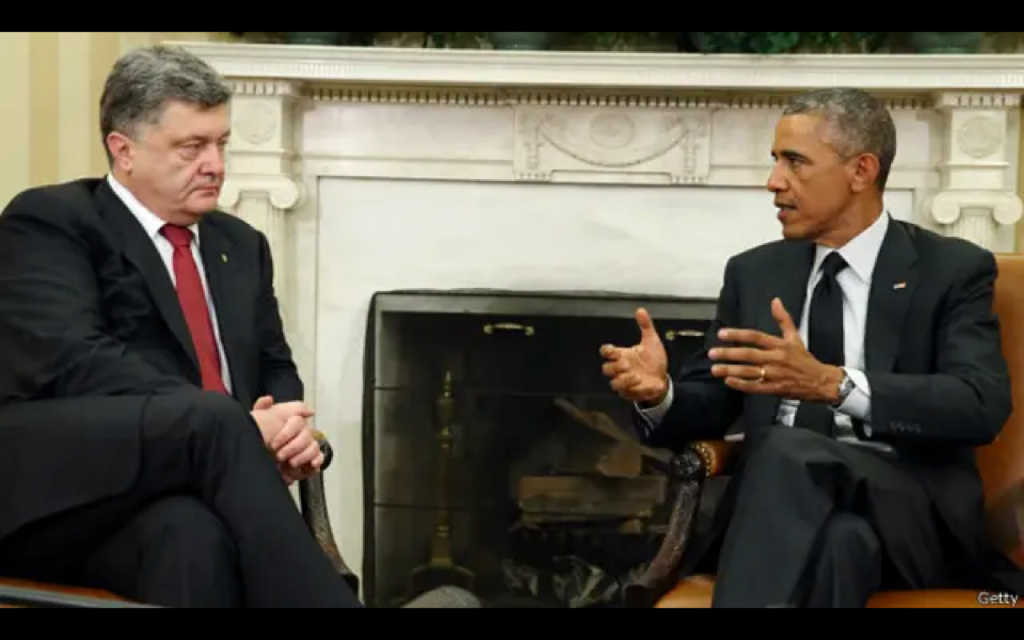
Thus, after Russia seized Crimea, the US under Obama’s leadership took a number of steps that at the time became unprecedented in relations with Moscow. Barack Obama signed the Ukraine Freedom Support Act, which created a legal basis for sanctions against Russia and assistance to Ukraine.
The U.S. and its allies imposed sanctions against the Russian government, financial sector and elites close to the Kremlin. Washington began to strengthen the U.S. and NATO military presence in Europe under the European Deterrence Initiative to deter further Russian aggression.
The Obama administration supported democratic, economic and anti-corruption reforms in Ukraine. However, Barack Obama made a statement after the end of his presidential term, which caused a significant resonance in Ukraine.
In an interview with CNN, he explained why in 2014 the US and allies did not resort to military intervention during the annexation of Crimea.
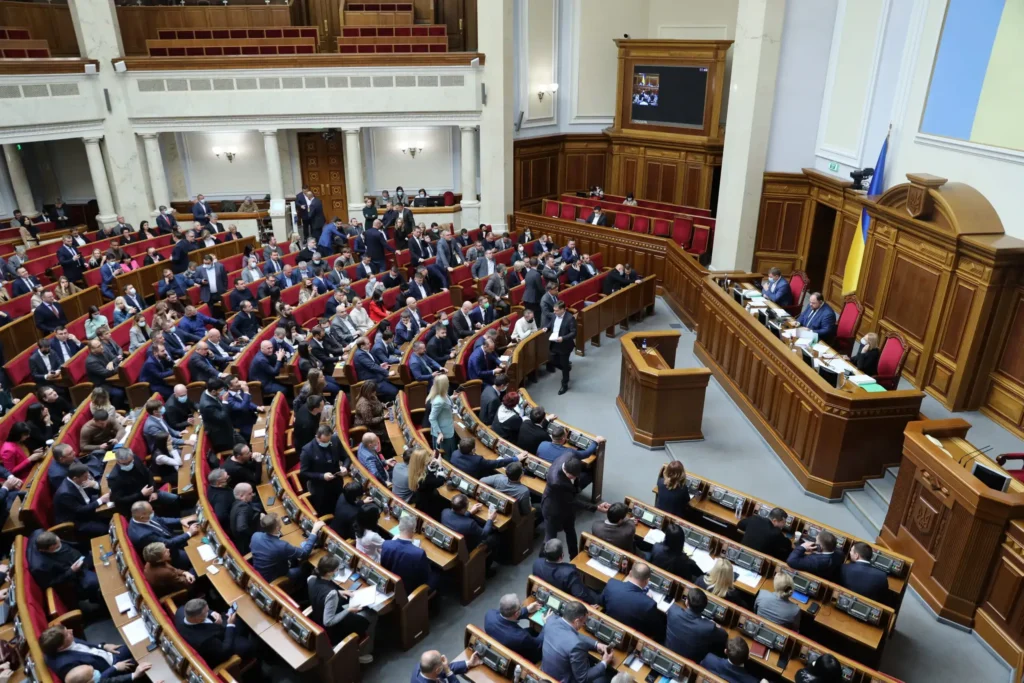
“There’s a reason why there was no armed intervention in Crimea. Because there were many Russian-speaking people in Crimea, and there was a certain sympathy there for the views that Russia represented. Even in the Verkhovna Rada at that time there were sympathizers of Russia. The politics in Ukraine were more complicated,” Obama said.
According to him, Ukraine in 2014 “was not the Ukraine we are talking about today,” and the internal political situation and public sentiment differed significantly from today.
The presence of pro-Russian sentiments among part of the population cannot be a justification for violation of international law, annexation of territory and use of military force.
Politicized aid: what was Trump’s policy towards Ukraine in 2017-2021
In 2019, relations between Ukraine and the United States were at the center of a high-profile international scandal related to then US President Donald Trump.
Trump linked the provision of around $400 million in military aid to Ukraine to political demands – particularly investigations against his opponent Joe Biden.
After the whistleblower’s revelation, this prompted accusations of abuse of power and an attempt to involve a foreign state in US domestic politics.
on September 24, 2019, impeachment proceedings began against Trump, but the Senate acquitted him on February 5, 2020. The scandal became one of the most high-profile in Trump’s presidency and negatively affected US-Ukraine relations.
Biden and full-scale war
Under the presidency of Joe Biden (2021-2025), the Russian invasion of Ukraine on February 24, 2022, radically changed US foreign policy toward Kiev. Once full-scale war broke out, Washington became one of Ukraine’s most powerful allies, coordinating international support and aid shipments.
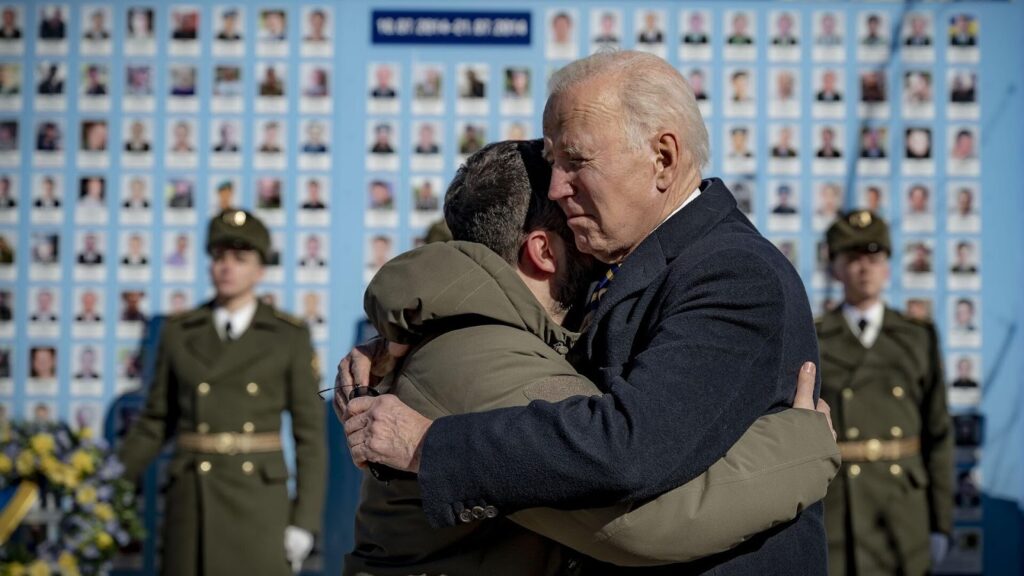
Biden strongly condemned Russia’s full-scale invasion, calling it unprovoked and criminal. He has initiated and approved significant military, financial, and humanitarian aid packages to Ukraine – tens of billions of dollars in arms, equipment, supplies, and support.
With his support, the U.S. Congress passed record multiple aid packages totaling more than $100 billion.
In a joint press conference with Ukrainian President Volodymyr Zelensky, Biden expressed the key U.S. position on the war.
“…when Ukraine’s freedom was threatened, the American people – like generations of Americans before us – did not waver. You did not stand alone … and you will never stand alone,” – Joe Biden
Trump’s second term: from criticism to support
Donald Trump’s return to the White House for a second presidential term is accompanied by controversial rhetoric regarding Russia’s war against Ukraine and the role of President Vladimir Zelensky. The American leader’s statements range from harsh criticism to cautious signals of willingness to support Ukraine as part of a peace settlement.
One of the most resonant was Trump’s statement in which he publicly attacked the Ukrainian president:
“Zelensky is a dictator without an election. He better act fast or he won’t have a country left at all,” Trump said
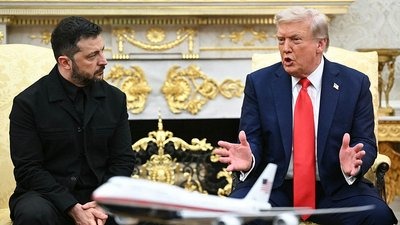
In other statements, however, Donald Trump showed a more conciliatory stance, emphasizing his desire to stop the war and preserve Ukraine as a state:
“I want Ukraine to survive. We are close to a real solution that can end this war,” Trump said
In these speeches, Trump emphasizes that his goal is not to abandon Ukraine, but to achieve peace through negotiations, even if it means changing approaches from the previous administration.
Moreover, Trump has even allowed the transfer of Tomahawk missiles to Ukraine. And Republican Senator Lindsey Graham called on the US president to hand over Tomahawk cruise missiles to Ukraine in case Russia rejects the peace plan to increase pressure on Vladimir Putin. Volodymyr Fesenko, a political scientist, in an exclusive commentary
“Lindsey Graham is voicing his own political position. The current US administration has different approaches to Russia. For example, Steve Whitkoff is in favor of establishing contacts with Moscow and is ready to negotiate with Putin even if the war is not completed soon. Lindsey Graham takes an extremely tough stance on Russia,” Fesenko noted.
Let me remind you that since the beginning of his second term, Donald Trump has revised the policy of support for Ukraine: he signed a defense budget, which provides for less funding for Ukraine in fiscal years until 2026, while leaving separate support programs through NATO mechanisms.
The history of Ukraine-U.S. relations is a history of support without definitive guarantees, the right words without timely decisions, and a strategic partnership that has not always matched the scale of threats. Today, as the war continues and world security is once again under threat, this experience has not only historical but also practical significance. It shows: half-hearted decisions on Ukraine eventually become a problem for the entire West.