How fiber optic drones are changing the course of war: benefits and challenges
27 January 2025 14:37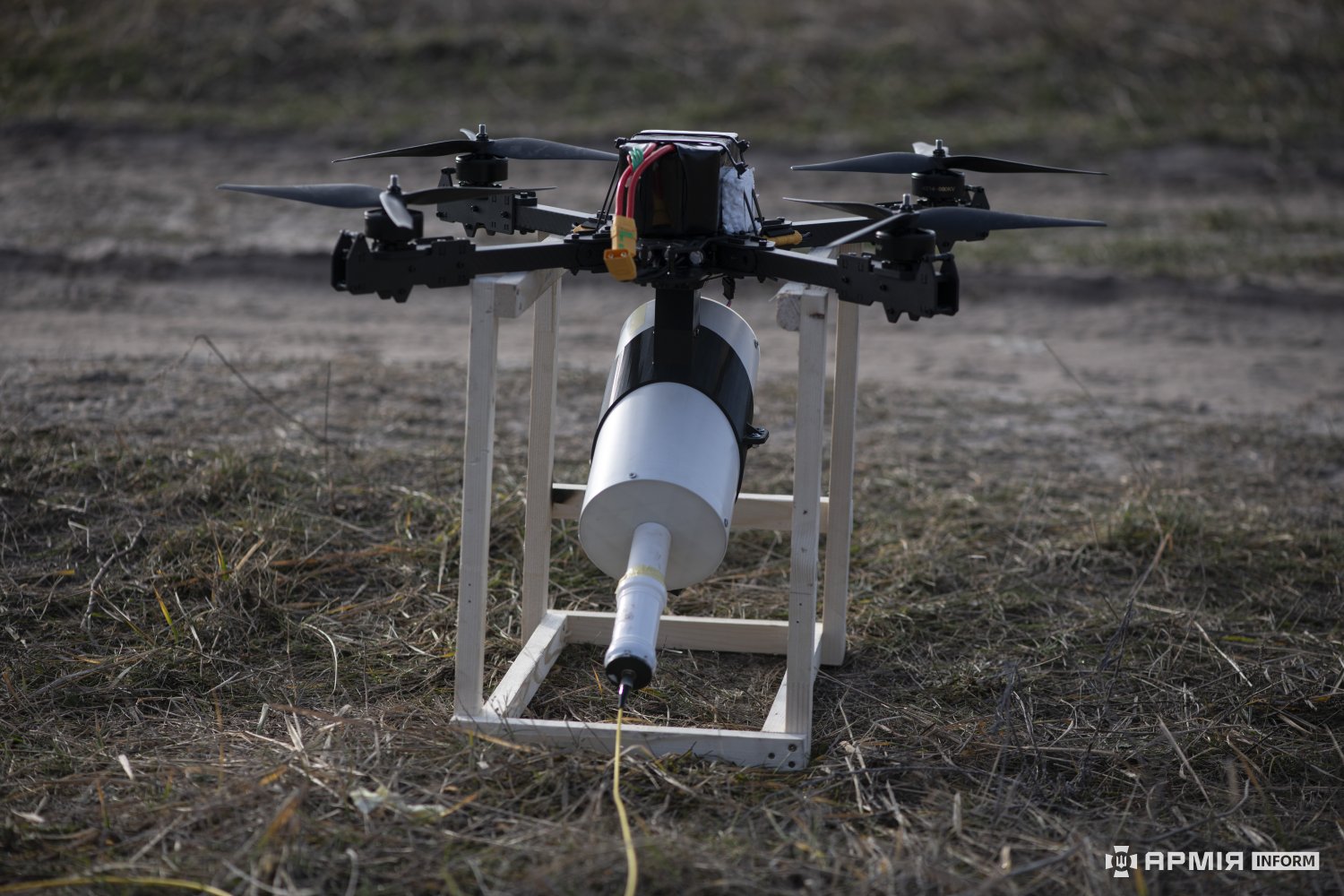
Drones on fiber-optic cables have become a new and important element at the front. The main reason for their popularity is the inability to jam the signal with electronic warfare (EW) systems. There are a lot of such systems on the front line, and sometimes they cause problems when they jam not only enemy equipment but also their own. It is very difficult to break a fiber optic cable manually, but when it is kinked and hits obstacles, it can lead to a breakdown in communication.
Ukraine did not start actively using fiber optics for drones because of good circumstances. Currently, Russia is 3-4 months ahead of us in this area, and even if we manage to catch up with them in production, we will still be behind.

At the same time, Ukrainian military engineers are working on a solution that could effectively counter enemy drones on fiber-optic communication channels. However, they are not finding such a solution quickly. The main vulnerability of fiber optics is its fragile structure, which is especially evident in combat conditions. Another potential weakness is the piloting of such drones. The pilot must take into account existing obstacles, turns, navigate the terrain, and be able to work with the camera to safely control the drone. Therefore, before the flight, he needs to study the territory well and know its landmarks.
Fiber optic drones on the battlefield
Alexey Zhulinsky, founder and CEO of 3DTech, a company specializing in the production of fiber-optic drones, in an exclusive commentary to Kommersant Ukrainian
“Fiber-optic drones have become a new stage in the technological confrontation with the aggressor country, which we have been witnessing since the beginning of the full-scale war. We are constantly facing new challenges. When the enemy tried to counter our radio-controlled FPV drones with electronic warfare, we developed new firmware for non-standard frequencies and added antennas with frequency adjustment. Today, when the frontline is saturated with electronic warfare systems, fiber optic drones have become a solution that is difficult to resist,”
– Zhulynskyi explains.

Unlike traditional radio-controlled drones, whose signal can be jammed by electronic warfare, fiber optic drones use fiber to transmit signals, making them less vulnerable to external interference.
“One of the main advantages of fiber-optic drones is that their signal cannot be suppressed by electronic warfare, which gives them an advantage in modern warfare,”
– says the founder of 3DTech.
However, fiber optic drones have their limitations. For example, the cable itself, which transmits the signal, can be damaged during unwinding or in strong winds. In addition, these drones are less fast compared to radio-controlled drones, but they can fly at low altitudes, which makes them much more difficult to detect and neutralize.
Читайте нас у Telegram: головні новини коротко
Prospects for the use of fiber optic drones in 2025
Zhulynskyi believes that 2025 will be a milestone year for the active introduction of fiber optic drones in Ukraine. But for this technology to truly change the course of the war, it is necessary to significantly increase their production and achieve their massive adoption in the army.
“We are actively working on improving our drones – increasing the flight range, improving the payload, improving the cable unwinding system to reduce the number of breakdowns. However, to change the picture of warfare, we need to integrate them into the military on a massive scale. And we see that Russia is already actively using fiber optic drones, but Ukraine is finding fundamentally new ways to improve this technology,”
– he says.

One of the key aspects of 3DTech’s work is maximizing the localization of production. This helps to significantly reduce dependence on imported components and reduce production costs:
“We manufacture fiber optic spools at our own facilities, which not only improves quality but also makes production more affordable,”
– adds Oleksiy Zhulynskyi.
According to him, the introduction of fiber-optic drones in Ukraine is an important step in the development of security technologies that can change the course of war. Their potential is significant, and as early as 2025 we may see their active use at the front, which will allow Ukraine to reduce its vulnerability to external threats and significantly increase the effectiveness of the fight against the aggressor. However, as Oleksiy Zhulynsky notes, constant innovation and production scaling are required for these drones to become the main tool on the battlefield.
“The massive introduction of fiber optic drones, improvement of their technical characteristics and cheaper production are the steps that can influence the outcome of the war. However, this requires further work on improving and rapidly introducing technologies into military structures,” he concludes,
– he concludes.
What do the military say?
Ukrainian Armed Forces soldier Yevhen Ievlev in a conversation with
“Previously, up to 200 soldiers were needed to conduct offensive operations on a one-kilometer-square area, but now 60 soldiers are enough. Due to the lack of infantry, we need to use other methods, such as drones,”
– he noted.
The direct consequence of EW resistance is increased accuracy in drone control, the military said:
“Fiber-optic drones allow you to choose the exact moment to hit a target, which gives you an advantage in strategic operations where high accuracy and minimal losses are required.”
With such technological advances, the importance of drones in warfare will only grow, and the ability to control this aspect of combat will largely determine the outcome of the conflict in the coming years, Ievlev believes.

Ukrainian Defense Forces officer Yevhen “Tykhyi” also shared his vision of using FPV drones with fiber optics. According to him, this technology has both advantages and disadvantages.
“It has its advantages and disadvantages. The disadvantages, of course, are in maneuvering and distance,”
– he said in a conversation with journalists
According to him, such drones require less professionalism, but at the same time, operators still need to have deeper knowledge to effectively control them.
He also emphasized that the tactics of using such drones are somewhat different from the usual ones. And one of the most important aspects is operator safety.
“You don’t maneuver so much anymore, and you can’t fly everywhere. Operators also need to sit closer. Closer positions to the front line are logical,”
– he added.
However, despite these limitations, the officer believes that FPV drones with fiber optics are very effective at certain distances and in certain conditions.
Thus, the future of fiber optic drones looks promising. Ukrainian military engineers are already working to improve and localize production. In order for this technology to really change the course of the war, mass adoption and further improvement of drone performance is required. In 2025, we can expect a significant expansion of this technology at the frontline, which will reduce vulnerability to external threats and increase the effectiveness of combat operations.
Читайте нас у Telegram: головні новини коротко