Euro breaks records – July 9 will reveal the consequences of the rapid rise in price
1 July 2025 11:41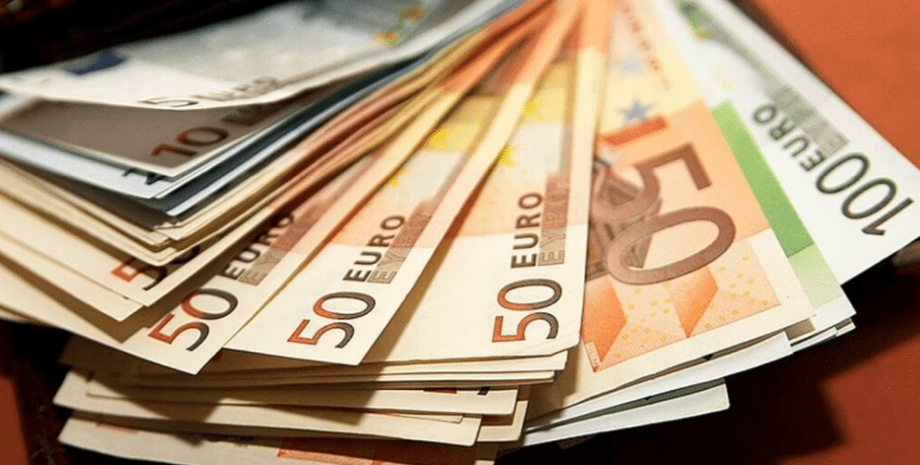
“The European currency has updated its historical high.” Ukrainians have become accustomed to such messages. Today, the official hryvnia to euro exchange rate is fixed at 48.9856 UAH/euro, which is another record. Why the euro is steadily rising in value and how it relates to the dollar was investigated by
June was particularly generous with euro records. The euro has achieved four record-breaking achievements in a month. But the rapid exchange rate growth began in the spring. And it was not without the influence of the dollar, explained
“Today, the euro to hryvnia exchange rate is formed exclusively through the global euro to dollar exchange rate and the hryvnia to dollar cross rate. Today, the National Bank does not carry out currency interventions in euros. It manages the market and intervenes exclusively in dollars. Thus, the National Bank recalculates the value of the euro exclusively through the current exchange rate against the dollar,” the expert notes.
Who is pushing the euro up
“Trump” is the best way to answer the question of who the euro may owe its growth to. In two words, the root cause is Trump’s policy. Financial analyst Andriy Shevchyshyn continues to explain.
“The exchange rate started to rise because what Trump started to do scared the markets, scared investors. And they began to withdraw their funds from the US market. And we can see what has been growing during this period: the value of gold, the value of cryptocurrencies, the euro. The capital went to safer havens. If the dollar used to be such a safe haven, the euro has become a more stable, more predictable currency. Most of the capital that was circulating in the US financial markets was European money, and it went from there to Europe. Accordingly, the euro has risen by 12.5% in global markets since the beginning of the year,” the analyst said.
The dollar began to lose ground against the euro, as the world saw that the European Union, as a political force, looks more integrated and predictable than the United States. This is also emphasized by Professor and Rector of the International Institute of Business Oleksandr Savchenko. He also draws attention to another feature of the situation.
“In my opinion, there is a combination of two factors. The political factor should have been in Trump’s favor, because traditionally, during wars, cataclysms, and various global crises, the dollar has always grown and won. But here, given that the business community does not expect Trump to act rationally, the economic trend has been interrupted by, let’s say, the political one. This is quite surprising, but it really happened,” the expert emphasizes.
Apparently, the cumulative effect of what is happening in the United States under the current presidency of Donald Trump is working. Andriy Shevchyshyn reminds us that the United States has a very large debt, which the United States does not yet know how to handle. And this, of course, does not contribute to investor confidence. And many people are also “tense” about Donald Trump’s pressure on the Federal Reserve Board, i.e. the US Central Bank, to lower the key interest rate. Andriy Shevchyshyn continues.
“Trump will push through this decision. That is, a disproportion will be formed, in which the dollar will weaken. In general, a low dollar in the US protectionist policy is very beneficial for the Americans to expand. That is, a cheap dollar is now beneficial for the United States to compete with everyone in the world,” the expert explains.
What will the Eurocourse look like next?
July 9 should become a time and event benchmark in understanding the future prospects for the euro exchange rate, says financial analyst Andriy Shevchyshyn.
As a reminder, U.S. President Donald Trump threatened to impose 50 percent tariffs on imports from the EU on June 1, but in late May agreed to postpone his decision and continue trade talks until July 9. It is not known what the outcome of the talks will be.
“When it becomes clear what kind of duties will be imposed, if any, and how Europe will react to them, it may slightly correct the euro for a while, but then the European currency will continue to grow again,” says Shevchyshyn.
According to him, this is despite the fact that Europe does not need such a strong euro.
“The devaluation of the dollar against the euro is doing its job: a 12.5% rise in the euro is actually a 12.5% duty on European goods in the United States. This really hits Europe. This creates a negative backdrop for the future, because Europe is also export-oriented, and its industry is export-oriented. At the same time, investments in Europe will grow very actively now, as Europeans are investing in their own military and defense companies. And the budgets that are being formed, including defense budgets, will support the euro,” the expert states.
Therefore, according to him, the nearest target that the euro will try to reach is 1.2 dollars per 1 euro, but it is possible that the rate may go further and reach 1.25.
Ukraine also has its own interest in this currency race
The rise in the euro may affect the actions of the NBU. Financial analyst Andriy Shemchyshyn continues.
“The euro is growing so rapidly that the National Bank may be forced to restrain the dollar, because our revenues, our export and import operations go through Europe in one way or another. And all revaluations of foreign currency budget revenues in terms of hryvnia can be tied to a dual-currency basket. 50% are euros, 50% are dollars. So, the dollar can be restrained, kept low while the euro is high. And thanks to this, the customs payments we receive, the excise taxes that are tied to the euro – all this will be recalculated and budget revenues will grow thanks to the euro exchange rate,” the financial analyst explains.
Oleksandr Savchenko, professor and rector of the International Institute of Business, is more cautious about Ukraine’s benefits.
“Look, commodities are bought for dollars. I mean agricultural products, oil, gas, fuel for nuclear power plants. This is on the one hand. On the other hand, we buy machinery and equipment from Europe. As for me, there is still a balance. There are pros and cons,” the expert says.
Should Ukrainians change their currency preferences?
Andriy Shemchyshyn, a financial analyst, believes that the reorientation of ordinary Ukrainians to the euro is natural.
“Ukrainian refugees live in Europe and use European services, and Ukrainians have started to travel more to Europe. So the transition to the euro will be very smooth, I think. And one way or another, it is the growth of the exchange rate that will encourage Ukrainians to focus on the euro. Since the National Bank holds the dollar, Ukrainians will buy euros. And as long as there are forecasts that the exchange rate may reach 50 or 52 hryvnia per euro, this will encourage Ukrainians to buy. However, I recommend keeping a dual-currency basket: both dollars and euros. And it can be 50/50. And the hryvnia should not be forgotten,” the expert notes and reminds that “money should work.”
Oleksandr Savchenko, professor and rector of the International Institute of Business, agrees with this. He reminds us that “this is not the first time that the dollar has fallen by about 10% against other currencies and then recovered.” Moreover, dollar investments bring higher returns.
“Banks pay almost nothing in euros, and you can get up to 2 percent of income in dollars. That is, this interest for the year can interrupt the devaluation of the dollar against the euro,” the expert notes.
In general, in his opinion, the hryvnia is the most profitable currency now. It is stable against the dollar and can generate up to 15% of income.
So, against the backdrop of the unstable euro-dollar exchange rate, the advice for Ukrainians sounds traditional: it is now profitable to place deposits in hryvnia and buy military bonds.
Author: Sergiy Vasilevich