The euro and dollar are hitting record highs: how to protect your savings – advice from an economist
9 January 14:53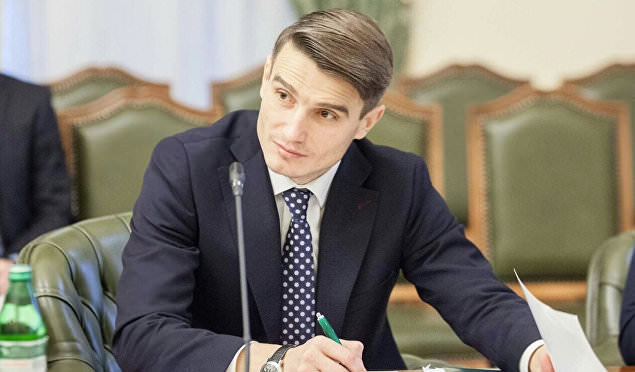
The hryvnia exchange rate came under significant pressure at the beginning of the year: the euro officially crossed the psychological mark of 50 hryvnia for the first time, reaching 50.50 UAH, while the dollar approached its historic highs. The growth of both currencies is happening simultaneously and is raising more and more questions among businesses and citizens: what is behind this movement, is it a temporary phenomenon, and what to expect in 2026.
Komersant spoke with economist and member of the National Bank of Ukraine Council Vasyl Furman about the reasons for currency fluctuations, the role of seasonal factors, the policy of the National Bank, the impact of international aid, and the prospects for the euro and the dollar.
The euro has crossed the 50 hryvnia mark and is now worth 50.50. Why is this happening, and will the euro weaken in 2026?
The euro exchange rate in Ukraine is derived from two factors: the global euro-dollar exchange rate and the hryvnia-dollar exchange rate. In recent months, we have seen both factors at work simultaneously — the euro has strengthened significantly on global markets, while the hryvnia has weakened seasonally.
As for 2026, the further dynamics of the euro will depend on the monetary policy of the ECB and the Fed, the pace of economic growth in the EU and the US, and geopolitical risks. The baseline scenario is high volatility, but without a sustained unilateral trend. In other words, periods of euro correction are possible, as well as its further fluctuation near current levels. I recently analyzed the currency swings of the euro and the dollar (when one currency weakens or strengthens relative to the other) over the past 10 years and can say that there have been many.
To what extent are seasonal factors currently influencing exchange rates?
Seasonal factors have a significant but not decisive influence. At the beginning of the year, demand for currency traditionally increases due to:
- energy imports during the winter period;
- significant budget expenditures at the end of the year;
- holiday payments and bonuses to the population;
- the start of the new financial and calendar year.
In the second half of the year, however, the situation often changes: agricultural exports, foreign exchange earnings, and a decrease in seasonal imports support the hryvnia. That is why seasonality is not a sign of long-term devaluation.
In general, seasonal factors only affect short-term exchange rate fluctuations, while the long-term trend is determined by the structural currency deficit.
Is the NBU considering adjusting the discount rate or other instruments to stabilize the exchange rate?
The National Bank does not target a specific exchange rate level. The discount rate is used primarily to achieve price stability, rather than to directly influence the exchange rate.
At the same time, monetary policy, in particular the interest rate and liquidity operations, indirectly affect the currency market through inflation expectations, the attractiveness of hryvnia instruments, and the behavior of market participants. Currency interventions within the managed flexibility regime remain the main instrument for smoothing exchange rate fluctuations.
How critically do delays in international aid affect the exchange rate?
International financial assistance is a key factor in macrofinancial stability in wartime. Delays can temporarily increase pressure on the currency market, reserves, and expectations.
At the same time, it is important to emphasize that this is not about Ukraine’s inability to function, but about increased volatility. With predictable and agreed financing schedules, these risks are significantly reduced.
If we are talking about 2026, then these risks are, in my opinion, minimal.
In general, international assistance is crucial in the medium and long term, but in the short term, the NBU has sufficient international reserves to maintain control over the currency market.
How is the current budget deficit affecting the currency market?
The budget deficit, which is covered by international aid, creates a specific transmission: currency is converted into hryvnia to finance expenditures, and part of this hryvnia is subsequently returned to the currency market through imports.
That is why the NBU is forced to conduct currency interventions to neutralize exchange rate pressure. This is a controlled process that currently does not pose a threat to financial stability. In 2025, we sold about $36 billion from our gold and foreign exchange reserves to support the Ukrainian hryvnia exchange rate, while the NBU’s gold and foreign exchange reserves as of January 1, 2026, amounted to more than $57 billion, which is a historic high and an increase of more than 30% compared to the beginning of 2025.
What is the reason for the gap between the cash and non-cash exchange rates?
The gap between the cash and non-cash exchange rates is currently less than 1%.
Demand for cash is driven by individuals and the shadow economy.
How big is the impact of the exchange rate on prices in Ukraine right now?
The exchange rate effect is limited and delayed. The fastest to react are:
- imported energy resources;
- fuel;
- some imported food products and equipment.
At the same time, a significant part of the consumer basket is formed by domestic production, which restrains the overall inflationary effect.
In general, the exchange rate affects inflation through the carry-over effect, with the latest pre-war estimates at around 0.22 or 22%. That is, 1 hryvnia of devaluation means a 22 kopecks increase in prices, but this effect is not linear and increases significantly in conditions of rapid devaluation. In conditions of war and a de facto reduction in the economy’s ability to self-balance, pre-war estimates of the carry-over effect are not relevant.
How does the exchange rate affect inflation, and can it be predicted for 3–6 months?
The exchange rate is an important factor in inflation, but not the only one. The transfer of the exchange rate to prices in Ukraine is partial and gradual.
Over a 3-6 month horizon, the baseline scenario is moderate inflation without sharp accelerations, provided there are no new shocks from the energy or financing sectors. The National Bank of Ukraine forecasts that inflation will be around 7% at the end of 2026.
Overall, the 3-6 month forecast is fairly accurate, as the basis for comparison and short-term factors affecting prices are known.
What recommendations do you have for Ukrainians regarding savings?
The NBU does not provide investment advice. At the same time, from a macroeconomic point of view, diversification of savings remains a rational strategy.
It is important that hryvnia instruments — deposits and government bonds — remain attractive, as confirmed by the growth in household investments in 2025.
Over the past year, household investments in term hryvnia deposits grew by almost 20%, and in hryvnia government bonds — by 67%. Net household demand for foreign currency was almost half that of the previous year.
This indicates growing confidence in the hryvnia and the National Bank’s policy, even in the context of full-scale war. And I believe this will continue in 2026.
Are there any signs of speculative exchange rate fluctuations?
Currently, there are no systemic signs of speculative attacks. The fluctuations are market-driven and can be explained by fundamental and seasonal factors.
The NBU is closely monitoring the situation and has the tools to respond.
How resilient is the banking sector to the weakening of the hryvnia?
The banking system is capitalized, liquid, and profitable.
Currency risks are limited, and stress tests show that banks are able to operate even in less favorable scenarios.
What needs to happen for the exchange rate to return below UAH 50 per euro?
This is possible if several factors come together:
• a decline in the global euro exchange rate;
• seasonal growth in currency supply;
• stable international financing;
• lower inflation expectations.
Under what conditions is it possible to exceed 52–55 UAH per euro, and how can this be avoided?
Such a scenario is only possible in the event of a combination of negative shocks: sharp delays in aid, an escalation of the war and its consequences, energy crises, or global financial turbulence.
This can be prevented by successful actions of the Armed Forces of Ukraine, reserves, cooperation with partners, and a balanced policy of the National Bank of Ukraine.
What role do remittances from migrants play?
Remittances remain an important stabilizing factor for the balance of payments, supporting currency supply and consumer demand.
However, due in part to significant population migration, their volume has declined from $14 billion in 2021 to $9.4 billion in 2024 and $7.3 billion in the first 11 months of 2025.
Does the exchange rate affect gas and electricity prices?
Yes, indirectly. But for the population, the key factors remain tariff policy and government decisions, not just the exchange rate.
Gas prices for the population have not changed since the start of the war, and electricity prices remain unchanged at present.
How much does the change in the euro exchange rate affect prices, given imports from the EU?
The EU is Ukraine’s main trading partner. Imports from the EU accounted for 45% of total imports in January-November 2025, so the euro exchange rate has a significant impact on prices.
What steps would be most effective for the state to take now?
Key priorities:
• predictable international financing;
• prudent fiscal policy;
• development of the domestic capital market;
• support for exports and high value-added production.
Read us on Telegram: important topics – without censorship