European standards for poultry welfare: what will change for Ukrainian poultry farming from 2026
29 January 17:20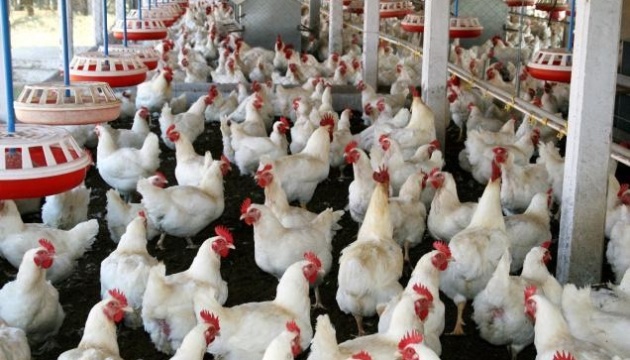
On January 1, 2026, updated requirements for the welfare of farm poultry, harmonized with European Union standards, came into force in Ukraine. These are the rules for keeping broilers and laying hens, established by Order No. 224 of the Ministry of Economy back in 2021. This was announced in a comment to "Komersant Ukrainian" by Serhiy Karpenko, executive director of the Ukrainian Poultry Farmers Union .
The new standards implement EU Directives 1999/74/EC and 2007/43/EC and are part of Ukraine’s commitments under the Association Agreement with the European Union. However, the industry warns that their full implementation without financial support could have serious economic consequences.
What are the new requirements?
European standards provide for stricter standards for poultry housing, in particular regarding space, cage design, lighting conditions, and access to feed and water. According to Serhiy Karpenko, executive director of the Ukrainian Poultry Farmers Union, currently about 70% of the cage equipment used in Ukraine does not meet these requirements.
The key problem is that such equipment cannot be partially modernized. It must be completely dismantled and replaced, which requires significant investment.
How much will it cost the industry?
According to preliminary estimates by the association, the amount of investment required for egg-producing poultry farms alone is at least UAH 13 billion, and this is only for the re-equipment of poultry houses at last year’s production level.
At the same time, as Karpenko points out, these costs do not take into account:
- poultry rearing areas,
- slaughtering and sorting facilities,
- warehousing and logistics infrastructure,
- feed mixing equipment,
- waste disposal and transport systems.
No government financial support programs are currently planned for the implementation of the new standards.
How this may affect prices and production
According to industry estimates, the transition to European standards will inevitably increase production costs. European studies cited by poultry farmers show that
- keeping birds in improved cages increases the cost of eggs by 26%,
- alternative systems increase the cost by 38%.
This, in turn, could lead to price increases of up to 30% for consumers.
Who will suffer the most
According to Karpenko, the greatest risks concern small and medium-sized producers focused on the domestic market. Without access to loans or grants, they may not be able to withstand the financial burden.
Among the possible consequences, the industry cites:
- a 30–40% reduction in production,
- loss of competitiveness in global markets,
- a decrease in poultryexports.
War as an additional risk factor
The introduction of new standards is taking place against the backdrop of full-scale war, high security risks, and staff shortages. Over the past four years, adaptation to EU standards has been slow and has mainly been carried out by large integrated producers focused on exports to the EU.
The industry believes that a large-scale and rapid transition is only possible after the end of hostilities, with the availability of financial programs for re-equipment and more complete liberalization of trade with the European Union.