Zaporizhzhya Nuclear Power Plant on the brink: why a single power line is critical and what risks the IAEA sees
20 February 14:38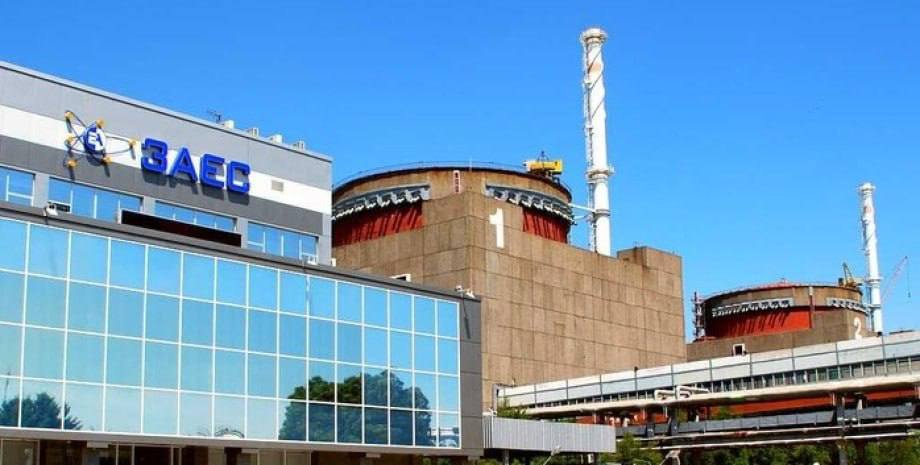
The Russian-controlled Zaporizhzhia nuclear power plant has been operating in a state of heightened vulnerability for over a week: the plant’s external power supply is provided by what is effectively the only surviving line. This was reported by the International Atomic Energy Agency (IAEA), according to "Komersant Ukrainian" with reference to Reuters.
The head of the International Atomic Energy Agency (IAEA), Rafael Grossi, warned that the loss of backup power increases the risks to nuclear safety, primarily due to the need to continuously power the reactor and spent fuel cooling systems.
What happened to the power lines
According to IAEA Director General Rafael Grossi, the Ferrosplavna-1 line was shut down on February 10, “probably as a result of military activity.” Since then, the station has been powered only by the Dniprovska line.
The IAEA emphasizes that similar failures have already occurred, and last year there was a period when both external lines were out of service for almost a month, forcing the plant to rely on diesel generators.
Read us on Telegram: important topics – without censorship
Why one line is critical
Although the ZNPP is not currently producing electricity, power is needed to operate safety systems, in particular for cooling and maintaining the controlled state of equipment. When there is no backup line, any accident on the only operating power line sharply increases the risks — after all, the “safety cushion” disappears, and there is less time to react.
A separate factor is the limited access of international observers: according to Grossi, the IAEA team on site is trying to determine the extent of the damage, but due to “security restrictions” does not have access to the distribution node.
What the IAEA says
The agency emphasizes that it is ready to provide an accurate assessment of the damage and its impact on nuclear safety as soon as it gains access to critical areas. Grossi himself warns: “Such events are becoming too common and remind us of the constant risks to nuclear safety,” calling on the parties to exercise maximum military restraint.
The ZNPP is one of the key issues in negotiations and disputes about the future of the plant
The issue of control over the Zaporizhzhia NPP remains one of the central topics in talks about possible de-escalation. Some international discussions touch on scenariosof joint supervision/management and the future operating regime of the plant, but Moscow insists on its own control, while Ukraine emphasizes the need for security conditions under which the facility can operate.
At the same time, Ukraine states that critical systems and expertise are needed for the safe restart of the plant, without which the launch could create additional risks.
Read us on Telegram: important topics – without censorship
Why this is critically important
The Zaporizhzhia NPP is the largest nuclear power plant in Europe, and a stable external power supply is a key condition for:
- cooling the reactors,
- maintaining safety systems,
- preventing emergency scenarios.
Any power outages at such facilities are considered by the international community to be a global risk factor, so involving the IAEA and agreeing on even a temporary truce is of fundamental importance.
Special status of the ZNPP
The Zaporizhzhia NPP is the largest nuclear power plant in Europe with six reactors. Russian troops captured it in March 2022. The plant is not producing electricity. The six reactors at the Zaporizhzhia NPP have been in cold shutdown since 2022, relying on external power lines and emergency systems to prevent a complete power outage.
The IAEA maintains a permanent presence at the site to monitor safety amid ongoing shelling.
IAEA Director General Rafael Grossi said that the Zaporizhzhia nuclear power plant would need “special status” and a cooperation agreement between Russia and Ukraine if a peace agreement is reached.