Closed public meeting: why the discussion between students and Andriy Yermak turned into a media scandal
13 August 2025 20:30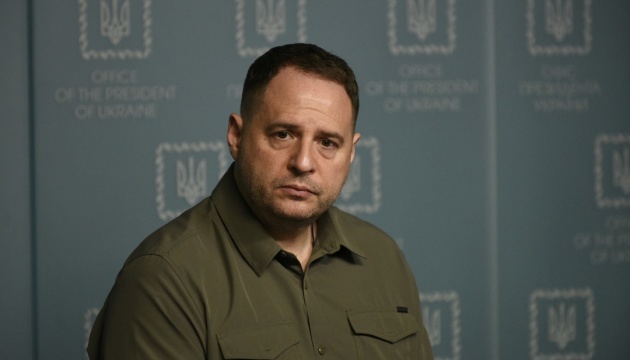
The story of Andriy Yermak’s dialogue with students from KSE, UCU, and Kyiv-Mohyla Academy began as an attempt to establish contact with young people who advocate for the preservation of the independence of the NABU and the SAPO. However, the Chatham House Rule format, designed to ensure frankness, turned into a point of confrontation between the media, moderators, and the participants themselves.
The publication of Ekonomichna Pravda with a transcript and direct quotes launched a wave of discussions, ranging from accusations of “journalistic malpractice” to claims that this is exactly what the media’s public mission is. Can a “closed” meeting with a high-ranking official remain closed if what was said at it has obvious public importance? Where is the line between journalistic ethics and the right of citizens to know what influential people in the state think?
on August 1, the head of the Presidential Office, Andriy Yermak, held a private meeting with students of the Kyiv School of Economics (KSE), the Ukrainian Catholic University, and the Kyiv-Mohyla Academy. The event was held according to the Chatham House Rule , a format that allows for a free exchange of views without direct quotation of participants by name.
The organizers’ goal was to “smooth out” the tension after the actions in defense of the independence of the NABU and the SAPO, in which young people actively participated. However, the conversation took an unexpected turn and became the subject of a loud media debate in a few days.
Dialogue that turned into opposition
According to Ekonomichna Pravda, the students did not limit themselves in the tone of their questions and often spoke directly. Judging by the emotional responses, Yermak himself was unprepared for the conversation to become a heated exchange of arguments.
“Not accepting an alternative point of view distances you from reality and pushes you to make mistakes. The epic with the deprivation of independence of the NABU and the SAPO, and then its return, is just about that,” the publication says.
Special attention was drawn to the discussion of the possible blocking of Telegram in Ukraine. Yermak said:
“We have a society, we are for freedom. And, for example, 80% of the military are categorically against the ban on Telegram. The military, who give us the opportunity to sit here, their voice should be taken into account and today we should not create a split in society.” – Andriy Yermak
At the same time, he added:
“I am sure that Mr. Durov and his messenger cannot but belong to Russia. But I respect the opinion of the people of Ukraine.”
Ethical conflict: Chatham House vs. the public interest
After the publication of the extended report by EP, KSE President and moderator of the meeting Tymofiy Mylovanov publicly criticized the publication.
“This is journalistic malpractice, regardless of the essence of the meeting. We specially organize such dialogues so that participants can safely discuss problematic topics without turning the discussion into personalities,” said Tymofiy Mylovanov.
Milovanov reminded that during events in the Chatham House Rule format, “it is forbidden to publish direct quotes from participants”, only generalizations without reference to names are allowed. He also accused the editorial of “distorted facts,” “negative framing” and unethical authorship:
“One of the mentioned authors was not present at the meeting, and the other, a student of Mohylianka, did not indicate his affiliation.” – Milovanov
Expert opinions: where is the limit of public interest?
Natalia Ligacheva, editor-in-chief of Detector Media, believes that EP did not formally violate the standards:
“The main duty of a journalist is to convey important information to the public. Period” – Natalia Ligacheva
At the same time, she raises the question of the scale of public interest in this particular story:
“Was it so significant as to publish an almost complete report from a closed meeting? Isn’t there too much interpretation of the authors instead of facts?” – Natalia Ligacheva
Olga Rudenko, editor-in-chief of the Kyiv Independent, reminds us that any rules should be consistent with values:
“Rules and structure are a map. But values are the compass. And if they diverge, you should check the way by the compass,” says Olga Rudenko.
Sharp assessments and political overtones
Maryna Danylyuk-Yarmolaieva, a political strategist, believes that the publication revealed a gap between the expectations of the authorities and the moods of active youth:
“Yermak did not feel the demand of young people so much that he was trivially burned at least on the issue of banning Telegram,” Maryna Danyliuk-Yarmolaieva
She reacted harshly to the official’s arguments:
“Stop covering any fucking sh*t with the military,” Maryna Danyliuk-Yarmolaieva
The incident became a test for the interaction between journalists, civil society and government officials. For some editorial offices, the publication was a fulfillment of their mission to inform citizens about the behavior of high-ranking officials in an informal setting. For others, it is an example of how a short-term sensation can cost credibility and access to similar events in the future.
Focus on ethics or content? Different priorities in the public debate
Some commentators emphasize that the media scandal surrounding the publication of Ekonomichna Pravda has overshadowed the main thing – the content of what Andriy Yermak said.
Vitaliy Shabunin, head of the Anti-Corruption Action Center, stated it bluntly:
“I see much more discussions about whether it was possible to publish Yermak’s words than about what he actually said.”
He went on to list three key problems with Yermak’s statements:
- Shifting the responsibility for the attempt to destroy the independence of NABU and SAPO to “some MPs” instead of himself and the President.
- Denial of the existence of a 15-day deadline for signing or vetoing laws provided for in Article 94 of the Constitution.
- The unconfirmed figure “80% of the military is against blocking Telegram”.
“I am sincerely grateful to the EP journalists who published this information. For me, as a person who has been promoting reforms for 15 years, the social significance of this information is difficult to overestimate,” Shabunin emphasized.
When the offrek should be hacked
Ukrainian Radio host Natalia Sokolenko shared her own story from the spring of 2010, when during an informal conversation, a political scientist close to the then government openly justified the need to violate the Constitution to form a coalition in the Verkhovna Rada.
“I don’t know what would have been the impact of making that information public. But it was still socially important information about the government’s intention to break the Constitution,” noted Natalia Sokolenko
She also added that the audience openly condemned this position.
However, the dilemma remains: should a journalist or a participant in a meeting keep silent about openly unconstitutional intentions if they learned about them in a closed format.
Political view from the inside
MP Liza Bogutska, on the contrary, sees in the EP material a subjective negative attitude towards the head of the OP. She notes that all the questions of the students described in the article actually concerned only the NABU and the SAPO, and not the broader agenda.
“Imagine students… asking about reducing the usurpation of power. That is, it exists, and they want to reduce it a little. To what level? How does usurpation manifest itself?” asks Bogutska rhetorically.
In her opinion, even sharp questions to the second in command demonstrate the level of democracy in a country at war:
“If there were gentle questions and sugar-coated answers, the same EP would have written that the meeting was prepared in advance by the Office.”
This discussion seems unlikely to disappear, as it concerns not only the specific meeting, but also the principles of interaction between the media, government, and civil society in wartime. For some, this publication is an example of how journalists fulfill their duty, even at the risk of losing access to platforms for communication with high-ranking officials. For others, it is a manifestation of unprofessionalism that undermines trust and breaks down fragile mechanisms of dialogue.
But regardless of one’s assessment, the case of the meeting between Yermak and the students has already become a litmus test for Ukrainian society: whether we are ready to prefer transparency to backroom deals-even when transparency hurts.