Water supplies and potential outages: what Ukrainians should prepare for in the event of attacks on the water supply
10 April 18:41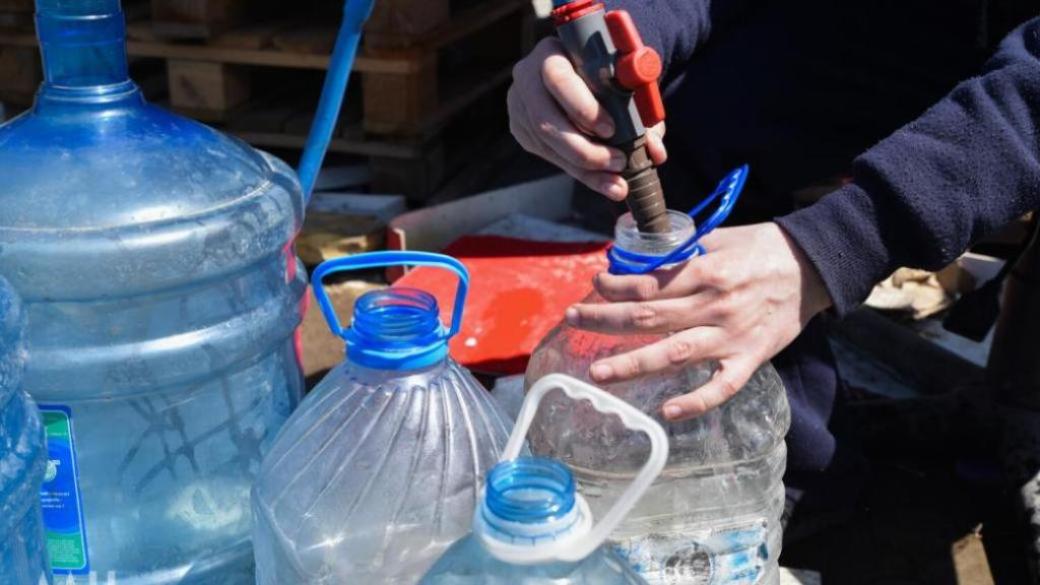 ANALYSIS FROM
President Volodymyr Zelenskyy, citing intelligence reports, warned of a possible new attack by Russia. This time, the enemy may target not only energy infrastructure facilities but also logistics infrastructure—specifically, railways and water supply systems, bridges, dams, hydroelectric power plants, pumping stations, and drinking water supply facilities. Zelenskyy emphasized that the military, together with local authorities, is already working to counter these threats.
He also stressed the need for thorough preparation—just as was the case with protecting the energy sector. In particular, the Air Force is strengthening air defense and system integration, and additional physical protection is being provided where necessary.
All levels of government—from regional administrations to local communities—must join this effort. City and village leaders must clearly understand which facilities are critical, as without them, basic systems—such as water supply or sewage—will not function. The highest level of protection is essential.
Should you stockpile water?
Russia plans to expand the list of targets for attacks across Ukraine, focusing not only on the energy sector but also on water supply systems and logistics. This was stated by Ukrainian MP Serhiy Nahorniak in an exclusive comment for
“The president has intelligence indicating that the Russians plan to expand the strike zone—not only targeting power plants or substations, but also water supply and wastewater treatment facilities and other critical infrastructure,” he noted.
The lawmaker emphasized that the head of state is openly discussing these threats with the government, regional leaders, and citizens to prepare the country for possible scenarios. He did not rule out that such strikes may have already taken place, but Ukrainian air defense forces repelled them.
“When a missile is flying, we don’t always know its final target. It can change course, pass through several regions, and only then strike,” the MP noted.
At least 20–40 liters of drinking water at home
And Artem Shira, vice president of the Ukrainian Water Association, told reporters
“Everyone needs to prepare. This, of course, means having a supply of water at home—I don’t know, 20–40 liters of drinking water, of drinking quality. And building up a supply of non-potable water. That’s the minimum you can prepare for,” the expert noted.
According to Shyra, the water supply system itself is complex and potentially vulnerable to attacks, as it involves several key stages: water intake, treatment, storage, and distribution to consumers via a network of pumps.
“If we destroy this network in any city, there will be no water on that line for some time—perhaps several days or weeks,” he explained.
At the same time, the situation in most cities remains stable at present, and the main problems previously concerned electricity supply rather than water. The expert emphasizes that, following the experience of previous attacks, water utilities have significantly strengthened their energy resilience. This reduces the risk of a complete shutdown of water supply systems due to power outages.
The most likely scenario is water supply according to schedule
In the event of targeted attacks on water infrastructure, according to the expert, the most realistic scenario is partial restrictions rather than a complete loss of water.
“Most likely, water will be supplied by the hour or by the day. For example, water might be provided every third day. It’s difficult, but it’s livable,” he noted.
However, in the event of more severe damage, more critical consequences are possible. If the water supply is cut off for an extended period, it could make living in certain buildings virtually impossible. At the same time, some residents may remain—depending on access to alternative water sources—but this creates significant difficulties, especially for people with limited mobility.
Why Ukraine’s air defense is insufficient for full protection
Military expert and retired Ukrainian Armed Forces Colonel Roman Svitan believes that strikes on infrastructure bear the hallmarks of targeted terror.
“Attacks on bridges, water supply, and energy infrastructure are pure terrorism. Essentially, this is an attempt to destroy life-support systems and ‘drive the country back to the Stone Age,’” Svitan stated.
According to him, Russia has the technical capabilities for such strikes, while Ukraine lacks the equivalent capacity for a symmetrical response.
The expert emphasizes that Ukraine lacks both air defense systems and the missiles to operate them.
“We cannot fully protect all facilities—we lack both anti-missile systems and means to intercept aerial targets,” he explained.
According to Svitan, the key way to reduce risks is to decentralize infrastructure.
“We need to create more local water supply systems, drill wells, and lay backup networks. This will help mitigate the consequences of potential strikes,” the expert noted.
He also emphasized the need to strengthen frontline air defense and create a so-called “barrier” that would make it harder for enemy drones and missiles to penetrate.
Experts agree: in wartime, Ukraine will have to adapt its infrastructure to the constant threat of attacks. This involves both strengthening air defense and restructuring life-support systems—based on the principles of decentralization and redundancy.
Despite the risks, the situation remains under control, and the key task is to minimize the consequences of potential strikes and ensure the uninterrupted operation of critical infrastructure.