Zaporizhzhya Giant for Sale: What the State is Offering, How Much and Who May Be Interested
4 November 2025 22:07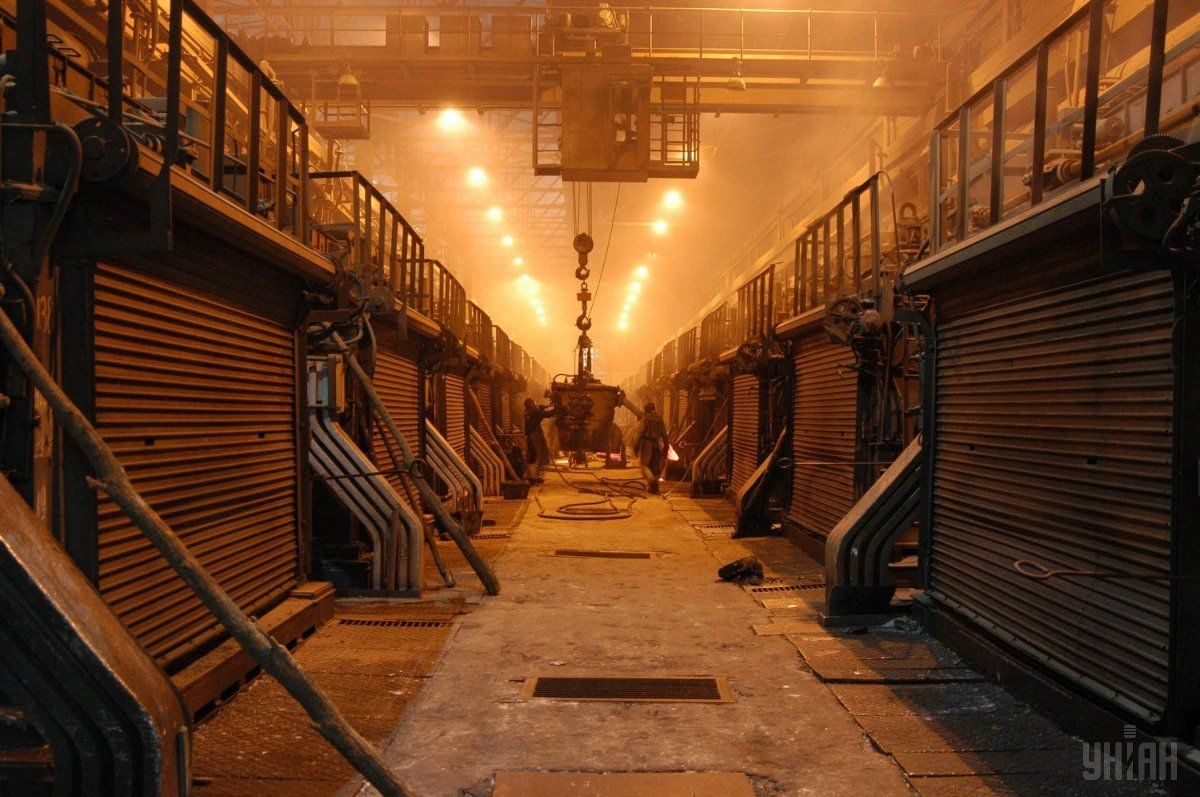
The State Property Fund (SPF) has scheduled an online auction on Prozorro.Sale for November 12, 2025, for the privatization of 97.5458% of shares in Zaporizhzhia Aluminium Production Plant (ZalK). This is reported by "Komersant Ukrainian" with reference to the website Prozorro.Sale.
The starting price of the stake has been reduced to UAH 75.93 million excluding VAT. This is the second attempt in the fall: there was no buyer for the auction scheduled for November 4 with a starting price of UAH 151.9 million, so the threshold was significantly adjusted downward.
Asset format: a large brownfield in the city
The SPF positions the company as a brownfield project in Zaporizhzhia, near the H08 highway and the railroad. On the company’s balance sheet:
- 1497 units of real estate and infrastructure with a total area of 370,929.85 sq. m;
- 292 vehicles and units of special equipment;
- 25 land plots with a total area of 216.0856 hectares.
Brownfield is a park created on the basis of previously constructed production sites, usually equipped with buildings, structures and infrastructure, which are subject to reconstruction and/or overhaul in accordance with the park’s specialization and the needs of its residents.
In effect, it is a large industrial site with ready-made buildings, roads, networks and logistics access that can be used to launch a new production facility or relocate a business.
Why the asset is being sold at a discount
The autumn auction is not the first attempt at privatization. The absence of bids at the start of UAH 151.9 million forced the SPF to reduce the price to UAH 75.93 million. The arguments are obvious: primary aluminum production at Zaliznyk has been halted for many years, and a new investor will need significant capital investments to convert or revitalize the facility to a modern business model.
What exactly will the buyer get
The winner will get control over corporate rights and a large industrial cluster with access infrastructure within the city. The scale of the assets (more than 370 thousand square meters of buildings and 216 hectares of land) allows for multifunctional use: from heavy processing to logistics, engineering, energy, or an industrial park. The presence of a railroad and a highway is a plus for import- and export-oriented industries.
Risks and limitations: what investors should consider
ZALK is not a working aluminum smelter, but a large-scale site that requires audits of the technical condition of assets, networks and communications, an assessment of possible environmental liabilities, and a capital investment plan. The success of the case will depend on the speed of change of functional purpose, connections to resources, permitting procedures, and the ability to attract anchor residents (if the industrial park model is chosen). The discounted start is intended to compensate for the expected CAPEX and restart risks.
Read also: Radiorele plant put up for sale: auction conditions and what the investor will get
How the state regained control over Zalka
The asset was returned to state ownership in stages.
in 2015, by court order, the state returned 68% of the shares and transferred them to the State Property Fund. In February 2023, another 29.5% was recovered by the High Anti-Corruption Court at the request of the Ministry of Justice. According to the SPF, over the previous 14 years, the former owners have effectively withdrawn assets and stopped primary aluminum production, which is unique for Ukraine.
How production was stopped
The facilities were shut down in stages: the alumina shop in March 2009, electrolytic production (primary aluminum) in April 2011, and the foundry in July 2014.
Historically, the plant was owned by the Russian SUAL group (since 2004), and in 2007 it came under the control of the united RusAl company after the consolidation of assets of RusAl, SUAL and Glencore. Oleg Deripaska was considered the ultimate beneficiary. At its peak, it was Ukraine’s only primary aluminum production facility with a capacity of over 100 thousand tons per year.
Why do the market and the state need this privatization?
For the state, the sale means reducing the cost of maintaining an idle giant and a chance to bring industrial life back to a large urban site. For a private investor, it is an opportunity to enter a large infrastructure facility at a reasonable price, reformat it to fit current value chains, and use the model of state support for relocated production.
If the bidding goes ahead and the price goes up, the discount can quickly “burn off”. The key to success for the buyer is a clear concept for the development of the brownfield, a CAPEX/OPEX breakdown and a roadmap of permits.
Watch us on YouTube: important topics – without censorship
Zaporizhzhia Aluminum Smelter: A Brief History
The construction of the aluminum smelter (part of the Dnipro Aluminum Plant) in Zaporizhzhia began in 1930 in accordance with the GOELRO plan. The plant became the first aluminum industry enterprise in the USSR.
In 1933, the company produced the first batch of aluminum ingots. In 1934, it was reorganized into the Dnipro Aluminum Plant.
By the outbreak of World War II, the plant was the largest aluminum industry enterprise in Europe. After the end of World War II, the plant was reconstructed and significantly expanded.
In 1949, an electrolysis shop was put into operation. In 1955, the alumina refinery was put into operation. In 1958, a crystalline silicon production shop was put into operation, and in 1963, an iron powder production shop was launched.
In 1965, the world’s first shop for the production of aluminum-silicon alloys by the electrothermal method was put into operation.
At the beginning of 1980, the plant’s main products were aluminum ingots, aluminum wire rod, alumina and alumina-silicon alloys. The plant also produced consumer goods.
on September 30, 1994, the plant was reorganized into PJSC Zaporizhzhia Production Aluminum Plant with an authorized capital of UAH 155,682,280; the share price was UAH 0.25, and a total of 622,729,120 shares were issued. In 1999, a preferential sale was launched: employees were given 6.991% of the shares for UAH 10,882,979.
In 2000, the SPFU launched an open tender for the sale of 68.01% of the shares in two stages. The first stage was confused by the criteria for an industrial investor, while the second stage was used to assess investment commitments.
In February 2001, the first stage was won by the Metallurgy consortium (Krasnoyarsk Aluminum Plant OJSC) with an offer of $101.5 million; the second was AvtoVAZ-Invest CJSC with $68 million. At the second stage, RUSAL offered the best deal, but the SPFU chose AvtoVAZ-Invest as the winner because the Krasnoyarsk plant did not provide bank guarantees and the AMCU’s permission.
An agreement was signed with AvtoVAZ-Invest: investments in the amount equivalent to $200 million to modernize ZAL. At the same time, the state retained 25% of 1 share for three years. In April 2002, the new owner attempted to dilute the state block of shares by adding a further UAH 274,540,657.5, but the SPFU blocked this, citing the terms of the agreement.
In 2004, AvtoVAZ-Invest was accused of failing to fulfill its investment obligations (the promised $200 million was not paid). In the same year, the Russian SUAL became the owner, and in 2007, the plant came under the control of the united RUSAL company (merger of RUSAL, SUAL and alumina assets of Glencore).
Peak performance in 2007: 265 thousand tons of alumina and 113 thousand tons of aluminum, revenue of UAH 1.9 billion, net profit of UAH 95.2 million.
On March 22, 2012, due to the deterioration of the company’s condition and failure to fulfill its obligations, the Kyiv Commercial Court ruled that the state should return 68% of Zalka’s shares to the company; this was confirmed by the Court of Appeal, although RUSAL filed a cassation. on March 12, 2015, the Supreme Court finally confirmed the return of 68.01% of the shares to state ownership for failure to comply with the privatization conditions. RUSAL announced its intention to appeal the decision in international courts.
The audit for 2015 recorded a net loss of UAH 2.04 billion, and at the beginning of the year, liabilities exceeded the value of assets by UAH 5.48 billion. The story goes that the company was privatized with big promises of investment, but failed to fulfill its obligations, and the controlling stake was returned to the state through the courts amid a deteriorating financial situation.
An interagency working group decided that it was advisable to privatize the 68.01% stake in Zaporizhzhya Aluminum Production Plant that had been previously returned to state ownership. Against the backdrop of these decisions, on August 31, 2016, ZALC solemnly restarted its aluminum wire rod production shop: on the first day, it produced 40 tons, and the annual target was set at 18 thousand tons. This is modest compared to the plant’s design capacity of 100 thousand tons per year, and it is not easy to reach this target due to the low profitability of rolling production and a shortage of working capital. For context: in 2013, the shop operated more or less steadily, and in 2014, production slowed down.
Then came the legal block. on September 27, 2016, the Supreme Economic Court upheld the termination of the sale and purchase agreements for 68.01% of Zalc shares (worth over UAH 380 million) and their return to the state.
And in September 2018, the SBU appealed to the National Security and Defense Council with a proposal to impose sanctions against RUSAL, Judson Trading Limited, and a number of foreigners believed to be involved in the destruction of Zalc. Experts estimate that the losses to the state from these actions exceeded USD 39 million and UAH 100 million.
Thus, the state legally regained the controlling stake and tried to revive at least the rental business, but the company remained financially fragile.
Read us on Telegram: important topics – without censorship