Geneva without illusions: what does the new round of negotiations mean?
17 February 18:51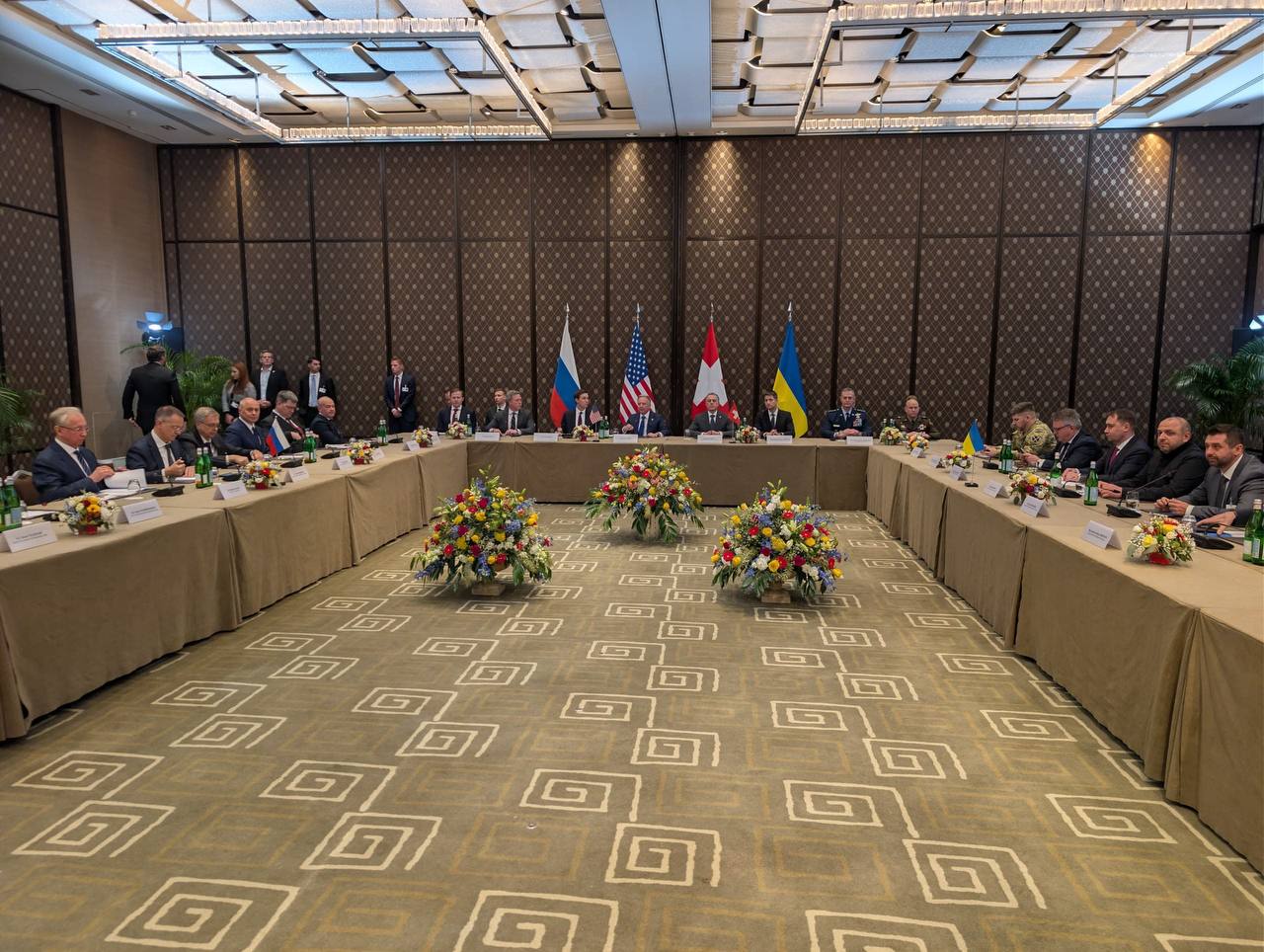
Another round of trilateral talks involving Ukraine, the US, and Russia has begun in Geneva. The meetings are being held with the mediation of the US and the organizational support of Switzerland.
The start of the talks was announced by Rustem Umerov, Secretary of the National Security and Defense Council of Ukraine (NSDC), according to
Formally, this is a continuation of consultations on the security situation and possible parameters for further negotiations.
Skepticism about the impact of the talks
At the same time, experts are skeptical about the potential of the current round.
Political scientist Yevgeny Magda in a comment
“To be honest, I find it hard to imagine why they should have any impact. Any negotiations are always just the tip of the iceberg. They must be preceded by gestures of goodwill. I don’t see any such gestures on Russia’s part.”
He also draws attention to the internal Ukrainian context:
“If anyone expects Ukraine to simply take Trump’s statements at face value and do what he says, I think that’s a little naive. Because, you see, almost four years of full-scale invasion have changed Ukrainian society very much. I think this will continue to be felt.”
According to the expert, public pressure will remain an important factor:
The role of public pressure
“Public pressure, the pressure of public expectations and the realization that working out some kind of agreement is a very complex process — this, in theory, should influence the negotiators.”
At the same time, Magda does not expect any sudden breakthroughs:
“Well, I don’t know what else to expect, what grounds are there for expectation? That suddenly, something explosive will happen…”
These are only preliminary agreements
The political scientist also emphasizes the limited mandate of the negotiators:
“In any case, these are agreements that then have to be, you understand… These are preliminary agreements, and then decisions will be made at the presidential level. If we imagine that the negotiators are agreeing on something and will push it through, it’s hard for me to imagine that.”
Russia has resorted to sabotage
A harsher assessment in a comment
“Russia has shifted to a strategy of delaying and sabotaging the negotiation process, as evidenced by Lavrov’s statement about 20 points and new-old demands, and the dispatch of Medinsky himself.”
According to him, the key intrigue of the negotiations is not in the trilateral format:
“The whole intrigue of the negotiation process now boils down exclusively to the potential role and influence of the British and French delegations, which are also present in Geneva.”
The European factor and Trump’s expectations
Saakyan believes that the current stage may strengthen Europe’s role:
“That is, the potential strengthening of Europe’s role as a reaction to Russia’s sabotage of the negotiation process and the inability of the United States to achieve the quick results that Trump would like.”
However, he does not expect any breakthroughs either:
“In all other respects, this round of negotiations cannot bring any breakthroughs. Rather, God willing, it will bring unpleasant surprises for the Russians.”
Are the negotiations bringing peace closer?
In conclusion, the expert emphasizes:
“But in terms of the real dynamics of the negotiation process, this still does not bring us closer to peace, because the architecture of the negotiations is not capable of doing so.”
Recall that on February 14, the NSDC secretary announced that Ukraine intends to discuss the issue of an energy truce at the trilateral talks in Geneva.
On February 16, Kremlin spokesman Dmitry Peskov said that the talks are expected to cover a “broader range of issues” than the meetings in Abu Dhabi (UAE), including, according to him, the issue of territory.