Winter is coming: what is really happening with gas production in Ukraine amid Russian missile attacks
26 September 2025 15:28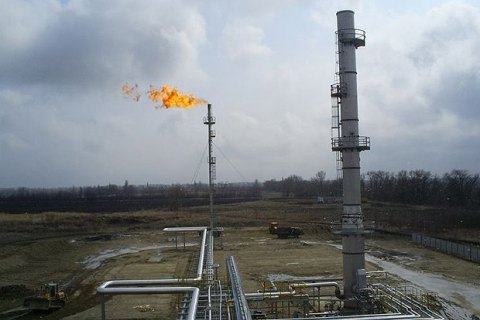
Ukrainian energy companies are preparing for another military winter by strengthening infrastructure protection and increasing gas reserves. Komersant found out what this readiness is like and whether there is a reason to worry.
A few days ago, The Washington Post quoted the chairman of the board of Naftogaz of Ukraine Serhiy Koretsky, who said that Russian strikes, which intensified in February of this year, have led to Ukraine losing 42 percent of its daily gas production in two months. As a result, the official said, Ukraine will have to import about 6 billion cubic meters of gas from abroad, the largest amount in the country’s history.
The words about “the loss of 42 percent of daily gas production”, if taken out of the context of the article and not supported by data on how much and what exactly has been restored over the past six months, could sound like “all is lost” to some. But is it really so? And how should we treat such statements.
“We need to be calm,” said Oleksandr Kharchenko, director of the Energy Research Center.
“There is not much to quote. Indeed, during the peak period of attacks on gas production in the spring, there was a period when about 40% of gas production was actually damaged. Here we need to understand what exactly is being attacked. They attack the so-called compressor stations and gas treatment systems. Indeed, up to 40% of these systems were damaged. But since then, a significant part has been restored. I won’t say the exact percentage, but believe me, a very significant part has been restored,” the expert said.
Oleksiy Kucherenko, First Deputy Chairman of the Verkhovna Rada Committee on Energy, Housing and Utilities, puts his own emphasis on the issue of gas losses.
“At one point, it was 42%. But how much can we talk about it? Everything has been restored long ago. We know that the losses of Naftogaz from these strikes are about 0.6-0.8 billion cubic meters of gas. This is already an estimate, it is known to everyone, including Naftogaz experts. And Naftogaz says it lacks 5.4 billion cubic meters of gas. Well, these are not comparable things. How long can you blame your negligence on the war? This is not a complaint against Koretsky… Although I do have one complaint against Koretsky. As a new leader, he is obliged to conduct an audit and clearly explain to the public, the Cabinet of Ministers, and MPs who and what did before him at Naftogaz and where this 5.4 billion hole in the balance sheet, which Naftogaz is currently importing, came from,” the MP emphasized.
Oleksandr Kharchenko, Director of the Center for Energy Studies, points to the connection between the need to restore infrastructure and gas purchases.
“Unfortunately, in order to restore everything, we need more money and equipment to physically cover these needs. Because Naftogaz is naturally focused on raising funds to purchase gas for imports. This was the No. 1 task for them this year – to accumulate the necessary reserves for the winter heating season. They have done this, but they have a certain lack of money and equipment to fully restore production. Of course, they need to work on this,” the expert states.
The Washington Post article notes that the most vulnerable part of Ukraine’s energy system is the gas infrastructure. These facilities, according toVictoria Voitsitska, former secretary of the parliamentary energy committee, are scattered and difficult to protect.
What parts of the Ukrainian energy system need the most protection?
The opinion of Oleksandr Kharchenko, Director of the Energy Research Center.
“If we look at the situation as a whole, focusing on where the greatest danger is now, I believe that our gas infrastructure is well prepared for winter, and our electric infrastructure is well prepared. The preparations are much better than a year ago, for example. Where we have significant dangers is in terms of heat supply facilities. These are often cities that are located up to a hundred kilometers from the frontline, and boiler houses and combined heat and power plants have been attacked many times in Sumy, Okhtyrka, Kharkiv, Odesa, and Mykolaiv. This is the main source of heat. So, if there are more attacks on heating facilities in winter, it will be a great and serious danger. I know that all city authorities are well aware of this problem and are working to be prepared for such attacks. Unfortunately, we can’t rule out new attacks on the gas production system either,” says Kharchenko.
In conclusion, we would like to refer once again to the article by The Washington Post and the words of Maxim Timchenko, CEO of DTEK, Ukraine’s largest private energy company. He advises that if we are to be worried, we should be worried reasonably:
“Do not panic, do not say that it will be bad, do not be overly optimistic. Just do your job, as we have been doing for three winters.”
Author: Sergey Vasilevich