$14 billion for TikTok: who is buying and what will remain in ByteDance
26 September 2025 08:35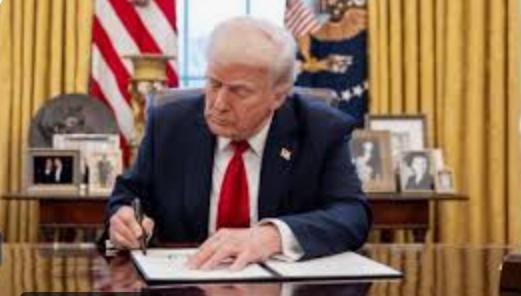
US President Donald Trump has officially signed an executive order paving the way for the sale of TikTok’s US assets to investors from the US and other countries. The new owner will have full control over the platform’s operation in the United States, including the company’s main asset, the recommendation algorithm. It was reported by Reuters, "Komersant Ukrainian" informs
Details of the deal
According to Reuters, the value of the new US company TikTok is estimated at $14 billion, US Vice President J.D. Vance said. Trump’s decree is aimed at fulfilling the requirements of the 2024 National Security Act, which provides for a ban on TikTok unless the Chinese company ByteDance sells its American assets.
The president also announced a postponement of the ban until January 20, 2026, to complete the process of creating a new ownership structure and obtaining the approval of the Chinese government.
“We wanted TikTok to continue to operate, but at the same time, we have to ensure the security of American data,” J.D. Vance said during a briefing at the White House.
Oracle and Dell are among the new owners of TikTok
According to Trump, several well-known investors are involved in the purchase of TikTok:
- Michael Dell, founder and CEO of Dell Technologies;
- Rupert Murdoch, founder of Fox News and News Corp;
- as well as “four or five of the world’s top investors”.
The main participants in the consortium will be Oracle and Silver Lake investment company, which together will own about 50% of TikTok US shares, sources told Reuters.
The remaining 30% will be retained by the current shareholders of ByteDance, including KKR, General Atlantic, and Susquehanna International Group.
At the same time, ByteDance will retain less than 20% of its stake to comply with US law. Six seats on the new seven-member board of directors will be held by Americans, and one seat will be held by a ByteDance representative.
Reaction of the parties
Trump said that Chinese leader Xi Jinping “approved the deal”:
“We had a good conversation. I explained what we were doing, and he said: ‘Go ahead,'” the president said.
Beijing has not officially commented on the situation, and TikTok representatives have refrained from making public statements.
However, Chinese media report that ByteDance will still play a role in the new structure. In particular, the company will create a separate American firm responsible for e-commerce, branding, and integration with international operations.
It is noted that the joint venture, as described by the White House and estimated at $14 billion, will be responsible for US digital security, content and software protection, as well as related local businesses.
Who will control TikTok’s algorithm after the sale
The most important issue of the deal is who will control TikTok’s recommendation algorithm.
Trump said that it would be retrained and supervised by American security partners. However, experts note that it is not officially known whether ByteDance will lose all rights to the technology.
“The president certified the deal, but did not disclose how the algorithm will be controlled,” said Alan Rosenstein, a professor at the University of Minnesota.
Why is $14 billion not enough?
Analysts call the $14 billion estimate an underestimate. According to ByteDance, its total value exceeds $330 billion, and back in April 2025, TikTok was estimated at $30-40 billion, excluding the algorithm.
Nevertheless, the White House insists that the main thing is to ensure TikTok US’s complete independence from China.
“From now on, TikTok will be completely American,” Trump said.
Context
TikTok has about 170 million users in the United States, and Donald Trump himself is an active user of the platform. Trump credits TikTok with helping him win re-election last year.
Trump has 15 million subscribers on his personal TikTok account. The White House also launched an official TikTok account last month.
Republican politicians are calling for a “clean break with China” and demanding that the agreement fully protects American users from influence and surveillance by Chinese entities.