Blackout in Ukraine: how businesses survive without electricity
29 July 2024 12:32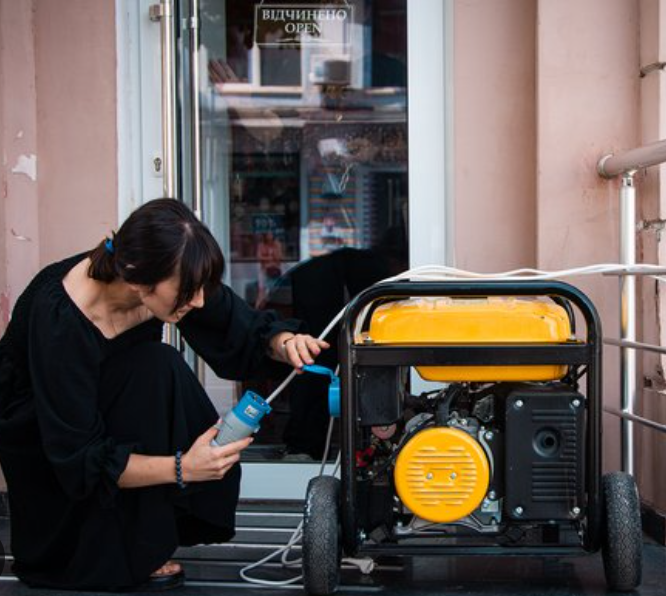 EXCLUSIVE
Amid constant power cuts, Ukrainian businesses continue to look for different ways out of the difficult situation. Some stock up on generators, inverters and ecoflow and continue to operate. Others are losing customers and sales niches and are forced to close.
The lack of electricity is not a new challenge for Ukrainian businesses. Ukrainian entrepreneurs faced this problem back in the winter of 2023. However, now, due to the constant shelling of electricity generation, the hours without power are getting longer, so the challenges for companies are much more serious.
Investing in energy independence is a priority for big business
Representatives of PJSC Carlsberg Ukraine said that their company has been investing in energy independence since 2023.
“We have purchased large industrial diesel generators for our factories, and some of our consumption has been switched to imported electricity. However, we are constantly looking for better alternatives,” the company said.
REFERENCE 
According to Carlsberg Ukraine, theKyiv brewery operates with imported electricity without critical production interruptions. The situation at Lviv and Zaporizhzhia breweries is different.
“Lviv Brewery operates about 50% of the day using a diesel generator, but it is already at a gradual stage of adopting the experience of electricity supply following the example of its colleagues from the capital. The Zaporizhzhia brewery has similar experience, but is also constantly looking for better alternatives,” said Carlsberg Ukraine.
How they cope with power outages told
According to them, Silpo Resto is located in large shopping malls, where at least critical equipment is powered. Some restaurants have already installed generators.
“In fact, we are finding different ways to adapt to the situation and continue to delight our guests. For example, Escobar restaurant has a separate Blackout menu that guests can use in the absence of electricity (this is something we can cook even without electricity). Heat-intensive thermopots help to keep hot water and make tea and coffee. Who&Why has learnt to prepare cocktails by candlelight. Our Positano pizzeria has a wood-burning oven, so this also helps. For music, we have portable speakers or invite live musicians,” the company said.
Product damage during power outages
However, not all businesses are able to provide themselves with generators or special power banks that would support their energy independence. As one of the capital’s chain grocery stores told journalists on condition of anonymity, they have to go through all the blackouts “in the dark”.
“There are no generators, no ecoflow and even no power banks. If they switch off the power for 10 hours, we sit without light for 10 hours. Sometimes we have electricity for 2-3 hours per shift. For these reasons, almost all dairy products spoil. The losses of just one store where I work are huge, and this is a chain, I’m even afraid to count the total,” the saleswoman told reporters.
She stressed that she had raised the issue of connecting the generator with the management, but had not received a response.
“The bosses don’t say anything, and I can’t afford to buy a generator for the store. So we just throw milk, sour cream and cottage cheese out of the store every night. It’s scary to imagine what will happen next. Now the electricity is being switched off less frequently, so I only hope that there will be no more long power cuts,” she said.
Food is also spoiling in some restaurants. According to Tatyana Butovskaya, production manager of the Milk Bar restaurant in Kyiv, the number of products that would be affected by the power outage is small, but they do exist.
“The safety of our products and raw materials is ensured by large freezers and refrigerators, where the temperature does not change in 4 hours. The main thing is to maintain their technical condition, which is not an easy task during the heatwave and power fluctuations. However, such cases do occur in a restaurant, as there are no such powerful chambers,” she said.
Representatives of the Fozzy Group restaurant business shared their case of food storage. They do not keep large inventories, which minimises food write-offs.
“We have also optimised the time for preparations through proper shift planning: everything is prepared in one go, without unnecessary movements and fuss – and unnecessary products. A zero-waste approach is also very important. That’s how we came up with Pavlova’s speciality at the Who&Why bar, because the yolks were used for tartare, and we needed to use the protein. Escobar used to fry bananas without peels. Now we fry them with them, and it’s even tastier! And more profitable for the guest. Therefore, our write-offs are currently minimal – all the preparations are pasteurised, sundried, and all the ingredients are used in different dishes,” Fozzy Group said.
How the power outage affects product pricing
Each of the business representatives commented
“The cost of electricity from diesel generators is 2-3 times higher than the market price, while imported electricity is 1.5 times higher. As for the impact on the finished product, it all depends on how much electricity is used in the production process. If the production of beverages uses a relatively small share of electricity compared to the production of malt or cans, then any increase in the cost of electricity will affect the prices of the finished beverage much more than just the direct costs of its production,” explained Carlsberg Ukraine.
Not only grocery and restaurant businesses are experiencing difficult times during power outages: small Ukrainian companies are also trying to stay afloat. One of them is the Marsala Look beauty salon. Despite the full-scale invasion, the beauty industry segment remains in high demand among Ukrainian women, so the owners of such businesses are trying their best to continue working. Olga Lutsenko, co-owner of the Marsala Look beauty salon, also shared her story of working during the blackout.
“Small businesses, such as the service sector, are having a hard time with power outages. At the same time, prices for consumables rise, and landlords raise the price of premises. In order for a business to stay afloat, and I’m not talking about income, you need to buy a generator, maintain it and refuel it. In order to make some money, you need to raise prices for services and not reduce the level of service. Of course, you can save on materials and paints, but it will not be the same level of quality that our customers are used to,” says Olga.
She added that it costs her business between UAH 5,000 and 7,000 per month to maintain the generator and refuel it.
“That’s if you’re lucky and it doesn’t break down,” said Olga Lutsenko.
How businesses prepare for winter operations
Preparation for the winter period is different for small companies and large businesses, because, accordingly, the scale of opportunities is different. For example, the co-owner of the Marsala Lookbeauty salon starts to worry about how her business will survive the cold season in the summer.
“There is a lot of anxiety about the winter period, as non-residential premises have different tariffs for everything. If we raise prices again, we don’t know if we will keep people. They may not do certain procedures as often. Or they may spend money only on basic necessities, such as food. Therefore, there are fears that the income will decrease,” said Olga Lutsenko.
At the same time, Carlsberg Ukraine plans to act on a large scale:
“The company is constantly looking for the most optimal ways. Currently, buying diesel generators is the cheapest option. Another option is cogeneration units. They provide independence from electricity but still require water and gas. This can cost up to €7 million for one plant. The implementation period is longer.”
It is also possible to build biomethane plants with cogeneration units. However, the implementation of this plan requires much more investment and time.
“The issue is urgent at the moment and our team is determined to take decisive action. We are focused on choosing the most effective method that will ensure reliable and uninterrupted business operations in the future,” said PJSC Carlsberg Ukraine
Tetiana Butovska from Milk Bar believes that it is necessary to prepare for the winter cold not only in terms of electricity.
“My vision is a complete revision and optimisation of the product range, changes in production schedules, and changes in the organisation of the production process. In fact, everyone is preparing for the worst. Winter is ahead, and no one has cancelled the holiday season. We plan to satisfy every guest with a high-quality and traditional range of products in our restaurants,” she said.
Despite the different scale of business and, accordingly, different opportunities to operate during the power outages, almost all companies are trying their best to continue working and doing everything possible to stay in Ukraine and satisfy their customers.
Author: Alyona Kaplina