Staff shortages, reservations, and challenges for business: the Federation of Employers has shared its outlook for the labor market
6 March 19:15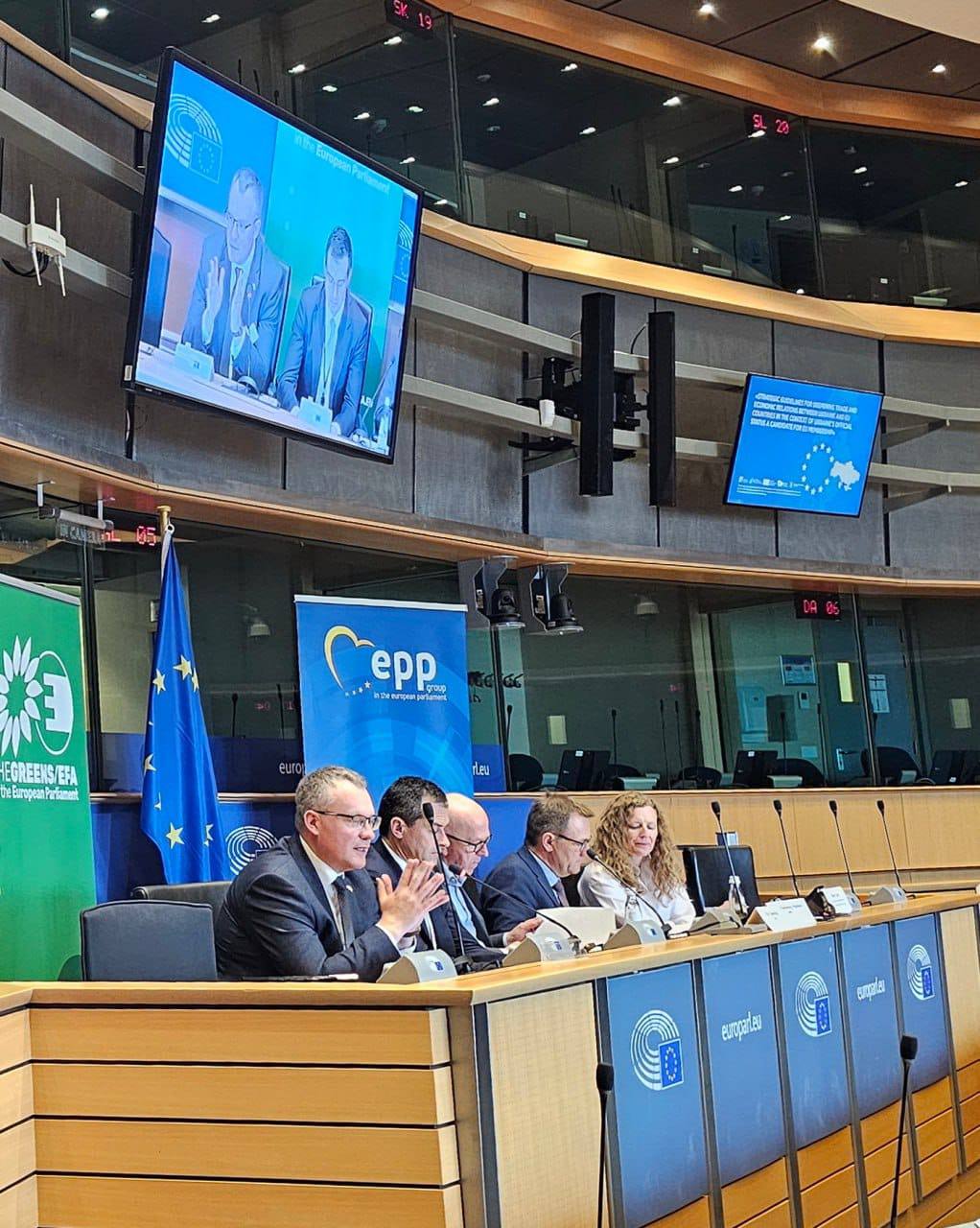
Today, Ukrainian businesses face a number of unprecedented challenges: a shortage of personnel due to mobilization and people leaving the country, high production costs, the need to balance profitability and wage growth, and the need to integrate into international production chains. At the same time, the war has demonstrated the importance of having one’s own industrial base.
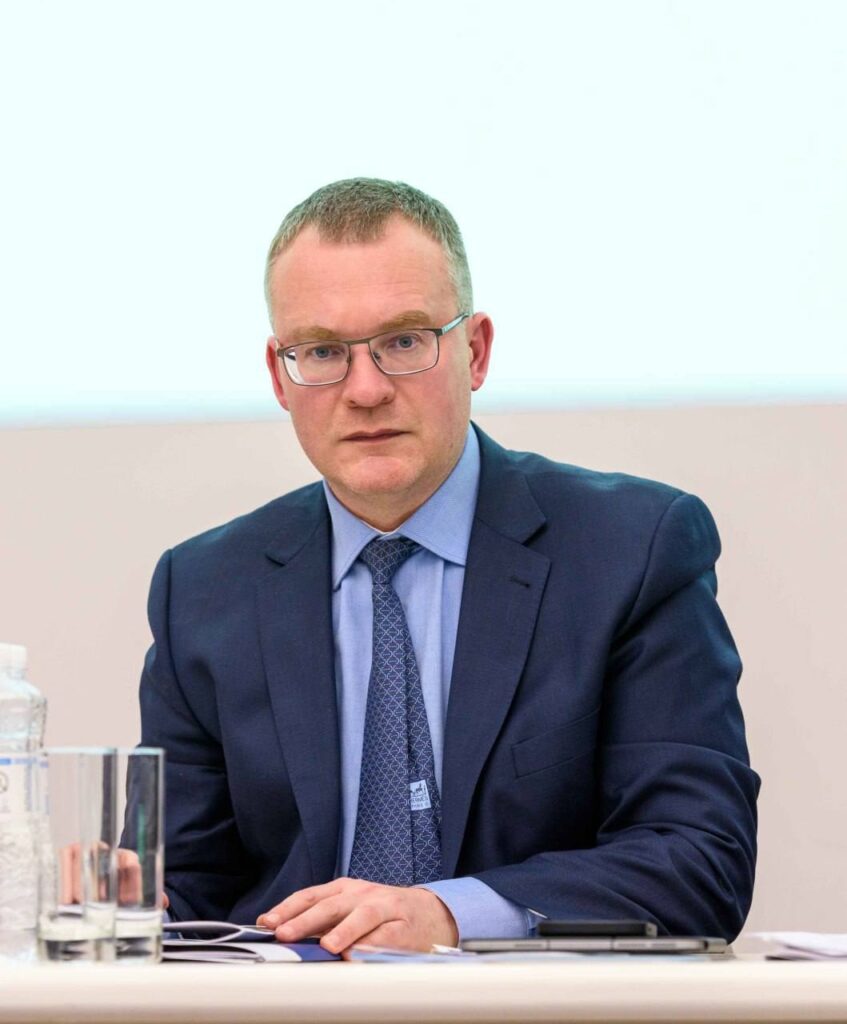
Komersant spoke with Ruslan Illichov, CEO of the Federation of Employers of Ukraine, about how businesses are adapting to the new conditions, how the booking system works, which specialists are in short supply on the market, and what the prospects are for Ukrainian industry. He shared specific figures, case studies of successful companies, and his vision of how Ukraine can become a competitive manufacturing hub in Europe.
Where is the labor market imbalance most acute today — in terms of numbers and industries?
— Today, almost every operating enterprise faces a shortage of personnel. The reasons are objective: mobilization and people leaving the country. If a company is operating and, moreover, expanding, it is almost guaranteed to experience a shortage of personnel.
Last year, we conducted a large-scale study of the labor market in 2025 and a forecast for 2026: 61,000 enterprises, about 4 million employees. In the first 10 months of 2025, the industry saw a reduction in staff by 99,000 people. At the same time:
- 67% of enterprises hired new employees;
- 33% plan to hire in 2026;
- almost 40% of companies had difficulties recruiting staff;
- 70% of all vacancies are in only 105 professions — mainly blue-collar, engineering, and technical.
In other words, the market is highly concentrated: 105 specialties account for the bulk of demand.
The greatest shortage of personnel is in the manufacturing industry: metallurgy, mechanical engineering, energy, and agriculture. Also in trade. In fact, every industry is experiencing difficulties with personnel.
Why does wage growth not solve the problem?
— Salaries are indeed rising. In machine building, they are rising by an average of 10–15% per year. But salary is not the only factor.
There are regional disparities. We have fairly low labor mobility; people generally do not move to other regions for work.
And there is one more thing that is rarely mentioned: in addition to investing in people, there are also significant costs that businesses have to bear. The cost of electricity is higher today than in many EU countries, and production costs are rising. Companies have to make a profit, otherwise there will be no jobs and, accordingly, no salaries.
Does the reservation system work? What needs to be changed?
— This is a global issue. Business owners often say that the reservation system is imperfect and want 100% protection. But since the first year of the war, the Federation has been working closely with the Ministry of Economy to improve the system. Joint initiatives have focused on annual reservations, reservations for frontline territories and the defense sector, and the registration of conscripts. There is a balance between mobilization and the economy; it is not perfect, but it exists.
The system works better in key sectors: defense, energy, frontline territories — 100% reservation for large factories, which is important. The standard 50/50 formula has risks, but companies are aware of them.
The main drawback is the large number of people outside legal employment and military registration. Transparent enterprises receive critical status and reserve their employees.
Overall, there is a balance, and the system can be improved, but there is no point in changing it globally—adjustments are made taking into account the needs of defense and the economy.
Is there a risk of enterprises shutting down due to a shortage of workers?
— We have enterprises that are already partially shut down, and some are even completely shut down.
But businesses are adapting and looking for ways out of the current situation. One of the adaptation mechanisms is industrial outsourcing.
For example, if I need laser cutting of metal, I can buy equipment and hire people. Or I can find a partner within the Federation who has capacity and underutilization. We have formed a pool of over 100 companies that can quickly accept orders. Some have a shortage of personnel, while others have spare capacity. This allows us to balance the system flexibly.
Watch us on YouTube: important topics – without censorship
Has the labor shortage become a structural problem for the economy?
Yes. In Ukraine, it has become most acute due to the war. But other countries also have staffing problems. In Denmark, for example, you won’t find a good welder without difficulty.
Will the employment of veterans become a key challenge?
— Already today, up to 20% of the Federation’s employees have been mobilized. And our main task is to ensure that they return to their jobs.
People often talk about the “labor market for veterans” as something abstract.
But at the enterprises that are members of the Federation, we already have a huge number of programs to support veterans.
Corporate solutions: training centers; mentoring programs; separate vacancies for veterans; barrier-free environment; veteran hubs and the creation of separate production units.
These are not forum discussions — this is practical work at the company level.
What should the strategy for integrating Ukrainian business with international partners be?
— We do not want economic relations with the EU that would boil down to exporting our raw materials or discussing quotas for Ukrainian products. We need to change the narrative: Ukrainian industry is not a competitor to EU industry; today, we are already an industrial partner for European business.
Our message is simple: Ukraine can become a driver of economic growth in the EU. We want to build value chains, create joint production with European partners, and strengthen economic independence — for Ukraine and for Europe.
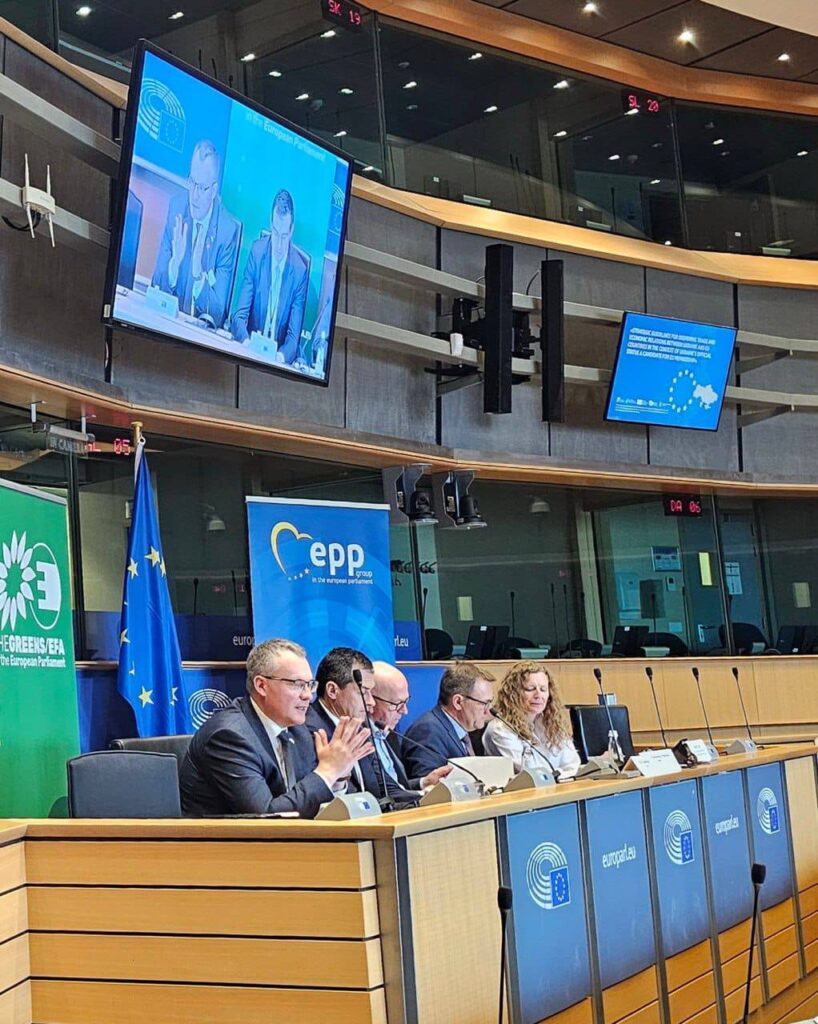
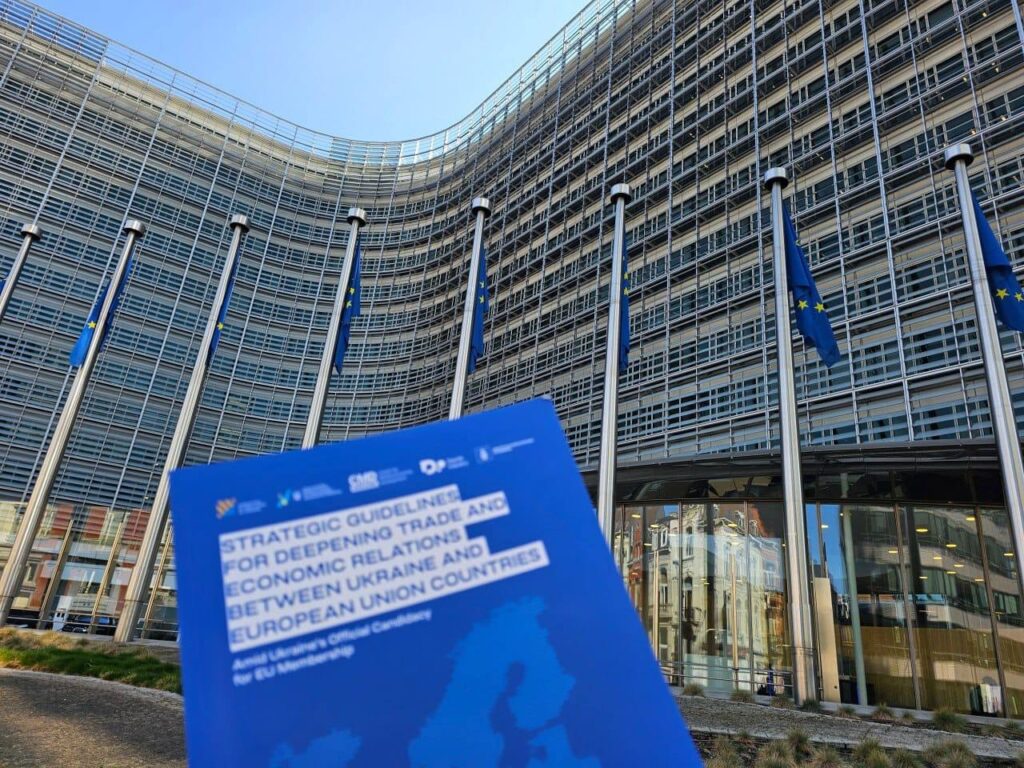
We conducted a unique study with the support of the Confederation of Danish Industry and the Danish Ministry of Foreign Affairs. For the first time, Ukrainian businesses — exporters and industry associations from 37 sectors that we surveyed — have formed a common position on economic integration with the EU. We analyzed trade trends and barriers and proposed practical solutions for deepening cooperation.
We identified the most promising sectors for partnership:
- Machinery and metalworking
- Metallurgy
- Agro-industry
- Woodworking industry
- Chemical industry
- Energy equipment
- Food industry
- Light industry and furniture
- Building materials
- Defense industry
- Pharmaceutical
- Glass and ceramics industry
Each of these sectors has mutually beneficial potential for Ukraine and Europe.
It is also important in reconstruction projects not to simply import equipment. If we can produce transformers or metal structures in Ukraine, they should be Ukrainian.
What specific results of the “Made in Ukraine” program can already be seen?
— The FEU is a key partner in the Made in Ukraine state program. After all, it has become a natural continuation of the initiatives that we have been implementing and advocating together with Ukrainian businesses for more than eight years. It is a very important tool for stimulating demand for Ukrainian goods.

Why is this so important? Because “Made in Ukraine” is a development strategy that gives the country expertise, jobs, and economic independence.
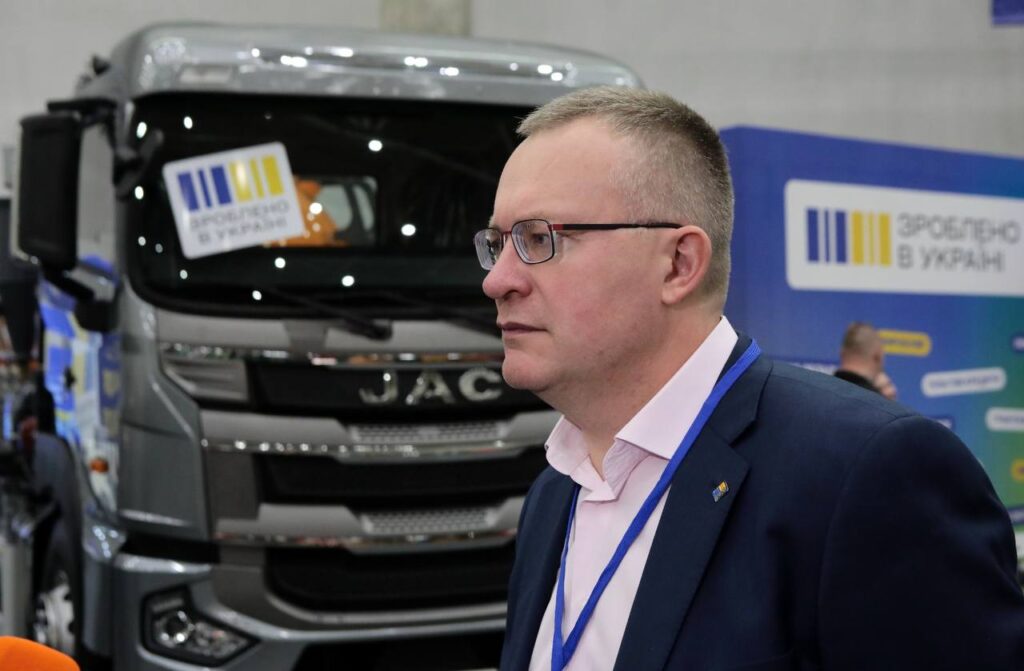
For example, one Ukrainian school bus brings together 212 related enterprises across Ukraine. Just imagine how many jobs depend on its production.
The program of 25% compensation to farmers for the cost of purchasing localized agricultural equipment, which we initiated at the time and which, thanks to the support of the government, was restarted in 2024, gave impetus to a significant increase in demand for domestic machinery and equipment in the agro-industrial complex. According to our participating companies, sales volumes, and therefore production, have increased by at least 30%, with some types of equipment seeing growth of 50%–70% and irrigation equipment seeing growth of up to 110%.
And these are just a few examples of the impact of the Made in Ukraine programs.
The war has also shown that Ukrainian industrial production is a matter of national security.
For example, it was Ukrainian machine-building and metalworking enterprises that were able to quickly set up repair bases for military equipment and start producing products necessary for the Ukrainian defense industry.
Read us on Telegram: important topics – without censorship
What will happen if industrial policy is not scaled up? What are the risks in 2-3 years?
— The global division of labor is changing rapidly: for example, large automotive companies have long since identified their markets, and Ukraine has not yet managed to enter global chains. At the same time, we have production of electrical cables, machine kits, and even large retail chains.
It makes sense to revive the idea of Ukraine as a production hub for the European automotive industry, offering competitive and affordable services.
There are many examples of Ukrainian companies leading the way in foreign markets: Modern Expo has been setting the tone in design and standards for global retail chains for many years, and Ukrainian tomato paste was once found in every other bottle of popular ketchup.
This proves that we have real opportunities for growth, but they need to be actively stimulated through business efforts and government support. War creates risks, but at the same time opens up opportunities for development, particularly in mechanical engineering, metallurgy, and the defense industry.
Therefore, the future of the Ukrainian economy depends on how effectively the state and business can scale industrial initiatives, integrate with international partners, and take advantage of opportunities even in the difficult conditions of war. Ukraine has a real chance to become a competitive manufacturing center in Europe if these opportunities are actively stimulated and supported.