Hackers from Ukraine disrupted a secret Russian meeting: “Russian” drones turned out to be Chinese
21 April 10:55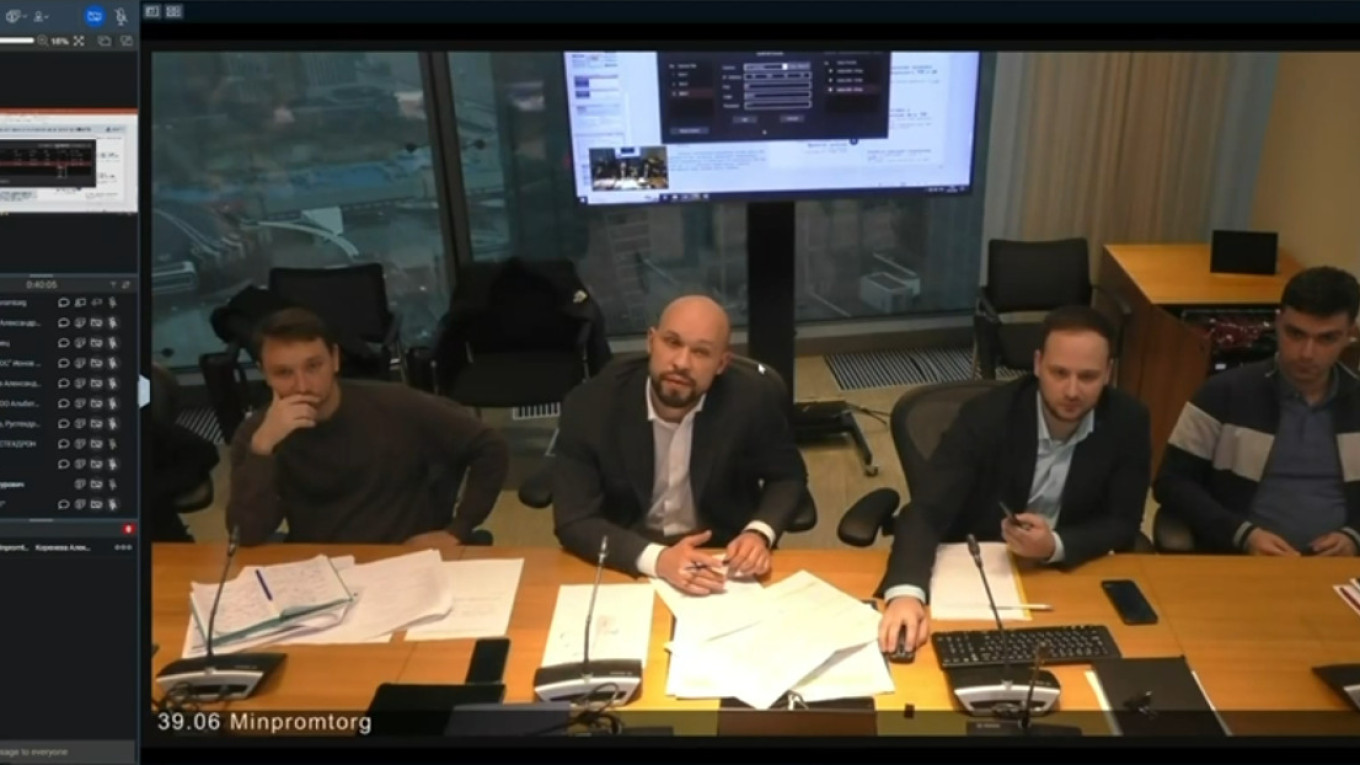
Ukrainian blogger and prankster Yevgen Volnov, known by the pseudonym Major Chornobaev, claimed to have successfully infiltrated a closed-door meeting of the Ministry of Industry and Trade of the aggressor state, the Russian Federation. He published a post to that effect on Telegram, according to "Komersant Ukrainian"
In the recording, one of the participants directly complains that even copper wire for production has to be purchased from China. The conversation also mentions Chinese plastic, since, according to her, there is simply no Russian plastic available. After that, Ukrainian hackers interfered with the conference and effectively disrupted it.
What happened at the closed meeting of the Russian Ministry of Industry and Trade
Ukrainian prankster Yevgen Volnov published a portion of a video recording of a closed online meeting of the Russian Ministry of Industry and Trade. The clip shows that the meeting specifically concerned drone production: a presentation related to unmanned aerial vehicles was displayed on the screen. One of the participants asked about the permissible percentage of foreign raw materials in the finished product, after which a remark was made about critical dependence on imports.
At the reportedly closed-door meeting, Russian officials admitted that without Chinese components (engines, electronics, and even plastic), “nothing flies.” Russian companies such as Albatros, Geoscan, and Ufimets came under fire, as the Russian government demands an impossible level of localization from them.
In fact, this remark became the main sensation of the leak. The Russian UAV production system, which the Kremlin tries to present as an example of import substitution, itself acknowledges deep dependence on foreign supplies at a closed-door meeting.
What exactly was said about Chinese components
In the recording, a participant explains that Russia cannot produce some of the necessary materials domestically. She says that even the copper wire used in production actually comes from China, and when it comes to electrical components, 90% of what is used consists of foreign raw materials. Chinese plastic is also mentioned in the conversation.
This is particularly significant given Russia’s claims of technological self-sufficiency. If officials acknowledge in internal discussions that production grinds to a halt without Chinese materials and foreign infrastructure, it deals a serious blow to the Kremlin’s narrative of a “self-sufficient defense industry.”
Who was at this meeting
Astra claims to have identified the participants in the video conference who appeared in the recording. Volnov’s message was primarily addressed to Alexei Serdyuk, head of the Department of Unmanned Systems and Robotics at the Russian Ministry of Industry and Trade.
Also, according to media reports, the recording features Alexander Plotnikov, an employee of the Ministry of Industry and Trade’s drone division; Danila Abulov, the coordinator of cooperation between UAV manufacturers and the Russian Ministry of Defense as well as Putin’s “People’s Front”; and Aisen Nesterov, Director of Asset Protection at the ANO “Center for Unmanned Systems and Technologies.” Aisen Nesterov.
In addition, the personal contact information of ministry employees Alexander Lysenko, Andrey Titov, and Andrey Sukharev was leaked online. Astra journalists confirmed the authenticity of their phone numbers and their connections to companies in the Russian military-industrial complex.
After the hackers intervened, one of the participants asked to end the conference call. This means that the leak was not merely a recording of someone else’s conversation, but an instance of a direct breach of closed government communications.
Read us on Telegram: important topics – without censorship
Why this leak is painful for Russia
The story is painful for Moscow for several reasons.
First, it shows that closed-door meetings of entities involved in drone production can be hacked.
Second, the very content of the conversation undermines the official Russian narrative of successful import substitution.
Third, the recording effectively acknowledges that critical elements of UAV production rely on China and foreign raw materials.
It should be noted that the dependence of Russian weapons on foreign components has been revealed before. A large number of parts of foreign origin were found in the Orlan-10 and Shahed UAVs. Therefore, the new leak does not appear to be a coincidence—rather, it confirms an already known trend.
What this means for the war against Ukraine
For Ukraine, this leak is significant not only as an informational blow but also as evidence of the vulnerability of Russian drone production. If a significant portion of materials and components comes from abroad, then the Russian defense industry is far more dependent on external supply chains than it tries to show. This means that sanctions, logistical, and technological pressure on such chains can have a tangible effect.
In other words, “purely Russian” drones turned out not to be so Russian after all. Behind the high-profile reports of new production facilities and “domestic manufacturing” lies a far less heroic reality: Chinese raw materials, foreign components, and a nervous reaction to Ukrainian hackers on live TV.
Was there a comment from the Russian side?
As of the time of publication, the Russian Ministry of Industry and Trade had not commented on the leaked recording. There has also been no public denial of the conversation’s content.
Read us on Telegram: important topics – without censorship