Saturday schools are the educational rear of Ukrainians abroad
 COLUMN
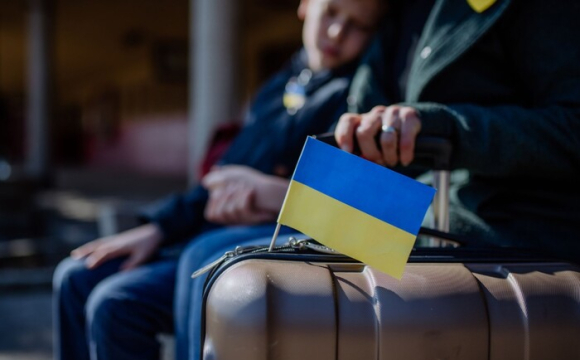
For millions of Ukrainian families abroad, children’s education has become the biggest challenge. How to combine studying in a new country with the Ukrainian curriculum? How do you prevent your child from forgetting their native language when their friends at school speak Polish or German?
My friends, colleagues, and representatives of our Association – internally displaced persons – admit that it is difficult to adapt to a new life. Finding a job, housing, and learning a language takes a lot of effort and time. But the most difficult thing is to “keep” Ukraine in the child. This is where Saturday schools can help: educational centers that help our children keep in touch with Ukraine. Through language, history, song.
But the reality is that these schools do not reach all children. According to the Accounting Chamber, more than 900,000 Ukrainian schoolchildren are currently studying in the education systems of European countries. At the same time, there are only about 500 Saturday and Sunday schools. To reach at least the majority of children, at least 850 such institutions are needed.
As a result, the existing schools are overcrowded. In many European countries, Ukrainian children study in classes where there are not enough seats for even half of those who want to attend.
I recently spoke about this problem in public with representatives of the Ministry of Education and Science during the discussion forum “Youth cannot be let go.” I emphasized then that Saturday and Sunday schools do not cover the needs of all Ukrainian children abroad, and the state has not yet created systemic support for such institutions.
I am deeply convinced that it is not too late and it is absolutely necessary:
- develop a clear algorithm of actions
- provide for state funding for such schools,
- initiate the creation of educational hubs at embassies,
- to ensure that children abroad have access to Ukrainian textbooks (which is sorely lacking! and buying them from abroad is another challenge)
- to ensure official recognition of the work of our teachers abroad.
After all, the reality looks different now. Teachers work mostly on enthusiasm, with the support of local communities and foundations, and parents are looking for premises, textbooks, and other educational materials themselves.
You may be surprised to learn that buying Ukrainian books for study is a separate challenge: it is almost impossible to do so with European cards, so families are looking for any way to “get around” technical barriers so that their children can study in their native language.
And the most unfortunate thing is that while Ukraine has not created systemic support for its schools, Russian educational centers are actively filling this niche, offering free education and comfortable conditions. There are already cases where Ukrainian children attend such institutions in parallel, and this is a dangerous trend. This is actually our loss in the hybrid war to the enemy.
Nevertheless, there are some positive developments. In June, the Cabinet of Ministers of Ukraine approved a document that recognizes the results of children’s education abroad and allows them to be officially enrolled in our schools. It also stipulates that teachers working in Ukrainian schools outside the country will be credited with teaching experience. This is an important step that will help children living and studying abroad to easily return to the Ukrainian education system.
However, there are still more challenges.
According to the International Organization for Migration, 1.1 million children have already returned to Ukraine, often even to the frontline regions. But upon returning, these children face a problem – huge gaps in knowledge. Online lessons cannot replace live learning, and the programs of European schools differ from Ukrainian ones. The role of Saturday schools here is invaluable – they become a bridge between the two systems, helping children not to get lost and adapt more easily upon their return.
I know that communities abroad often look for funding, premises, textbooks, and teachers on their own. And yet they do not give up. Because they realize that every Ukrainian lesson is not just grammar, it is an investment in the future. The day these children return home, they will be able to build Ukraine without forgetting who they are.
Recently, I had the honor of participating in the opening of the Educational Academy in Lviv, where more than 160 educators from 28 countries gathered to talk about the education of Ukrainian children abroad. And there I was once again convinced that our teachers, no matter where they work – in Copenhagen, Vienna or Cherkasy – keep a common front.
They do not allow the Ukrainian language and culture to dissolve among others.
It is through education that we lay the foundation for a strong state. And this foundation is being laid today not only in the schools of our cities, but also in small Saturday classes thousands of kilometers away from home. As long as the Ukrainian language is spoken in the classroom in Madrid, Warsaw or Rome, Ukraine exists in the hearts of our children. That’s why supporting such educational centers should not be a charitable gesture, but a conscious state policy. It is not just about education, but about the future of the nation.