Due to the ongoing war: EBRD has lowered its GDP growth forecast for Ukraine in 2026
26 February 12:15
The European Bank for Reconstruction and Development (EBRD) forecasts that Ukraine’s real GDP will grow by 2.5% this year and by 4.0% in 2027 if the war continues throughout 2026.
This was reported by "Komersant Ukrainian" with reference to the EBRD report.
Macroeconomic stability despite the war
The report notes that Ukraine remains macroeconomically stable despite the war with Russia.
Real GDP growth, which was slow at the beginning of the year, accelerated sharply to 3.0% by the end of 2025, giving a full-year figure of 2.0%.
Growth and constraints
In a report published today, the EBRD has revised the assumption on which its forecast for Ukraine’s real GDP growth in 2026 is based.
Assuming that the war will continue throughout 2026, the Bank now forecasts that Ukraine’s real GDP will grow by 2.5% this year and by 4.0% in 2027.
The previous report assumed a ceasefire and gains from post-war reconstruction, which allowed for a growth forecast of 5.0% in 2026.
“Support for the country’s macroeconomic stability is significant, secure, and largely predictable external financing. Although the war continues to cause significant human and economic losses, Ukraine’s authorities, businesses, and partners have demonstrated a strong ability to stabilize the economy under unprecedented conditions,” the report says.
Deficit and inflation
Economic performance in 2025 was shaped by severe wartime constraints. Electricity shortages, weaker agricultural production, and persistent labor shortages weighed on growth, while Russia’s targeted attacks on infrastructure created ongoing logistical challenges.
The trade deficit widened due to reduced grain exports and the expiration of temporary EU trade preferences.
Nevertheless, many sectors continued to adapt, reflecting the high resilience and ability of firms to operate effectively despite the shocks.
Real GDP growth remained low overall in 2025, although the pace picked up towards the end of the year. The economy grew by 2.1% year-on-year in the third quarter and by 3.0% in the fourth quarter, compared with 0.8% in the first half of the year.
Inflation, which was elevated in early 2025, fell sharply in the second half of the year as tighter monetary policy, easing cost pressures, and a stable exchange rate took effect.
By January 2026, inflation had fallen to 7.4%. The central bank maintained a restrictive stance throughout 2025 before cutting the rate by 50 basis points in January 2026.
Fiscal support remains critical. Ukraine’s large budget deficit is fully financed by external partners, ensuring the continuity of public services and defense spending and contributing to broader macroeconomic stability.
The allocation of over €110 billion in external financing for 2026-2027 is expected to mitigate short-term risks.
Although the baseline scenario, in which Russia’s war against Ukraine continues throughout 2026, projects real GDP growth of 2.5% this year and rising to 4.0% in 2027 if the war ends, a peace agreement in early 2026 would significantly improve the outlook.
However, electricity shortages, labor constraints, and weak agricultural production continue to pose significant short-term risks.
New IMF loan for Ukraine
In November 2025, Ukraine and the IMF reached a preliminary agreement to launch a new four-year financing program worth $8.1 billion.
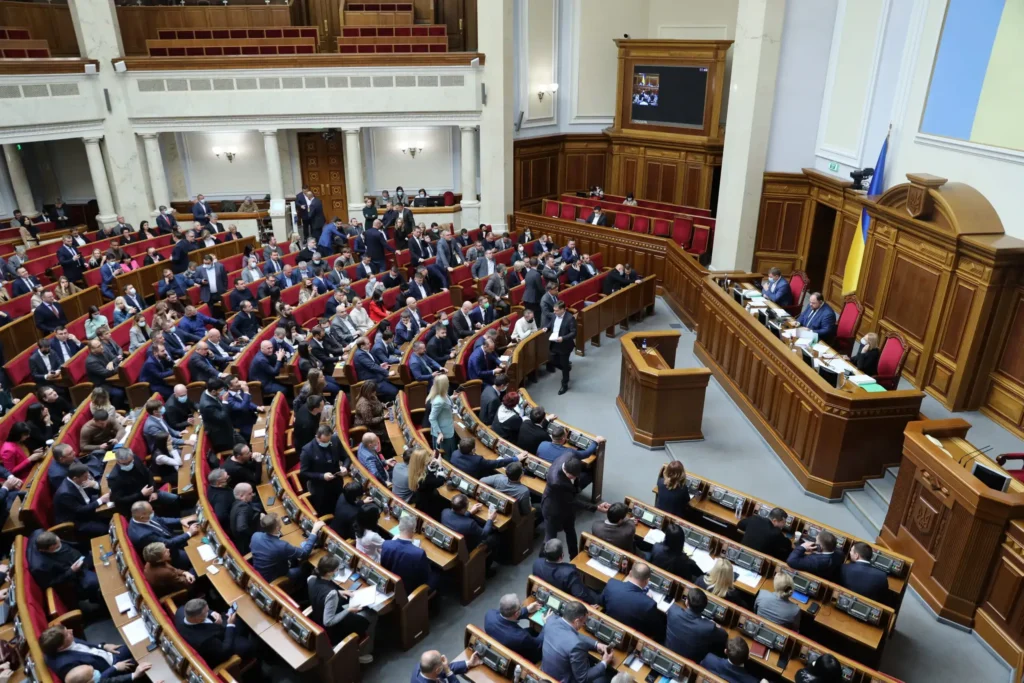
At the same time, the receipt of funds is subject to a number of conditions. Ukraine has already fulfilled one of them — the Verkhovna Rada has approved the state budget for 2026.
Among other IMF requirements is the introduction of VAT for individual entrepreneurs with an annual income of more than UAH 1 million.
However, this provision has been criticized. Experts warn that it could contribute to the growth of the shadow economy, and consider the established income threshold to be too low and in need of revision.
Against this backdrop, IMF Managing Director Kristalina Georgieva said during a visit to Kyiv in January this year that the Fund could give Ukraine up to a year to adopt the necessary changes to this tax.
At the same time, it was recently announced that the IMF had canceled the preconditions for Ukraine’s new $8.1 billion loan program, namely the requirements for VAT for sole proprietors, customs duties on parcels, tax on digital platforms, and military tax.