No room for luxury: how the second-hand market works in Ukraine during the war
26 February 11:02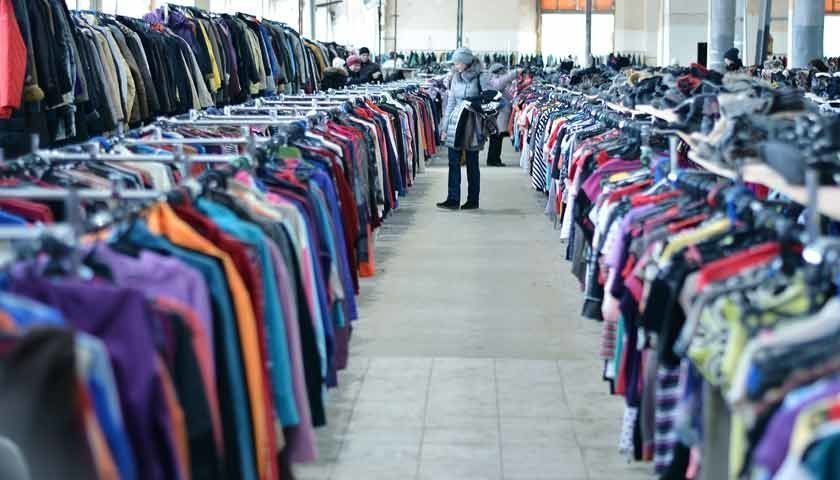 ANALYSIS FROM
Last year, the second-hand clothing market grew by 25% compared to 2024, according to data from specialized clothing sales websites. The number of second-hand stores increased by almost 50%. And, according to Vladislav Myasoedov, president of the Second-Hand Clothing Dealers Association, the second-hand market is not going to give up its position and is only gaining momentum, despite the problems that have arisen. Komersant investigated what is happening with second-hand clothing in Ukraine today.
Market dynamics during the war
In 2022, the market for stock and used clothing in Ukraine underwent significant changes under the influence of military operations, according to data from Pro-Consulting LLC. Traditionally, women’s clothing was in the highest demand, but with the start of the full-scale invasion, there was a significant increase in demand for men’s clothing. This is due to the need to provide the defense forces with appropriate equipment, while demand for women’s and children’s clothing declined due to the migration of these population groups abroad.
In 2023, the situation on the market for stock and used clothing in Ukraine began to stabilize, and the structure of demand approached the 2021 figures. Interest in sportswear remains particularly high. This is due to its versatility: it is used as everyday and home wear and is suitable for conditions of unstable heat supply, analysts concluded.
Return to pre-war trends
In fact, the share of women’s clothing, which declined in 2022, returned to pre-war levels in early 2024. This is due to the stabilization of the situation in the country, the return of part of the population, and the resumption of economic activity. Dresses, skirts, outerwear, sportswear, and knitwear were in the highest demand.
In 2022, men’s clothing accounted for about 27% of the knitwear market and 41% of the textile clothing market, which is significantly higher than in previous years. In 2023, the share of men’s clothing declined slightly, approaching the 2021 level. Outerwear, trousers (including jeans), and knitwear are in the highest demand.
The footwear market shrank by 17.5% in monetary terms in 2022. In 2023, this segment of the stock and used clothing market grew by 40%, exceeding 2021 figures. There has been a slow increase in the share of textile footwear.
Imports of used clothing to Ukraine in 2024 amounted to $181.8 million, returning to 2019 levels after a pandemic-induced decline, and remained strong last year. Analysts identify this segment as one of the most resilient in retail and predict that it will continue to gain momentum.
Logistical problems and their impact on price
As noted by
“There used to be a route for the delivery of goods called ‘Viking’. The cargo arrived at the port of Odessa and was loaded onto two train cars that ran twice a day. It was profitable, fast, and affordable. Today, this route no longer exists, and logistics have shifted to road transport. It turns out that foreigners, mainly Poles, do not want to travel deep into Ukraine due to shelling. Therefore, there are difficulties with delivery. It takes a long time, is slow, and expensive,” says Vladislav Myasoedov.
Transportation costs, as well as related costs for purchasing generators to power stores and fuel, affect the final cost of imported used goods. It is increasing in our country, even though it may not be changing on world markets. However, many factors influence the price, the expert notes.
Pricing: from collection method to country of origin
“The price of second-hand goods at sales sites abroad always varies, and it directly depends even on the method of collection. One option is “door-to-door,” when bags are distributed to people and then the ready-made bundles are picked up. This is expensive. But there is also container collection, where items are brought to a container, which is cheaper. And it all depends on the country where the purchases are made. Items are brought to us from large countries in Europe and North America, for example, countries that are similar to us in terms of climate. Poland is nearby, with cheaper logistics and prices. If it’s Germany, it will be more expensive. The price includes where the items were collected, the quality of the clothing, and how much waste there will be,” the association’s president explains.
Pricing varies. Contracts vary—long or short. Today, you can buy 40 containers, and then there may be a two- or three-month pause. For example, Britain exports clothing, but there are certain migration rules there—there are periods when they stop exports when many migrants arrive and need to be provided with things. Ukraine may not receive goods from them at this time, and this may be during one of the seasons. After all, things are collected abroad after the end of the season.
The flip side of the business: processing unsold goods
But the most interesting thing is that Ukrainians also recoup part of what they spent on buying used items. That is, even imported and unsold items do not go to waste; they are resold.
“We export and sell rags from unsold second-hand goods. We have many companies engaged in recycling, and rags are already being sold even in our country, if you have seen them in Epicenter. They sort them by fabric type, cut off the fittings, cuffs, etc. No one specifically produces rags. Rags are waste that is exported to Germany and the Netherlands and purchased by factories, mainly in the automotive industry, for sound insulation in cars. This is called shredded second-hand goods, a completely environmentally friendly product,” notes Vladislav Myasoedov.
Incidentally, the same thing happens with Ukrainian second-hand goods, which people throw into special containers; practically all of it goes for recycling.
“We don’t have such a great need to give these things to the needy for free. Only about 1% of them remain. But we don’t have enough rags for sale, so they are sent for recycling. However, if there are items that can be reused, they may be donated to charity, while the rest are sent to be turned into rags,” notes the expert.
The popularity of second-hand goods will grow
It is not easy to enter the second-hand market, as large European companies work with trusted buyers. In addition, there is fierce competition between countries today, and you have to try hard to buy used items. For example, Poland buys goods from Germany, and Romania buys from Sweden. In Ukraine, even small businesses can buy goods from large companies for resale, of course, at a completely different price.
Second-hand goods have already become one of the business structures in Ukraine that pays taxes in advance, plus customs clearance. And newcomers are not treated very kindly in order to avoid trouble. There have been many cases where new branded goods or expensive equipment were imported into Ukraine under the guise of second-hand goods, bypassing customs clearance. Second-hand goods were used as cover. Today, according to the head of the Second-Hand Clothing Dealers Association, only trusted companies remain on the market.
Since not everyone in Ukraine today can afford to buy not only branded clothing, but also new clothing in general, due to its price, the popularity of second-hand goods will only grow. And it is economically advantageous to spend less on quality clothing. Today, second-hand goods have become popular even in European countries.
Author: Alla Dunina