Egypt has allowed the unloading of Ukrainian wheat stolen by Russia
5 May 17:26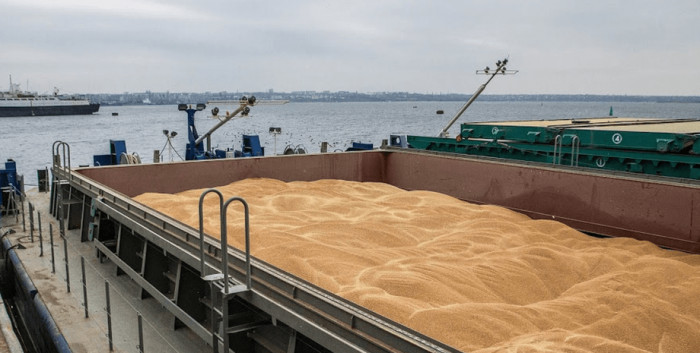
Unloading of the Asomatos, which delivered 26,900 tons of wheat stolen by Russia from the temporarily occupied territories of Ukraine, has been completed at the Egyptian port of Abu Qir. This is already the fourth such incident in Egyptian ports since April. This was reported by Ukrainian Foreign Minister Andriy Sybiga, according to "Komersant Ukrainian".
“Ukraine is a country that has served as a reliable guarantor of food security for Egypt for many years—and we do not understand why our Egyptian partners are repaying us by continuing to accept stolen Ukrainian grain… Stolen property from the occupied territories should be confiscated, not accepted. Looting is not trade, and complicity only fuels further aggression,” Sibiga emphasized.
This is already the fourth instance of stolen Ukrainian grain being unloaded at Egyptian ports since April.
According to the Ministry of Foreign Affairs, the “ASOMATOS” was allowed to unload even though five days ago the Prosecutor General of Ukraine sent an official request for legal assistance to the Egyptian Ministry of Justice regarding this illegal cargo, exported by the sanctioned “Agro-Fregat” through occupied Crimea. The prosecutor provided all the necessary data and legal grounds for the arrest of the vessel and its cargo, Sibiga asserts.
“Despite repeated warnings, the ASOMATOS was allowed to unload 26,900 tons of stolen Ukrainian wheat in Abu Qir. This is already the fourth instance of ‘laundering’ Russian grain in Egyptian ports since April,” he wrote.
The minister called on Egypt to abide by international law, its own commitments, and the principles of bilateral relations.
Watch us on YouTube: important topics – without censorship
Egypt had previously assured that it would not accept stolen grain
Earlier, following a conversation with Egyptian President Abdel Fattah al-Sisi, Ukrainian President Volodymyr Zelenskyy stated that Egypt would no longer accept grain exported by Russia from Ukraine’s temporarily occupied territories.
“I spoke with Egyptian President Abdel Fattah al-Sisi. He informed me that Egypt will no longer purchase Russian grain from our temporarily occupied territories and, at the same time, is interested in increasing imports of Ukrainian grain. Thank you for this decision,” Zelenskyy wrote at the time.
In July, Foreign Minister Andriy Sibiga reported that in 2025, Russia had stolen over 2 million tons of Ukrainian grain from the temporarily occupied territories. Moscow shipped it to markets in Africa, Asia, the Middle East, and Europe. Nearly 40% was delivered to Egypt.
Egypt is the world’s largest wheat importer, so its purchases serve as an important indicator of global demand and the competitiveness of various suppliers. In November 2025, Bloomberg reported that Egypt had increased its wheat purchases from the Black Sea region, particularly from Ukraine.
Similar cases involving grain in Israel
As a reminder, in mid-April, the first ship carrying grain stolen by Russians from Ukraine’s occupied territories arrived in Israel at the port of Haifa. Despite official warnings from Kyiv, Israel allowed the ship to be unloaded.
Later, a second ship carrying stolen Ukrainian grain was spotted in Israel, prompting Ukraine to once again appeal to the country’s authorities to block the illegal shipments. Notably, the Ukrainian Ministry of Foreign Affairs summoned Israeli Ambassador Michael Brodsky to provide explanations. He was handed a note of protest.
Meanwhile, Israeli Foreign Minister Gideon Saar stated that the accusations themselves do not constitute evidence and that the Ukrainian side had not provided the necessary proof. He noted, however, that the Israeli police had contacted the Ukrainian prosecutor’s office requesting additional information and relevant evidence, as required by Israeli law.
Later, the Israeli Foreign Ministry stated that the Panormitis, which “was scheduled to enter the port next week,” had decided to leave the country’s territorial waters. At that time, the Israel Grain Importers Association reported that the importer, Tzentsiper, had refused to unload grain from the Panormitis at the port of Haifa due to the risk of falling under EU sanctions.
Read us on Telegram: important topics – without censorship