Ecological adjustment: how the new European tax may create problems for Ukrainian exporters
16 September 2025 20:10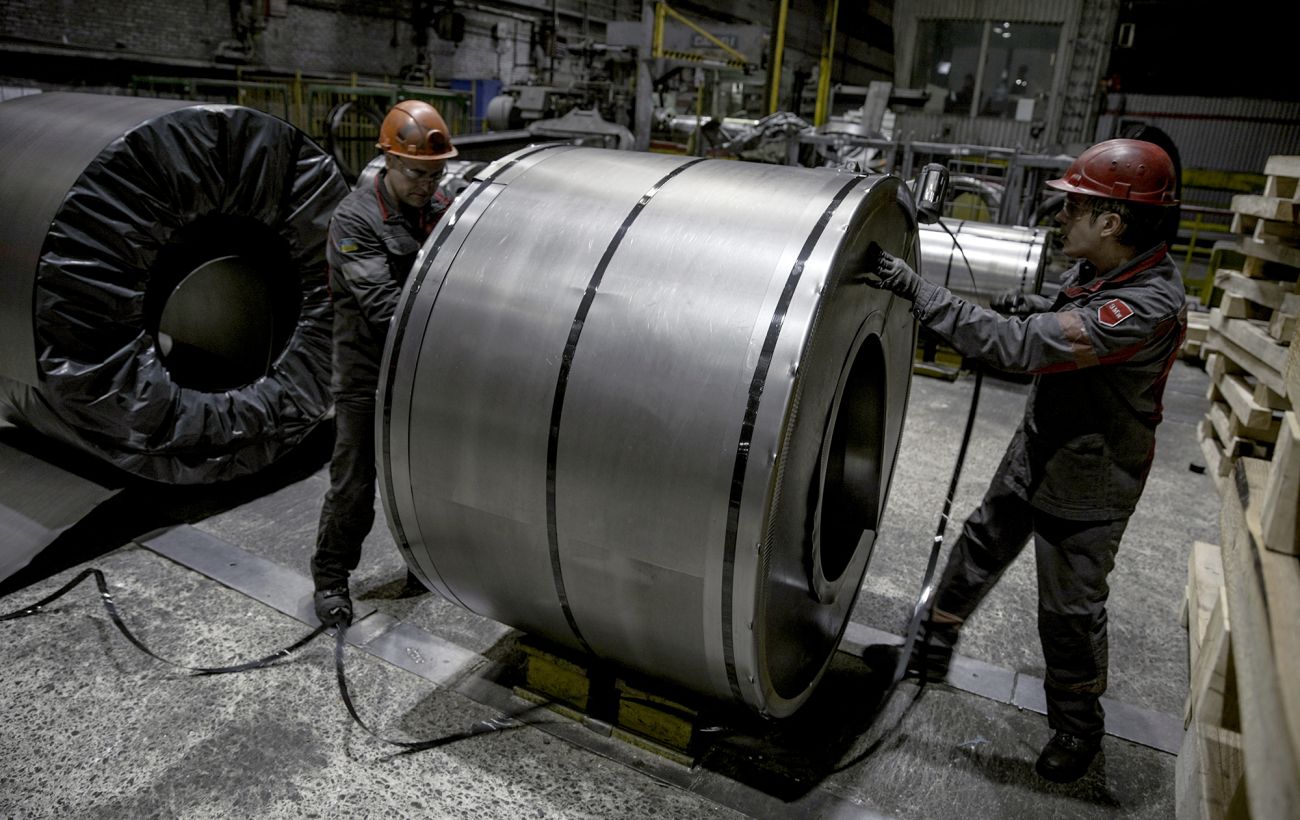 ANALYSIS FROM
Ukrainian steelmakers, and not only them, are sounding the alarm. The European Union has long prepared a “gift” for its foreign partners in the form of a carbon duty on imports of the same steel to the EU, and is ready to apply it. Ukrainian exporters may also feel its effects. Unless, of course, government officials step up their efforts to postpone this prospect.
How does it threaten domestic producers and what is being done or not done to protect them, found out
CBAM – Ukrainian producers supplying goods such as steel, cement, fertilizers, electricity, aluminum, and hydrogen to the EU have long since learned this acronym. It stands for Carbon Border Adjustment Mechanism and implies the introduction of a carbon tax. Its impact may be felt as early as January 1 next year, including by Ukrainian exporters.
What is this mechanism?
Source
The border carbon adjustment mechanism has been under discussion for the past four years. It is supposed to pay for the difference between CO2 emissions between European producers and importers. What does it mean? If you produce cement or steel, fertilizers or electricity at a company in Europe, then, for example, your emissions per ton of steel or per ton of cement are, say, one ton of CO2 per ton of product. Whereas, for example, Indian steel or Ukrainian steel production averages two tons of CO2 per ton of product. And this difference, the so-called carbon intensity, will be paid by the importer in the form of a tax. Let’s be honest, even though the so-called climate mechanism is used, i.e., it is tied to CO2 emissions, greenhouse gases, it is actually just a simple trade defense. In other words, this environmental tax protects the European market from imports,” says Stanislav Zinchenko.
According to him, many of Europe’s trading partners point out that this is an unfair mechanism because European companies have innovated and invested enough, and now they are imposing duties on developing countries, and therefore this is not a fair and just step. Nevertheless, this mechanism is already working and not only formally.
The mechanism works within the framework of reporting, which means that for the last two years companies have been reporting on CO2 emissions when exporting to Europe or when importing, if you are an importer. This is a transitional period. From January 1, 2026, it will be fully operational. Although we can assume that it is already in effect. Because, for example, if you need 10 thousand tons of fertilizers now, say, and you are told, okay, it will be a January contract. Because there is a production period, a delivery period, a customs clearance period, and so on. So, in fact, this mechanism is already affecting the market. And one way or another, it will change trade flows to Europe,” the expert states.
And Europe’s trading partners, he said, are reacting negatively and trying to negotiate, find their counter-responses or somehow harmonize the process.
And what about Ukraine?
Unfortunately, Ukraine has no stated official position on CBAM. This is stated by Stanislav Zinchenko, Director of GMK Center, Chairman of the EBA Committee on Industrial Ecology and Sustainable Development.
The first official mention in the five years of discussion came only recently, in August. “The new government’s plan includes a line that they will try to get an exemption for Ukraine,” the expert explains.
“Approval of the CBAM exception for Ukraine to stimulate the economy is how this priority task is formulated in the Cabinet of Ministers’ Action Plan for European Integration. And Ukraine has grounds to demand a delay in the application of this mechanism to Ukraine.
According to one of the CBAM regulations, if there is force majeure, and the war is a force majeure, Ukraine may request a postponement of the CBAM in relation to its exports. In other words, because we are at war and will have a post-war recovery, it may not apply to us. Unfortunately, the previous Deputy Prime Minister, Ms. Stefanishyna, did nothing about this, and there was no request from the Ukrainian government. And this is despite the fact that from the beginning of 2025 to May-June, all business associations and all exporting companies addressed the government with official, open, public letters asking for immediate action. So this is the situation in Ukraine today. There may be some secret negotiations going on, but I want to say that all the EU’s trading partners have public official documents, strategies, plans, and appeals to the European Commission regarding CBAM. Ukraine has none. So it can’t be like this,” says Stanislav Zinchenko.
And he is not the only one who holds this opinion. Three months ago, Ukrainian MP Oleksiy Kucherenko sent a parliamentary appeal to the then Prime Minister with a request to provide a developed action plan to postpone the introduction of a carbon tax for Ukrainian companies.
Source
Unfortunately, I have not received any response at all… To be honest, I was a government official and I don’t understand how you can’t answer a deputy This is a complete, in my opinion, cynical neglect of one’s duties. I just regret that Mr. Shmyhal has resigned, as well as Ms. Stefanishyna, because I also sent her an appeal. I would have brought them to administrative responsibility,” the MP said.
“It was logical to ask whether the parliamentarian plans to raise this issue again and send a parliamentary appeal to the new government officials
Of course, I will do so. You see, all the issues are very clearly formulated, and there are estimates from the Federation of Employers of Ukraine of what the consequences may be for us. And if we do not succeed, let’s say, in postponing it, then from January 1 of next year, our companies, those that trade, will have to pay huge amounts of money and lose money. It seems to me that there is no alternative but to demand a postponement for us. Moreover, there is absolutely every reason for this according to European documents. One of the clauses of the regulations stipulates that an unforeseen, exceptional and unprovoked event must occur. Unfortunately, this is what happened. Now, in times of war, given the state of the country’s economy, how can we take on additional obligations that will put a very serious burden on our enterprises,” the MP emphasized.
What Ukraine and exporters should prepare for
According to the Federation of Employers of Ukraine, if the CBA is introduced for Ukraine, the overall decline in the country’s GDP in 2026 could be 4.8%. In 2030-2034, the negative effect on GDP could reach 6.1-6.3%. Reduction in tax revenues and social contributions to budgets and funds of all levels as a result of reduced business activity due to the introduction of the DCFTA may amount to USD 2.8 billion. In 2026, this could amount to USD 2.8 billion.
The GMK Center cites the following data: in 2024, Ukraine exported $24.8 billion worth of goods to the EU, of which 14.5% were subject to the CBAM. According to the Center’s experts, the steel sector, which exported products worth $3.3 billion, will suffer the most from the introduction of the carbon tax. In the first year of full implementation of the CBAM, Ukrainian exports of iron and steel may face the need to make CBAM payments worth $311 million.
Stanislav Zinchenko, Director of GMK Center, Chairman of the EBA Industrial Ecology and Sustainable Growth Committee, continues.
“We make regular calculations. And they are such that the first year of CBAM’s operation will be minus $300-400 million for the steel industry alone for Ukrainian exports. Physically, in the first few years of CBAM’s existence, the steel industry will lose exports of pig iron, exports of square billets, and exports of long products. This will hit, for example, Kryvorizhstal, which is operating at 20 percent of its capacity, because they will not be able to export their products. It will be uncompetitive with Turkish and European producers,” says Stanislav Zinchenko.
For example, Metinvest Group’s Chief Operating Officer Oleksandr Myronenko calls the CBAM issue “very urgent” and believes that the introduction of CBAM requirements should be postponed for the duration of martial law plus 3-4 years to allow for recovery from the war and start modernization.
In addition to pig iron and rolled steel, the requirements of the border carbon adjustment mechanism may make Ukrainian exports of cement and fertilizers uncompetitive, given their high carbon intensity and the need to make the corresponding CBAM payments. This will also affect the country’s post-war recovery prospects.
Stanislav Zinchenko, Director of GMK Center, reminds us that 65% of our exports are already to the European Union. And the introduction of the CBAM mechanism will significantly reduce the ability of the Ukrainian economy to recover through trade with the EU.
Author – Serhiy Vasylovych