Ihor Likarchuk, former director of the Ukrainian Center for Educational Quality Assessment, has cast doubt on the “85% support” for the specialized school reform being promoted by the Ministry of Education and Science
10 April 20:15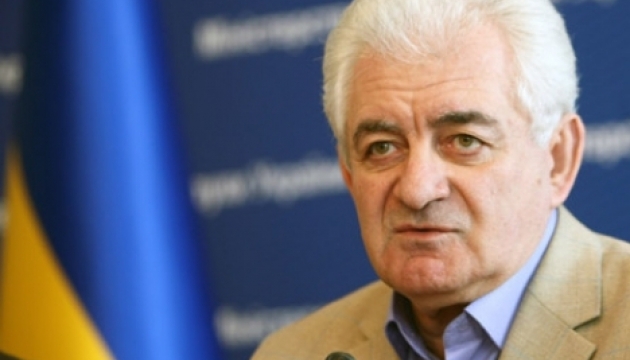
Ihor Likarchuk, an educator and former director of the Ukrainian Center for Educational Quality Assessment, has criticized the results of a sociological survey that representatives of the Ministry of Education and Science have been citing in recent days, claiming that 85% of respondents support the specialized school reform.
He shared this on Facebook, according to "Komersant Ukrainian".
According to him, the published data raises a number of questions—both regarding its relevance and the methodology of the study.
Lykarchuk, in particular, noted that the study was conducted back in 2024, when, in his assessment, the issue of specialized schools was not as pressing as it is today.
“Was the issue of specialized schools as painful and pressing back then as it is today? No,” he notes.
The education expert emphasizes that at that time, there were neither widespread discussions about changing the school system, nor petitions from parents, nor resistance from communities. Therefore, he calls the use of these results today, at the very least, inappropriate.
Questions for the clients and the wording
Separately, Lykarchuk points out that the study was commissioned by the Ministry of Education and Science of Ukraine and the DECIDE project—that is, the very entities promoting this reform.
At the same time, he emphasizes: this does not mean that the results are false, but it may explain their “convenience.”
Furthermore, according to him, the key problem lies in the wording of the questions. Respondents were not asked about specific consequences of the reform, such as the closure of upper-grade classes, the need to transport children over significant distances, or changes to the network of lyceums.
Instead, the questions concerned the general desire for a better education for children.
“There is by no means necessarily an equivalence between ‘I want a better education’ and ‘I support a specific reform,’” Lykarchuk emphasizes.
“80,000 respondents is not an indicator of quality”
The expert also expressed skepticism regarding the argument about the survey’s scale—approximately 80,000 respondents. He cited the position of renowned sociologist Iryna Bekeshkina, who once emphasized that the number of respondents is not decisive for the quality of the study, as the representativeness of the sample is of key importance.
According to Lykarchuk, in this case, participation is voluntary, which means it primarily involves an active audience, not necessarily those who will be directly affected by the reform.
In conclusion, the educator stated that using such results as an argument for the “will of the people” is manipulative.
“When such studies are presented as the ‘will of the people’—it’s no longer about sociology. It’s about technology,” he believes.
Lykarchuk also emphasized that the cited figures do not convince him of the existence of genuine 85% support for the specialized school reform within Ukrainian society. He urged against substituting public discourse with convenient figures and against mistaking wishful thinking for reality.
What came before
Oksen Lisovyi, Ukraine’s Minister of Education and Science, spoke about preparations for the launch of the senior specialized school as part of the New Ukrainian School initiative. According to him, 91% of communities are already actively undergoing this transformation.
“I emphasize that the 11-year school system is a model characteristic of Russia and Belarus. And obviously, we are not following their example. And it is up to us to implement the final stage of this reform,” Lisovyi stated.
He noted that preparations for the launch of the upper-level specialized school began in 2024. According to him, the first stage was a nationwide survey conducted in collaboration with KIIS, which covered over 80,000 respondents from 300 local communities. According to the results, 85% of parents of 10th and 11th graders and 78% of parents of 5th and 6th graders “support these changes in high school.”
In practice, however, the reform entails the closure of a number of Ukrainian schools, as well as the revocation of certain schools’ right to form high school classes. And children from these schools will have to transfer to other educational institutions. This issue has become particularly painful for rural areas, where children may be forced to commute to schools in other districts.
And this is happening despite the lack of decent roads and, in some cases, school transportation in these communities.
Petition — Stop the Reform
In March, a petition demanding a halt to the reform was even published on the CMU website, and it garnered the 25,000 signatures required for consideration.
“We, the parents of secondary school students, appeal to the Cabinet of Ministers of Ukraine to review the approach to implementing the general secondary education reform, taking into account the problems that arose during its implementation, as well as the need to fully respect the rights of students guaranteed by the Constitution of Ukraine,” the petition states.
The petition notes that the high school reform proposed by the government hinders access to education for thousands of Ukrainian students.
“We are convinced that, under conditions of military conflict, such a reform poses real risks of destroying education in communities. Without taking into account the actual situations on the ground, this reform will result in many communities being left without high school programs. This will force children to travel to other towns, which will negatively impact their physical and emotional well-being as well as the quality of the educational process. And, given the martial law, it will also create an additional risk to the lives of high school students,” the text states.