Former head of the Economic Cassation Bohdan Lviv is under arrest: what is known about the Medvedchuk pipe case
10 July 2025 14:25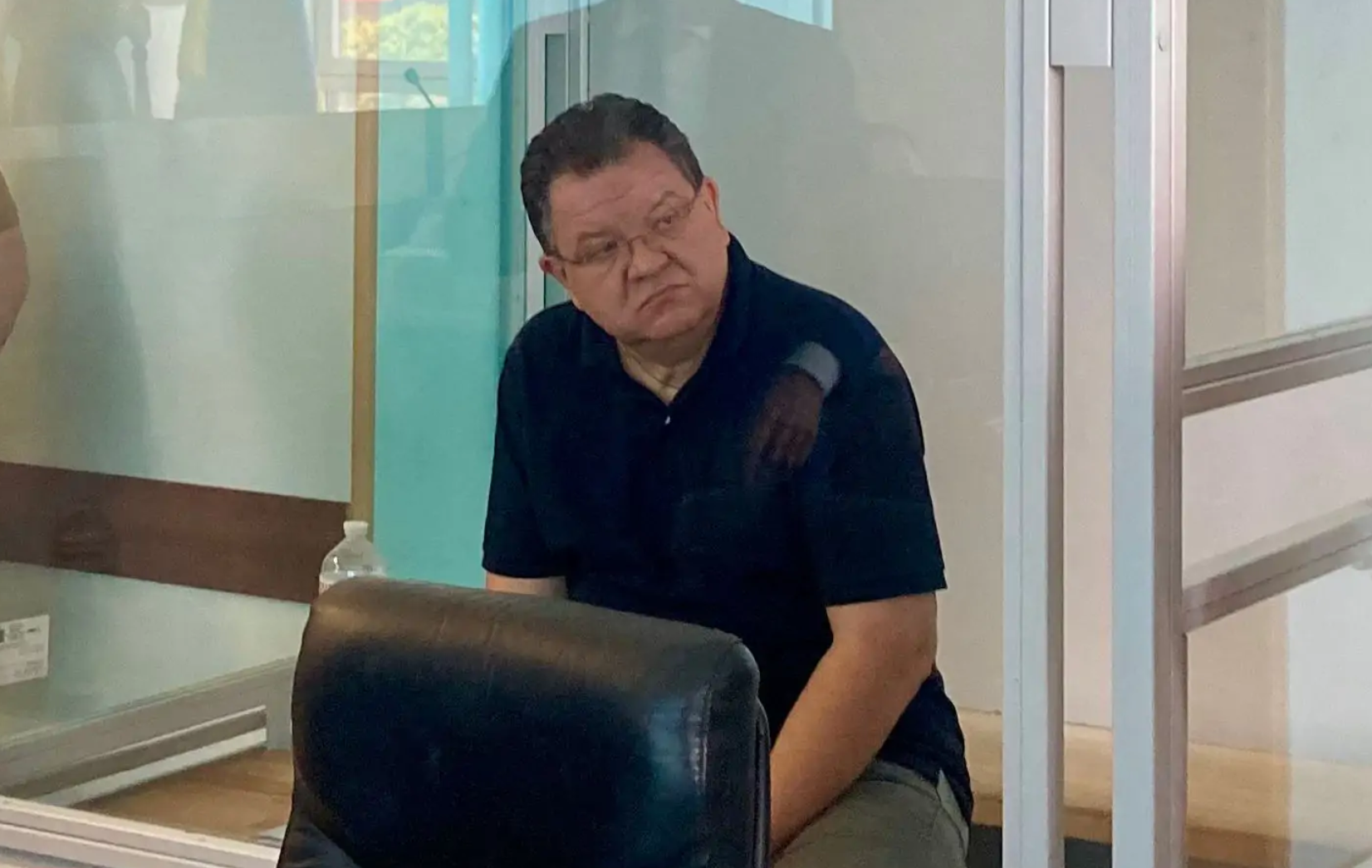
Bohdan Lviv, the former head of the Commercial Court of Cassation of the Supreme Court of Ukraine, has been under arrest since June 18, 2025. He is accused of participating in a corruption scheme related to the seizure of a strategic facility – the Samara-Western Direction oil product pipeline, better known as the Medvedchuk pipe. The court set bail at more than UAH 302 million, which Lviv failed to pay. This was reported by "Komersant Ukrainian" with reference to the Watchers publication
Lviv’s defense filed an appeal, which was to be considered by the Kyiv Court of Appeal on July 3. However, one of the panel’s judges, Valeriy Lashevych, recused himself because he had worked with Lviv for a long time in one of Ukraine’s military courts. The hearing was postponed until August.
Bohdan Lviv is suspected of aiding and abetting the misappropriation, embezzlement or seizure of property through abuse of office (Part 5 of Article 27 Part 5 of Article 191 of the Criminal Code of Ukraine) in the so-called Medvedchuk Pipe case.
Who is Bohdan Lviv?
Bohdan Lviv has been a judge since 1992, and has been with the Supreme Economic Court since 2004. After the judicial reform of 2016, he joined the newly created Supreme Court, heading the Economic Cassation. Despite warnings from civil society organizations about his integrity, he was appointed and even became deputy chief justice.
In addition, Lviv’s name was mentioned in the context of the corruption scandal involving Pavlo Hrechkivskyi, a member of the High Council of Justice at the time. According to media reports, the latter allegedly promised to settle the issue of the “necessary” decision through Lviv for $500,000. In 2016, journalists of Slidstvo.info wrote that it was possible to “resolve” issues related to business cases through Lviv.
Nevertheless, Lviv passed the competitive procedure and was appointed a judge of the Commercial Court of Cassation within the Supreme Court. In 2017, he was elected chairman of this court and deputy chairman of the Supreme Court.

In 2022, journalists of the Schemes program published information about Lviv’s Russian citizenship. This became the basis for his dismissal.
However, the Kyiv District Administrative Court reinstated him in his job (but postponed the immediate execution, which is usually provided for in this category of cases).
In June 2024, the Sixth Administrative Court of Appeal overturned this reinstatement decision. During the appeal hearing, the SBU confirmed that he had a Russian passport, although Lviv called it a fake.
What the case is about
In mid-June of this year, some media outlets reported that Lviv had been notified of suspicion, although there were no official communications on this in the information space at that time. For example, on June 18, the Union of Dead Lawyers wrote about this, indicating that it was a suspicion in the case of the so-called Medvedchuk pipe.
It is noteworthy that the Ukrainian Bar Association issued a statement on June 16 to prevent pressure on the bar. The statement noted that it was due to “an increase in the number of cases of interference by law enforcement agencies in the professional activities of lawyers.”
on April 24, 2025, Svitlana Panaiotidi, the former State Commissioner of the AMCU, reported a search that took place at her home without a court order. The UNBA assumed at the time that the searches were related to the so-called Medvedchuk pipe case, and later reported a number of other possible searches, but there were no more official comments.
As you know, in August 2023, Lviv received his lawyer’s license. But, according to the website of the Unified Register of Lawyers, he immediately suspended his right to practice law.
Lviv’s arrest was eventually confirmed after the relevant decision was published in the register of court decisions. As stated in the text of the decision, on June 18, the Security Service of Ukraine notified him of suspicion of aiding and abetting the misappropriation, embezzlement or seizure of property through abuse of office (part 5 of Article 27 part 5 of Article 191 of the Criminal Code of Ukraine). On the same day, the Shevchenkivskyi District Court of Kyiv remanded him in custody for two months with an alternative bail of UAH 302 million.

The case of Medvedchuk’s pipe
The charges against Lviv are related to alleged assistance in the misappropriation of state property – a pipeline that was supposed to become the property of Ukraine after the collapse of the USSR. Instead, it ended up under the control of the Russian company Transnefteprodukt, and later – people close to Viktor Medvedchuk.
The rulings in Lviv’s case, published in the Unified Register of Court Decisions, contain little information about the substance of the case in which he was notified of suspicion. Some of them state that the case investigates the circumstances of the seizure of the Ukrainian part of the Samara-Western Direction oil product pipeline by a group of former high-ranking officials, as well as the subsequent legalization of funds from its use.
The investigation established that after Ukraine declared its independence, this pipe was supposed to become the property of the state. However, the company from Russia, Transnefteprodukt, did not hand over the pipeline.
According to Bihus.info, Viktor Medvedchuk discussed this pipe with the head of Russian Transneft, Nikolai Tokarev. In the conversation, Medvedchuk mentioned that he had spoken about the pipeline with “our boss,” saying that he “had a proposal” and was personally “controlling” the issue. At that time, disputes over its transfer to Ukrainian ownership were ongoing in the courts.
In the winter of 2015, in one of his conversations with the head of Transneft, Medvedchuk outlined his plan: the pipeline should be returned to Russian control, after which it would be transferred to another “his” company. As a “representative” of this new structure, Medvedchuk proposed a member of parliament from his entourage, Taras Kozak.
on March 17, 2015, the Supreme Economic Court (since April 2014, Bohdan Lviv had been the head of this court, and the successor to the HEC was the Commercial Court of Cassation, with Lviv as its head again) decided that the pipe should become Ukrainian.
“Claims of the Prosecutor General filed in the interests of the state represented by the State Property Fund of Ukraine to reclaim property from the possession of the Subsidiary Enterprise Prykarpatzakhidtrans of the South-Western Open Joint Stock Company for Pipeline Transportation of Oil Products of the Russian Joint Stock Company Transnefteprodukt, in particular, part of the Samara-Western Direction and Grozny-Armavir-Trudova oil product pipelines, which run through the territory of Ukraine, with a total length of 1433 km, and return it to the ownership of the state represented by the Fund.
However, in April 2015, a judge of the Rivne Economic Court, Yaroslava Gudzenko, actually returned the pipeline to the Russians. Her decision canceled the almost completed nationalization of the strategic oil product pipeline.
According to Bihus.info, after the pipeline was returned to the Russians, it was re-registered to Medvedchuk’s people.
The prosecutor’s office subsequently tried to appeal this decision, but the courts, including the Supreme Court, dismissed the claim. In its cassation appeal, the prosecutor’s office argued that the courts had not properly evaluated all the evidence in the case.
“Since the prosecutor did not provide in his statement of claim any identifying features, as well as quantitative and qualitative characteristics of the disputed parts of the oil product pipelines, their composition, location and length (separately for each object), the above makes it impossible to satisfy the claims in the form in which they are set out in the request part of his statement of claim,” the Supreme Court ruling said in 2018.
Neither the first nor the second decision in the commercial cassation was made by Lviv. However, as mentioned above, he has been heading the Commercial Court of Cassation since 2017.
According to Skhemy, the case against Lviv concerns the period when sections of the Samara-Western Direction oil pipeline were under the control of Viktor Medvedchuk, who is accused of treason. The investigation believes that he may have influenced judges to make certain decisions in a commercial case on the transfer of the pipeline to a company associated with Medvedchuk.
Arrest and investigation
on June 18, the SBU served Lviv with a notice of suspicion under Part 5 of Article 27 and Part 5 of Article 191 of the Criminal Code (aiding and abetting in the misappropriation or embezzlement of property). On the same day, the Shevchenkivskyi District Court of Kyiv imposed a pre-trial restraint of arrest for two months with the possibility of bail in the amount of UAH 302 million. Prosecutors demanded a bail of over UAH 1.4 billion, arguing that the crime was serious and there were risks of influencing witnesses.
The defense appealed the decision, but the appeal hearing was postponed to August due to the recusal of a judge who had previously worked with Lviv.
What’s next
The next hearing to consider the appeal against Lviv’s arrest is scheduled for August 6.
Lviv himself calls the case a “fake,” but has so far refrained from commenting in detail in public.