Gas balance: Will Ukrainian storage facilities be filled with gas before winter?
27 March 17:24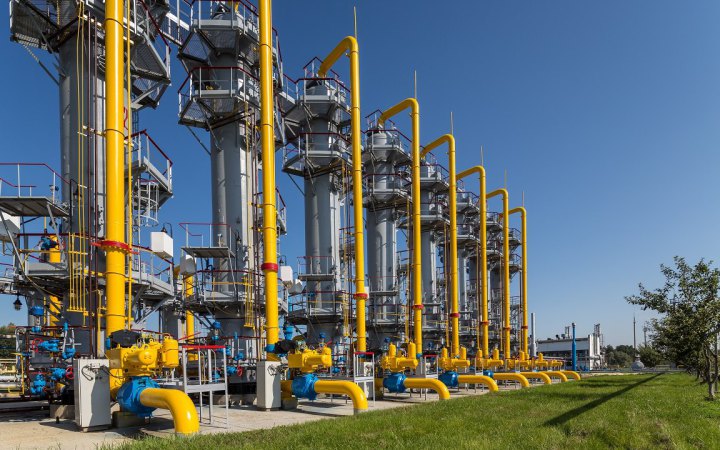
The current heating season in Ukraine is coming to an end, and preparations for the next one are underway. This once again brings the following questions to the forefront: how much gas is currently in underground storage facilities, how much more needs to be stockpiled, and at what cost. And this is happening at a time when, due to the war in the Middle East, we need to compete even more fiercely for resources and manage our finances even more carefully. Komersant investigated the state of Ukraine’s gas reserves
First Deputy Prime Minister and Minister of Energy Denys Shmyhal recently set out the guidelines for the government and state agencies responsible for preparing for the heating season.
“Our goal is to reach at least 13 billion cubic meters of gas by the start of the next heating season,” the official stated in parliament during question time, predicting that by the end of the current heating season, there will be 9.5 billion cubic meters of gas in storage.
The Ministry of Energy expects that underground gas storage facilities will be filled primarily with domestically produced gas. Additional gas purchases on the European market are planned to be made, as the minister put it, “during a period of favorable market conditions.”
How realistic are these and other plans and estimates? The publication
— According to your information, how much gas is currently left in underground storage facilities? What percentage are they filled to?
— At the end of this heating season, we have about 9.6 billion cubic meters of gas in storage. That is, the storage facilities are 31% full. For comparison: last year, as of the end of gas withdrawal from storage, there were 5.4 billion cubic meters there.
— So, are the Ukrainian government’s plans to inject at least 13 billion cubic meters of gas into the storage facilities by the start of the next heating season realistic?
— Yes, in my opinion, this is a very realistic goal. I even think that given the current situation—with production, imports, and consumption—even without gas imports, we will be able to accumulate these 13 billion cubic meters of gas by November 1. But this is a minimum target, and in my opinion, it would certainly be better to build up larger gas reserves. And so, in order to store more, we may have to import certain volumes of gas. Moreover, the enemy continues to shell gas production facilities, and it cannot be ruled out that if they sustain significant damage, we will have to resort to imports again. Therefore, we should not rule out this option.
— Industry publications have reported that Ukraine has already begun building up its gas reserves. What is the rate of injection?
Currently, these volumes are not very large, and the heating season has not yet ended in many regions. Although the fairly warm weather suggests that this will happen soon. For now, gas injection is unstable: ranging from a few to a maximum of thirteen million cubic meters per day. Again, for comparison: last March, we hadn’t even started replenishing the storage facilities yet. When we were in the active injection period, the maximum volumes reached 60 million cubic meters per day. I think this year we’ll see similar figures in the summer or closer to fall, when gas consumption will be lower than it is now. Currently, gas volumes in our storage facilities are increasing only due to the surplus that we are not using, since gas consumption remains high.
— I suggest we focus on the price component of the gas accumulation process and proceed on the assumption that import purchases will still be unavoidable. Energy Minister Denys Shmyhal stated that additional gas purchases on the European market will be made during periods of favorable market conditions. Do existing agreements with European partners allow us to adapt to favorable market conditions?
— This is a market, and when a Ukrainian company—whether state-owned or private—wants to, it enters the European market and buys natural gas at the prices prevailing on the European market at that time. Gas prices can be fixed in the case of longer-term agreements. Unfortunately or fortunately, we currently have virtually no such agreements. The last such agreement involved importing American LNG through the Polish company Orlen during the first quarter of 2026. So it turns out that we are currently still receiving the final deliveries of this gas. There are no other agreements, at least none that have been announced or are known on the market. Therefore, I think that in April we may see gas imports either cease entirely or be minimal. And this is quite normal, given that gas prices in Europe are currently high. Buying gas now at a price twice as high as it was in February is not at all profitable. It is better, if the situation allows—and it does, because, as I mentioned, storage reserves are higher than last year—to wait one, two, or three months, and if the price situation normalizes, say, in the summer, then import at that time.
— What are gas prices on the European market right now?
— If we’re talking about futures prices, which indicate how much it will cost to purchase gas for delivery in April, they stand at 56 euros per megawatt-hour, which is roughly 500–600 euros per thousand cubic meters. And compared to what it was in February—that is, before the war in the Middle East—that’s twice as high. It is also important to note that prices are not only high right now but also highly volatile; they change every day. This is happening against the backdrop of the war in the Middle East, where any news about a possible end or a possible prolongation of the war has a very strong impact on prices in Europe.
— Remind us why both the oil and gas markets are so dependent on what is currently happening in the Middle East.
— The global natural gas situation is heavily dependent on its extraction and production in the Persian Gulf countries. For example, Qatar is the world’s second-largest exporter of liquefied natural gas (LNG). And about 20% of the world’s LNG supply passes through the Strait of Hormuz. Therefore, any disruptions have an impact. And right now, essentially, neither Qatar nor the United Arab Emirates is exporting liquefied gas at all due to the blockade of the Strait of Hormuz. Consequently, there are certain expectations regarding a possible gas shortage on global markets.
The war continues, and it is unclear when it will end, while countries in both Europe and Asia need to prepare for next winter and fill their natural gas storage facilities; therefore, competition for available resources on the market is expected.
Consequently, whoever pays more will receive available gas from other major sources, such as the U.S. or Australia. Therefore, gas prices in Europe depend on events in the Middle East. Although there is no shortage as such at the moment, since the heating season is ending and warmer weather is arriving. But we need to start thinking about next winter, particularly because Europe went through this winter with low gas reserves in storage.
Compared to Europe, Ukraine is ending the current heating season with more optimistic figures. As a reminder, there are currently 9.6 billion cubic meters of gas remaining in storage, which is 4.2 billion more than there was last year at the time gas withdrawal from storage ended. This gives reason to hope that Ukraine—without heavy reliance on imports—will manage to accumulate at least 13 billion cubic meters of gas, the target set as a benchmark.
Author: Serhiy Vasylievych