Greece legalises same-sex marriage despite strong church opposition
16 February 2024 19:22
The Greek parliament has approved a bill allowing same-sex marriage. Greece has become one of the first Orthodox countries to allow such unions, reports  with reference to Reuters.
This historic decision was made possible despite significant opposition from the church and was supported by 176 out of 300 MPs. Representatives of the centre-right New Democracy party, which is part of the government of Prime Minister Kyriakos Mitsotakis, protested the bill, but it found sufficient support among the left-wing opposition despite tense debate.
The law will come into force after publication in the official government gazette.
Thelaw grants same-sex couples the right to marry and adopt children and was passed after decades of campaigning by the LGBT community for marriage equality in the socially conservative country. In 2015, Greece allowed civil partnerships between same-sex couples, and in 2017, it legally recognised gender identity.
Greece became the 16th EU country to recognise same-sex relationships by law. The unique situation is that Greece became the first Orthodox country where the authorities took such a step, despite the traditional influence of the church.
The head of the Greek Orthodox Church, Archbishop Ieronymos, commented on the situation as “a new reality that only seeks to undermine national cohesion”.
Recent opinion polls show that Greeks are divided on the issue. The powerful Orthodox Church, which considers homosexuality a sin, strongly opposes same-sex marriage, while many members of the LGBT community believe the bill does not go far enough.
It is noted that the law does not remove obstacles for LGBT couples to use assisted reproduction methods. Surrogate pregnancy will also not apply to LGBT people, although the bill recognises children already born using this method abroad.
Same-sex marriages in the world
Today, the registration of such marriages is legal in 35 countries, including: Andorra, Argentina, Australia, Austria, Belgium, Brazil, Canada, Chile, Colombia, Costa Rica, Cuba, Denmark, Ecuador, Estonia, Finland, France, Germany, Ireland, Iceland, Luxembourg, Malta, Mexico, the Netherlands, New Zealand, Norway, South Africa, Portugal, Slovenia, Spain, Sweden, Switzerland, Taiwan, the United Kingdom, the United States, Uruguay and the United States. In addition, the Inter-American Court of Human Rights has ruled that the countries that are parties to the American Convention on Human Rights must recognise the right of same-sex couples to marry.
Last year, Latvia and Estonia also legalised same-sex marriage. In late 2023, Pope Francis approved a Vatican ruling that Roman Catholic priests can conditionally bless same-sex couples if it is not part of regular church rituals or liturgies. The Ukrainian Greek Catholic Church has acknowledged that this decision does not apply to its faithful.
In different countries, civil partnerships have different names and define different rights and obligations of the partners. About 15 countries have enshrined in their legislation the right to enter into civil unions or partnerships. Among them are France (which also allows same-sex marriage), Italy, Iceland, the Czech Republic, Hungary, Croatia, Estonia, Israel and others.
Same-sex marriage in Ukraine
In the summer of 2022, a petition to President Zelensky to legalise marriage for LGBT people received 25,000 signatures. He replied that the decision would not be made during the war because the Constitution (which states that marriage is a union between a man and a woman) cannot be changed under martial law or a state of emergency, but the government has ideas for registering civil partnerships.
In 2023, President of Ukraine Volodymyr Zelenskyy responded to a petition to legalise partnerships for same-sex couples. He noted that he had asked the Chairman of the Verkhovna Rada of Ukraine and the Cabinet of Ministers to consider the issue raised in the electronic petition.
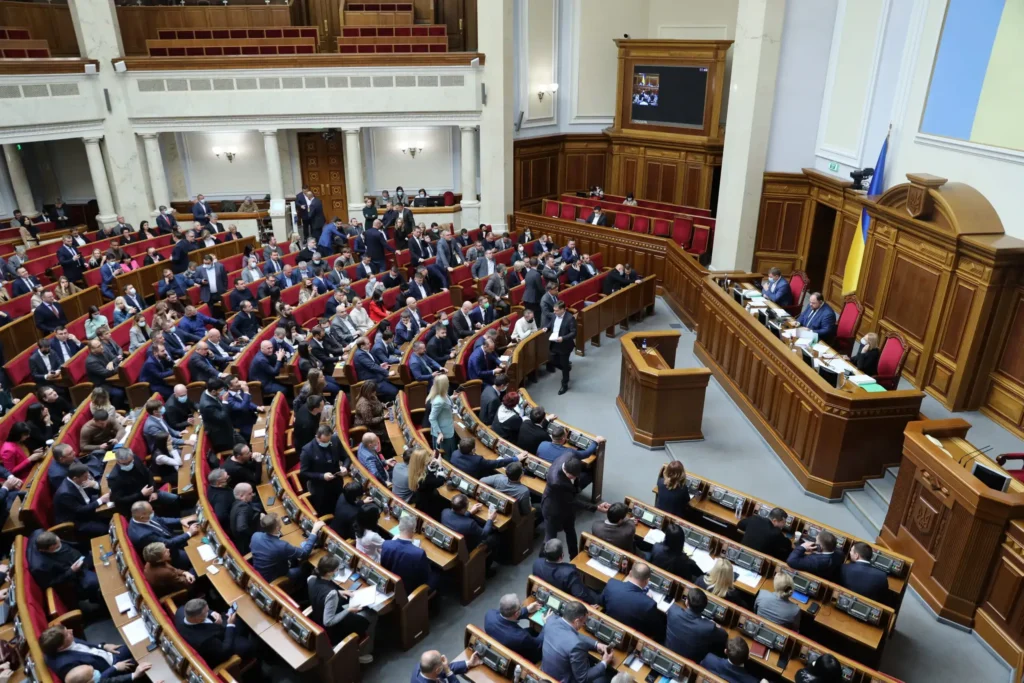
In March 2023, MP Inna Sovsun submitted to the Verkhovna Rada Bill No. 9103 on civil partnerships, which would allow the registration of same-sex marriages. In October last year, the Ministry of Defence and the Ministry of Justice supported the bill on registered partnerships.
Civil (registered) partnerships can be used by military and civilian, same-sex and different-sex couples. The draft law will help same-sex couples define mutual rights and obligations, property ownership, inheritance, social protection, and rights in the event of the death or disappearance of a partner.
The only exception is that civil partners will not be able to adopt or take care of children. This is not yet mentioned, but it is also a concern for same-sex couples, in particular those who are raising a child from a partner’s previous marriage.