Inflation in Ukraine rose in May: what’s behind the numbers and how the market is reacting
10 June 2025 22:00 INFOGRAPHICS
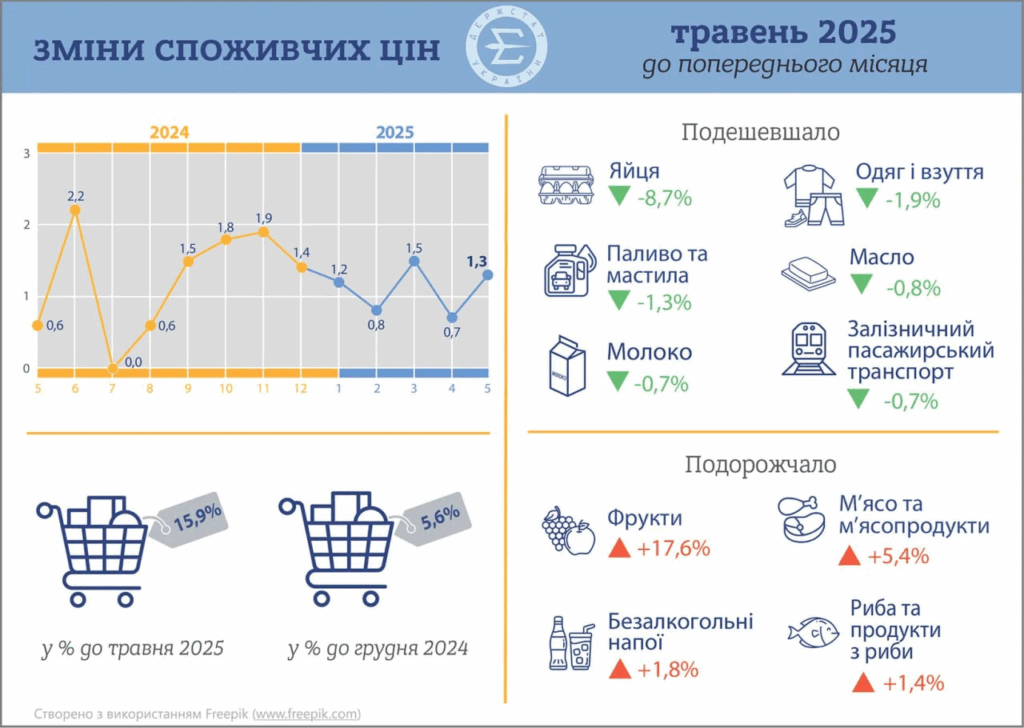
In May 2025, consumer prices in Ukraine rose by 1.3% compared to April, the highest monthly figure since the beginning of the year. According to the State Statistics Service, inflation has already reached 5.6% since the beginning of 2025, "Komersant Ukrainian" reports.
On an annualized basis, prices rose by 15.9%, significantly exceeding both the government’s forecasts and the National Bank’s target.
The main driver of growth was food. Prices for food and non-alcoholic beverages increased by an average of 2.8%. Fruit prices rose particularly sharply, by 17.6% over the month. There was also an increase in prices for:
- meat (0.8%);
- fish (0.7%);
- sugar (2.3%);
- bread (1.0%);
- vegetables (3.4%).
At the same time, some products fell in price. These include eggs (-8.7%), milk (-0.5%), butter (-0.8%), and rice (-0.5%).
In May, core inflation, which excludes seasonal and administratively regulated prices, was 0.5%. This indicates that a significant part of the overall inflationary pressure is temporary and related to seasonal fluctuations.
According to economists, the current price increase is due not only to seasonal factors, but also to the impact of inflation expectations, higher production costs, and rising wages. Logistical difficulties, the unstable hryvnia exchange rate and limited imports amid the war also play a significant role.
Read also: Inflation in Ukraine exceeded 15%: what caused it and is it really critical
In response to these trends, the National Bank left the key policy rate unchanged at 15.5% in early June. The regulator believes that the inflationary peak has already been reached, and in the summer months, we should expect a slowdown in price growth due to the seasonal reduction in the price of vegetables and fruits. At the same time, the NBU warns that risks remain high, primarily due to the security situation, the impact of global prices, and the level of budget spending.
The government and the NBU’s forecast for the end of the year has not yet been revised: inflation is expected to reach 8.7% in 2025 and return to the target level of 5% in 2026.
For businesses, the current dynamics mean that they need to adapt. Companies in the retail and food service sectors should take into account changes in consumer sentiment and rising procurement costs. At the same time, a stable key policy rate allows them to rely on predictable lending conditions. Companies that work with imports should be prepared for currency fluctuations, especially in an unstable environment.
Analysts also point out that with high inflation expectations, consumers tend to prematurely replenish stocks, which further stimulates demand and can lead to price spikes for certain categories of goods.
Currently, the market continues to monitor the June figures. If the seasonal factors really work and the hryvnia exchange rate remains stable, we may see a decline in monthly inflation to 0.5-0.7% in July. This will give businesses a temporary respite to plan their pricing policy and stabilize margins.
Читайте нас у Telegram: головні новини коротко