Stories that cannot be banned: how the IOC’s review made the Ukrainian film “The Interception” even stronger
24 February 16:39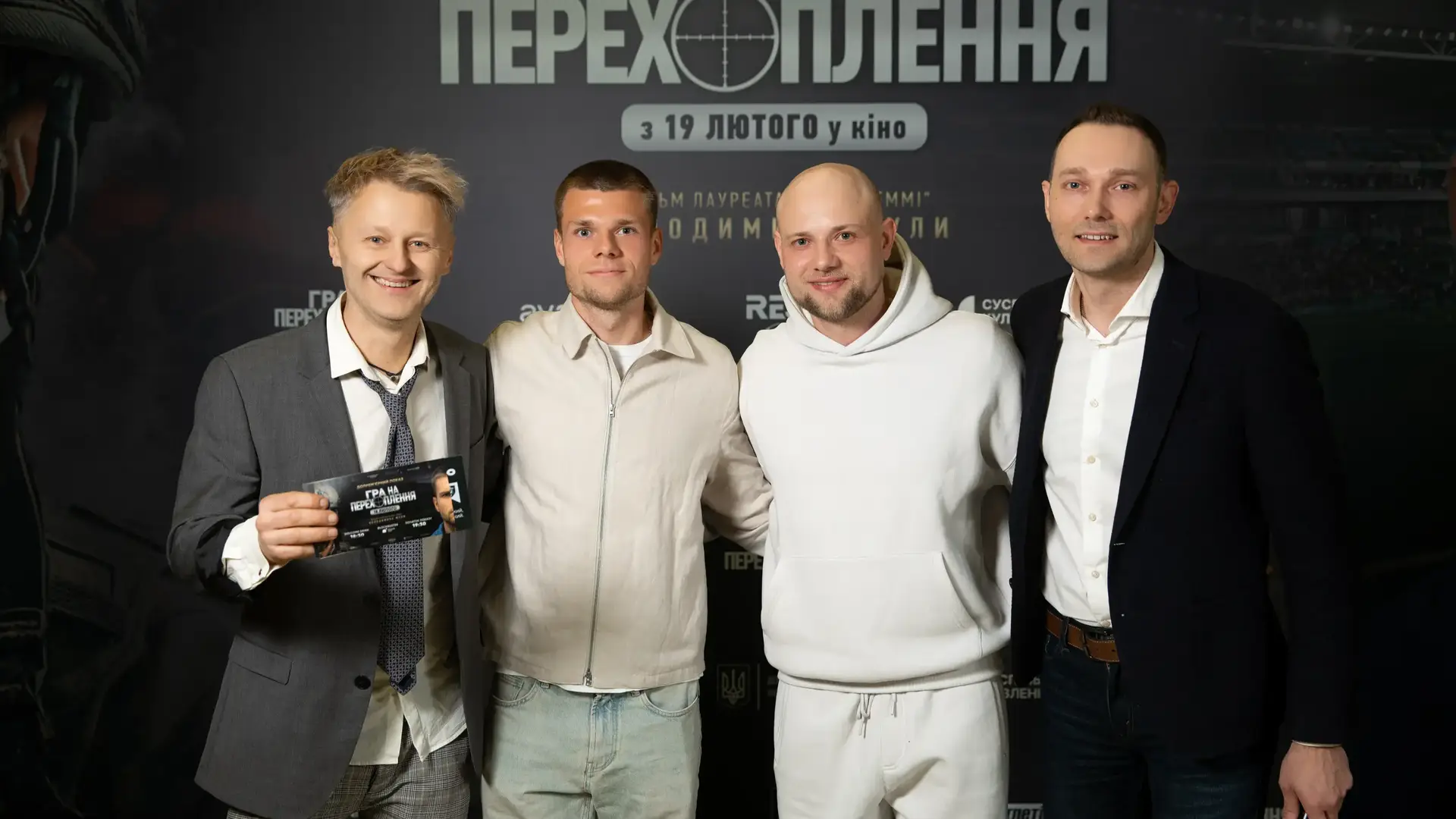
Against the backdrop of the International Paralympic Committee’s controversial decision to allow representatives from Russia and Belarus to compete in the 2026 Paralympics under their national flags, Ukraine continues to fight — not only on the battlefield, but also for the right to be heard in the world. While international sports are increasingly demonstrating a return to “business as usual,” Ukrainian artists, athletes, and journalists are forced to repeatedly voice the truth about the war and its consequences. It is in this reality that Volodymyr Mula, a film director, sports reporter, and the first Ukrainian Emmy Award winner, works. And although his documentary Interception was thoroughly scrutinized by the International Olympic Committee, with reservations about possible politicization and a ban on the use of certain shots and sensitive fragments, the film still reached its audience. And perhaps it was these forced restrictions that made the film even more accurate — more focused not on loud gestures, but on human stories that cannot be banned.
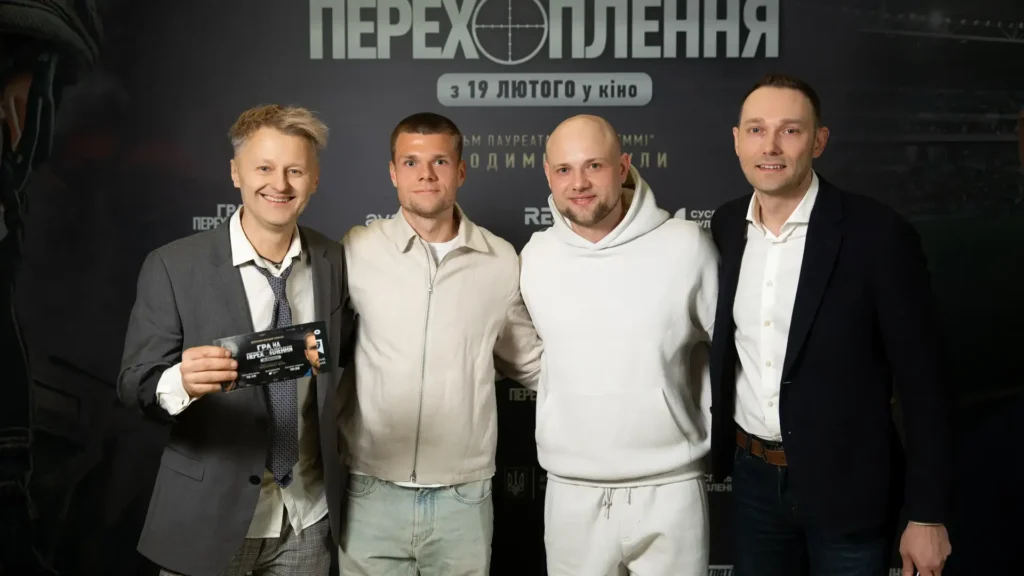
At a time when the world is tired of news from the front lines, Ukrainian documentary filmmaking is taking on a different mission — to bring back attention, emotion, and responsibility. And to prove that silence is not an option. In an exclusive interview with Kommersant Ukrainian, Vladimir Mula candidly spoke about the most difficult aspects of making the film Interception, the forced changes to the concept during editing, and the real prospects for Ukrainian documentary cinema abroad. Incidentally, the film has already been released. The main characters are Dynamo footballer Mykola Mykhailenko and his brother, a soldier named Serhiy.
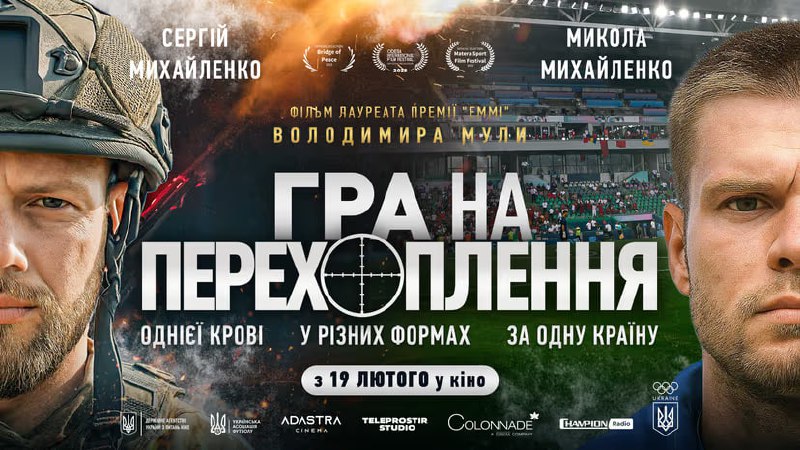
Two countries, two storylines, and complete freedom for the characters
According to the director, the most difficult part of working on the film was not even the filming process itself during the war, but organizing parallel work in different countries.
“The most difficult thing was probably not even the filming process, but organizing the entire team and everyone at the same time in Ukraine and France. There were two parallel storylines unfolding there, and it had to be filmed live,” says Vladimir Mula.
Mula emphasizes that the team fundamentally refused to use pre-written lines.
“We didn’t even write down what they were talking about. There was complete freedom of action. It was important to me that it looked as natural as possible on screen. I set the direction, understood where it should fit into the plot, but beyond that, it was the living fabric of life.”
At the same time, the director coordinated the work of cameramen in France and the film crew working with the military in Ukraine. Constant phone calls, synchronization, waiting—all this became part of the production routine.
“We weren’t writing interviews, we were writing scenes. And we needed to get not only images, but also information in these scenes. If someone didn’t say something or the emotion ‘sagged,’ the scene was cut.”
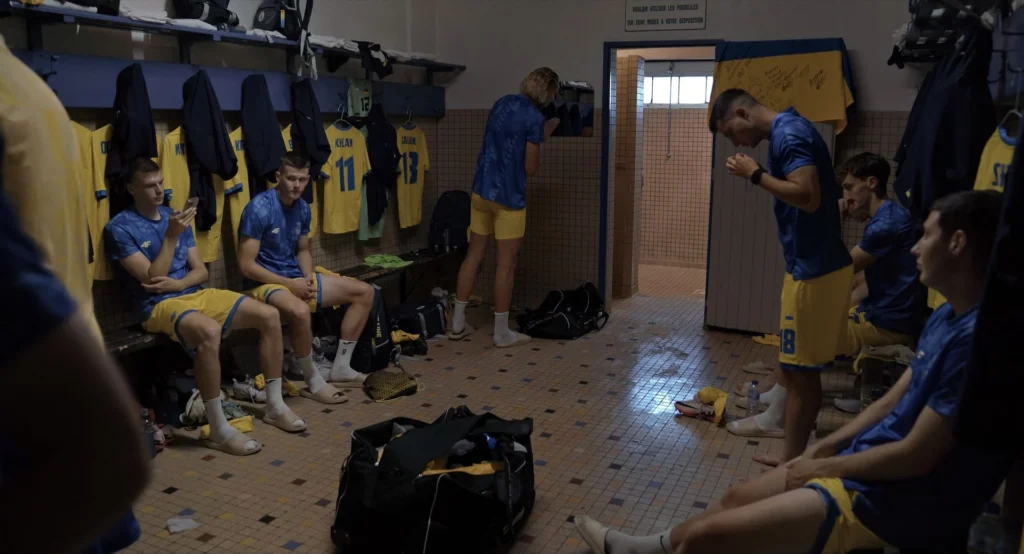
Editing as a battlefield: what didn’t make it into the film
Editing was a separate challenge. According to Mula, many powerful episodes had to be removed — either for security reasons or because of changes in the overall structure of the film. The most sensitive issue was the military component.
“Something had to be thrown out, not shown, so as not to give the enemy unnecessary information. At the front, we didn’t try to film as much as possible — we immediately filmed what we needed, with the maximum understanding of the situation,” says Mula.
There were also moments when the film crew arrived at their positions, set up, and the soldiers were urgently called away on a mission.
“You wait for them to come back. But they might come back exhausted, and that’s not exactly what we need for the scene. On the other hand, that’s life,” says Mula.
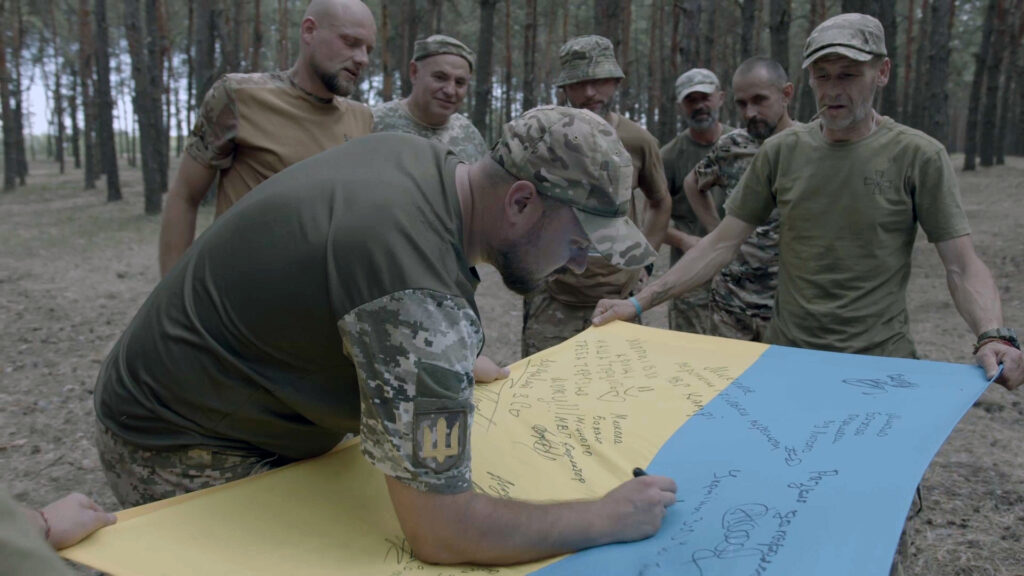
A change in concept: from sports to social drama
While working on the film, the team encountered legal and communication difficulties in their interactions with the International Olympic Committee. Some of the material had to be discarded.
“I even said during editing: let’s not insert this yet. We left a blank space and continued editing until communication ended,” says Mula.
Together with screenwriter Nikolai Vasilkov ( ), the director was forced to rethink the very structure of the film.
“We started looking at material that we hadn’t paid much attention to initially because we knew we had more insider, ‘juicy’ footage. But we had to change the structure itself and make a slightly different film — more focused on soulfulness, more emphasis on family.”
As a result, the film changed its genre direction.
“If initially it was supposed to be more of a sports documentary, the result turned out to be more of a social documentary. There is sport, but through sport, many other topics are raised,” — Vladimir Mula
Ukrainian documentary cinema: a chance to be heard
Mula speaks separately about the prospects for Ukrainian cinema in the West. In his opinion, documentary filmmaking today is a powerful tool for communicating with an international audience. The director is already working on the possibility of a limited theatrical release of the film in the US.
“I am working on an option with America. There is a request to show the film in limited release in the eastern part of the United States,” Vladimir Mula
According to him, what has become a painful everyday reality for Ukrainians is perceived in the West as a powerful emotional shock.
“What is familiar to us and does not cause surprise is perceived as ‘wow’ in the West. Through cinema, we can convey messages about what is happening to us. Cinema works very well, especially when you don’t do it in a straightforward way, but look for different forms.”
So, the story of how Interception was made shows that modern Ukrainian documentary filmmaking is not only an art form, but also a tool for strategic presence in the world. At a time when information fatigue from the war is growing, it is cinema that can bring back emotions, empathy, and attention.