The cold reality: how to restore the heating system in large Ukrainian cities
9 February 18:32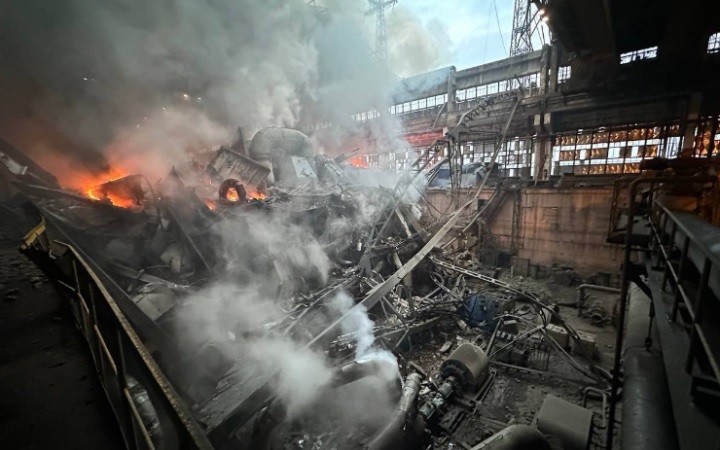
Severe frosts and regular enemy shelling not only test the resilience of Ukrainian citizens, but also test Ukrainian energy companies’ ability to repair damaged facilities. Sometimes, due to significant destruction, it is simply impossible to do this quickly. But it must be done. asked experts how best to repair the damage "Komersant Ukrainian".
Photos of the Darnytsia Thermal Power Plant in Kyiv, damaged last week as a result of an enemy attack, along with a list of more than 1,100 high-rise buildings in the capital that were left without heat, and forecasts that the restoration will take more than a month, confirmed the cold reality in which many Kyiv residents found themselves.
Serhiy Nahorniak, a member of parliament and representative of the parliamentary committee on energy, tried to reassure the city’s residents:
“Absolutely all of Kyiv’s thermal power plants and the Kharkiv Thermal Power Plant are subject to restoration. The only question is how long this restoration will take — that’s the first thing. The second issue is financial resources, and the third is the availability of spare parts and specialists for repairs.”
A fourth issue could be added: a professional understanding of what to restore and how.
Smart restoration
This winter, Ukrainians in various large cities, such as Kharkiv and Kyiv, will have to grit their teeth and endure, so to speak. This is given the current possibilities with the same electricity and heat supply. But what to do next? How to heat large cities? That is the question. Should we restore old thermal power plants or develop distributed generation, switch to autonomous mini-boiler rooms, and generally focus on individual heating?
Ivan Plachkov, former Minister of Fuel and Energy of Ukraine and former CEO of Kyivenergo, believes that it will not be possible to abandon large thermal power plants and, accordingly, centralized heating.
“We need to take into account the density of development, and where possible, individual heating can be used, but where development is dense, centralized heating is needed. Moreover, all the networks are in place, and it will not be so expensive,” says the expert.
As a reminder, Kyiv’s heat generation consists of three CHPs, which provided heat to most of Kyiv’s housing stock, and approximately 180 municipal boiler rooms of various capacities. Those buildings that receive heat from these boiler rooms are more fortunate. Those that were heated by large CHPs are less fortunate.
Energy expert Stanislav Ignatiev notes that large CHPs cannot be restored very quickly, and therefore makes the following proposal:
“Where equipment is already significantly damaged, it is necessary to calculate how economically feasible it is to continue using it, or whether it would be more expedient to rebuild and install new, more energy-efficient equipment with a higher efficiency factor. This is because these old CHPs have an efficiency coefficient of around 24-28% of what new facilities can provide. Therefore, it makes sense to rebuild them in a new way in order to preserve our centralized heat supply system. We need to install new equipment, new boilers, and steam turbines, which are more efficient. But it is worth doing this when the war is over, so that these facilities do not become targets for attacks during the reconstruction phase,” the expert notes.
But what about heat supply to the capital while the CHPs are being rebuilt? Ivan Plachkov, former Minister of Fuel and Energy of Ukraine and former CEO of Kyivenergo, explains.
“The thermal power plants need to be restored in stages. We have appropriate reserve boilers at our thermal power plants, which are provided for emergencies or situations such as the one we are currently facing, when the power units are destroyed. And they provide heat. That is, we need to start by repairing them where necessary. These boilers will be enough to provide the city with heat next winter. And then we will build power units that will produce both electricity and heat. I think it will take up to several years to rebuild the power units. In other words, we are restoring the system in stages,” the expert emphasizes.
Distributed heat supply
Distributed generation facilities — mobile boiler rooms, cogeneration plants — play and will continue to play an important role in the heat supply system of large cities, but not a decisive one. Unfortunately, this is confirmed by the experience of Kharkiv.
When the local thermal power plant and transformer substation were damaged during a massive attack on Kharkiv last week, residential buildings in three districts of the city had to be disconnected from the heat supply.
“Initially, 1,200 buildings were at risk, but thanks to the installation of modular boiler rooms and alternative heat sources, we managed to supply heat to 300 high-rise buildings, while 853 high-rise buildings were left without heat,” the mayor said at the time.
In other words, distributed generation, at least in its current volumes, manages to mitigate problems with heat supply, but does not solve them. That is why Kharkiv relied so heavily on the local thermal power plant. Energy expert Stanislav Ignatiev recalls.
“Kharkiv CHPP-5 was being restored after the arrival on September 25, 2022. I was in Kharkiv at the time, and it was the first strike on an energy facility. In other words, they tried to bring Kharkiv back into the general system, where it was technically possible to function in terms of infrastructure in a centralized heat supply mode. This was done in order to save resources, particularly those of citizens, and to continue operating in an “energy island” mode, where the city generates as much electricity as it directly needs,” the expert notes.
He also draws attention to another example from Kharkiv’s experience. “This is a good case study from Kharkiv. Heat is available where the city has been divided into ‘heating districts’ and modular boiler rooms have been installed there. In other words, similar ‘heatingdistricts’ need to be created. There are already examples of this in Kyiv. In the area that received heat from the Darnytsia Thermal Power Plant, two mobile boiler rooms were installed, which came to the capital under an international technical assistance program. In addition, cogeneration units were added to provide a pumping group.
“Heat zones” are a closed system of centralized heat supply, which involves the installation of a mobile boiler room or several boiler rooms to ensure pressure in the system. And this will be quite effective. Not as effective, of course, as large combined heat and power plants, where heat is, in principle, a by-product. But also not as effective as, for example, when a gas boiler has to be installed in every house,” the expert notes.
At the same time, it is important to realize that the use of autonomous mini-boiler rooms will entail a significant increase in the cost of heating for consumers.
As Stanislav Ignatiev explains, when energy resources are burned directly to generate heat, the cost will be higher. And it is not only this financial burden that will fall on the consumer’s shoulders. Some of the costs of repairing and rebuilding energy facilities will be covered by the state, and some will be purchased through international technical assistance programs, but most of the costs will still be included in the tariff and paid for by the consumer.
Author: Serhiy Vasilevych