China to build the world’s largest hydroelectric power plant in a unique canyon
27 December 2024 10:56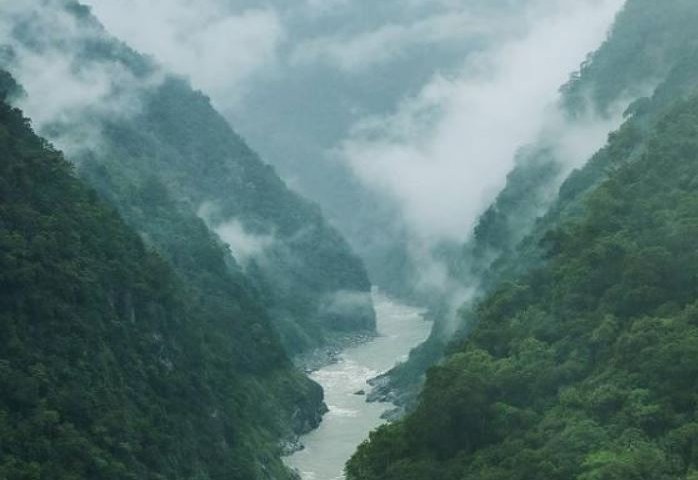
China has approved the construction of the world’s largest hydroelectric dam on the eastern edge of the Tibetan Plateau, launching an ambitious project that could affect millions of people downstream in India and Bangladesh. Reuters writes about this, "Komersant Ukrainian" informs.
The dam will be located in the lower reaches of the Yarlung Zangbo River in a section where the river drops by 2000 meters over 50 km, providing significant hydropower potential. Accordingly, the new hydroelectric power plant, according to an estimate provided by the Power Construction Corp of China in 2020, will be able to produce 300 billion kilowatt-hours of electricity annually.
This should be more than three times the design capacity of 88.2 billion kWh of the Three Gorges hydroelectric power plant, which is currently the largest in the world. By the way, the construction of the Three Gorges dam lasted 20 years, from 1992 to 2012
As the official Chinese news agency Xinhua said on Wednesday, the implementation of this project will help reduce carbon emissions and make China carbon neutral. The construction will also stimulate the development of engineering and create new jobs in the Tibetan region.
The cost of building the dam, including engineering costs, is also expected to dwarf the Three Gorges Dam, which cost 254.2 billion yuan ($34.83 billion). During the construction, 1.4 million people were displaced, which also had a significant impact on the costs, which ended up being four times higher than the original estimate of 57 billion yuan.

What negative consequences can be caused by the construction of hydropower plants
At present, the Chinese authorities do not explain in detail how many people will have to be relocated as a result of the new Tibetan project and how this construction will affect the local ecosystem, one of the richest and most diverse on the plateau.
Chinese officials are still trying to reassure everyone, claiming that the massive construction will not have a serious impact on the environment or water supply downstream.
But despite this, India and Bangladesh have already expressed concerns about the dam, as the project has the potential to change not only the local environment but also the flow and course of the river downstream.
Environmentalists in neighboring India have been reminding us since the plans to build a new dam were announced several years ago that the area is earthquake-prone and the dam is a potential “water bomb.” There is also a unique biodiversity there that could be disrupted by interfering with the riverbed.
As you know, the Yarlung Zangbo becomes lower than the Brahmaputra River, leaves Tibet and flows south to the Indian states of Arunachal Pradesh and Assam and finally to Bangladesh.
What else is known for the Yarlung Zangbo Canyon and River
Yarlung Zangbo Canyon, located in the Chinese autonomous region of Tibet, is the deepest in the world. Its depth is 6009 meters. This is recorded in the Guinness Book of Records.
Yarlung Zangbo is also one of the longest canyons in the world: it stretches for more than 500 km.
One of the largest waterways in South Asia, the Yarlung Zangbo River, also known as the Matsang, Dihang, and Xiang, flows at the bottom of the canyon. In India and Bangladesh, the river is called the Brahmaputra and Jamuna, respectively.
The canyon is distinguished by its spectacular landscape with steep cliffs, diverse flora and waterfalls, and this is due to two factors: the strong current of the river and the movement of the Himalayas.

Engineers from the state-owned PowerChina are about to dam the Yarlung Zangbo River in the lower reaches of Medog County. The dam will draw energy from the huge drop in the river in this particular area.
Another evidence of the uniqueness of the Yarlung Zangbo Canyon
A giant tree has been discovered in the deepest canyon on Earth, which may be the tallest tree in Asia and the second tallest tree in the world. This was reported by Newsweek.

A group of researchers from Peking University discovered a huge cypress there. The height of the tree is estimated at 102 meters, which is slightly higher than the 92-meter-tall Statue of Liberty.
According to the scientists, the discovered tree is a Himalayan cypress. But Chinese media reports call it a Tibetan cypress.
The tree broke the previous record set by the same team in China. In April 2022, scientists discovered a tree almost 77 meters high. A month later, they found an 83-meter-high tree.
This region is home to many giant trees, 25 of which are over 89 meters tall and were found near the record-breaking tree.

Himalayan and Tibetan cypresses are rarely found in the wild, and only a few of them grow in the Yarlung Zangbo Canyon National Nature Reserve. The tree is a protected species.
The tallest tree in the world is located in California, with a height of 116 meters. The tree was discovered in 2006 and named Hyperion. It is believed to be 600 to 800 years old.