Dr. Yevhen Dubrovsky: “The war brings us back to the terrible past of trench warfare”
14 November 2025 15:00
According to The Telegraph, Ukrainian military doctors report cases of a dangerous infection – gas gangrene, which destroys muscles and once massively affected soldiers in the trenches of World War I. Doctors note that the spread of the disease is related to the specifics of modern warfare: due to the constant threat of drones, the evacuation of the wounded is often delayed for hours or even days. Is there any effective way to prevent gas gangrene in the field, [Kommersant] asked infectious disease doctor, PhD, writer, and veteran of the Russian-Ukrainian war Yevgeny Dubrovsky.
– Yevgeniy Igorevich, there have been shocking reports that terrible diseases that everyone had long considered forgotten have begun to be recorded at the front. But there is modern medicine, knowledge, and effective powerful medicines. Are prophylactic antibiotics unable to prevent the development of gas gangrene? Why is this possible?
Indeed, to hear that the terrible diseases of the First World War have returned in the twenty-first century is extremely painful and frightening. The war has changed so much in its cruel, deadly complexity, the nature of combat operations has changed so much that, knowing the inhuman conditions our defenders are facing, it is impossible to talk about it without tears. I constantly communicate with my friends who are fighting in the most difficult and dangerous areas of the frontline – my hair stands on end from what I hear… When I was in Frankfurt and met with German readers, telling them about the real situation, the hall was silent. People looked at me with wide eyes and did not believe that this was possible in the twenty-first century. Such conditions and the nature of the war bring us back to the terrible past – to the terrible trench warfare.
As for the medical component, unfortunately, gas gangrene has already become a real threat in modern warfare. And no prophylactic antibiotics, even the most powerful ones, can protect against gas gangrene. Because the very nature of this disease is completely different.
– Could you explain what gas gangrene is? What kind of disease is it? Why don’t antibiotics work?
Gas gangrene is a severe, rapidly progressive infection of the muscles and soft tissues caused by bacteria of the genus Clostridium, which secrete strong toxins. The disease causes massive tissue death and the formation of gas in the affected area, a product of bacterial activity. That is why it is called “gas”. The most dangerous thing is that not only the limb is affected – the toxin’s effect quickly spreads throughout the body, causing shock, kidney failure and very high mortality without treatment.
Gas gangrene is caused by anaerobic bacteria, i.e. those that multiply only without access to oxygen. This is fundamentally important. In nature, clostridia live in the soil as spores. If you accidentally swallow a spore or if it gets into an open wound, nothing will happen. Special conditions are needed for the development of the disease, and it is in war that they arise perfectly.
Gas gangrene is not an ordinary “bacterial infection” that can be stopped by taking an early antibiotic. Its nature is a combination of severe tissue destruction and an anaerobic environment where Clostridium triggers necrosis.
– Is it really true that for more than a century no drug has been created that would prevent gas gangrene? Or is it difficult to prevent?
Modern warfare is mostly about mine-blast wounds. They create deep shrapnel channels, crush tissue that is massively contaminated with soil that sticks to the shrapnel and dirt from clothing, particles of which penetrate deep into the wound. Destroyed tissue quickly blocks oxygen supply, creating ideal conditions for the development of gas gangrene.
Spores get into the wound, “wake up” in these favorable conditions and trigger the development of a serious illness. However, they are activated not because the wounded “lacked antibiotics” but because the wound itself created ideal conditions: lack of oxygen, necrosis, pH changes and lack of blood supply.
Therefore, the antibiotic in the first aid kit does not solve the problem. Gas gangrene is not treated with pills. It is treated primarily with a scalpel – the wound needs to be opened, oxygen needs to be provided and necrotic tissue needs to be removed.
– So modern antibiotics do not work – do we need a new special drug?
Let me explain: an antibiotic works only where there is blood circulation. And gas gangrene occurs in the area where blood flow has already been lost. Blood does not flow into crushed, deep, tissue-contaminated wounds. Neither oxygen, nor immune cells, nor any antibiotic gets there. In fact, this means that the antibiotic is physically unable to get to where gas gangrene begins.
Not because it is weak, but because there is no delivery route.
– What should be done in this case?
The most important thing is to get the wounded on the operating table as soon as possible. Gas gangrene develops at lightning speed – often in a matter of hours. That is why time is the key factor. Prevention is not about antibiotics, but about rapid evacuation, high-quality surgical treatment of the wound, removal of crushed tissue, restoration of blood circulation and proper drainage.
Antibiotics are only an aid. They do not replace evacuation and do not replace surgery.
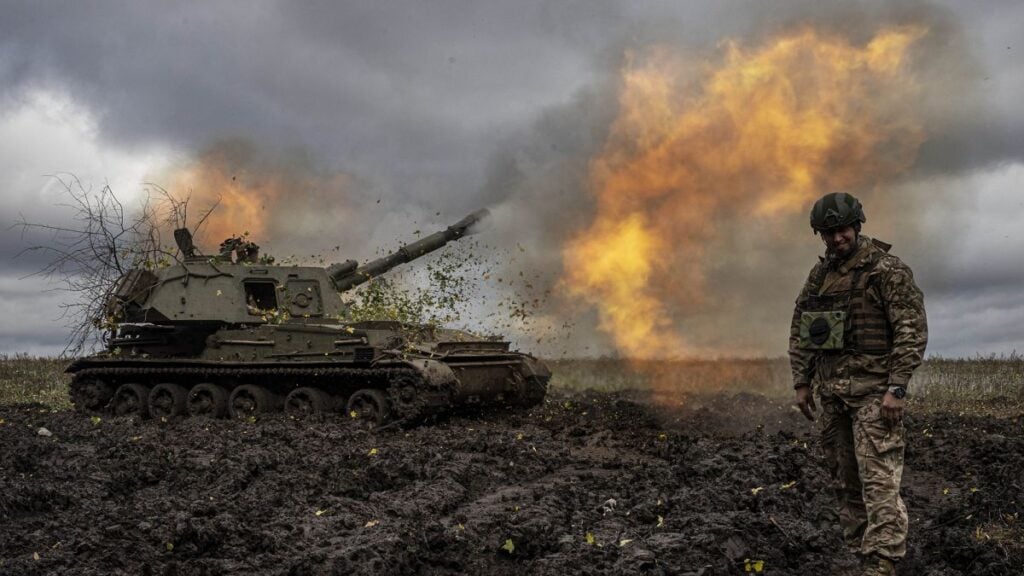
But the reality is that modern warfare often makes it impossible to provide emergency assistance. Drones, constant shelling, lack of exit windows, and the inability of vehicles to get to the wounded – all of this forces them to stay in the trench for hours or even days, dramatically reducing their chances of being rescued. What takes 20-40 minutes in civilian medicine can take days on the front line. It is impossible to talk about this calmly.
– How to solve it in the current situation?
I don’t know. Robotic equipment for evacuation, electronic warfare… These issues need to be discussed with field commanders and combat medics who are really aware of the situation. But it is clear that we need to look for solutions.
– That is, the main issue is not even medicines, but evacuation?
Yes, it is. In the context of gas gangrene, the main thing is time and high-quality surgical treatment, which is now almost impossible in the field. We need the earliest possible evacuation. This is a crucial factor at the front. The longer a wounded person is left without help, the greater the risk that anaerobic bacteria will start producing a deadly toxin.
Author: Alla Dunina