Ministerial fallout or why mass dismissals suddenly started in the Government: reasons
4 September 2024 13:19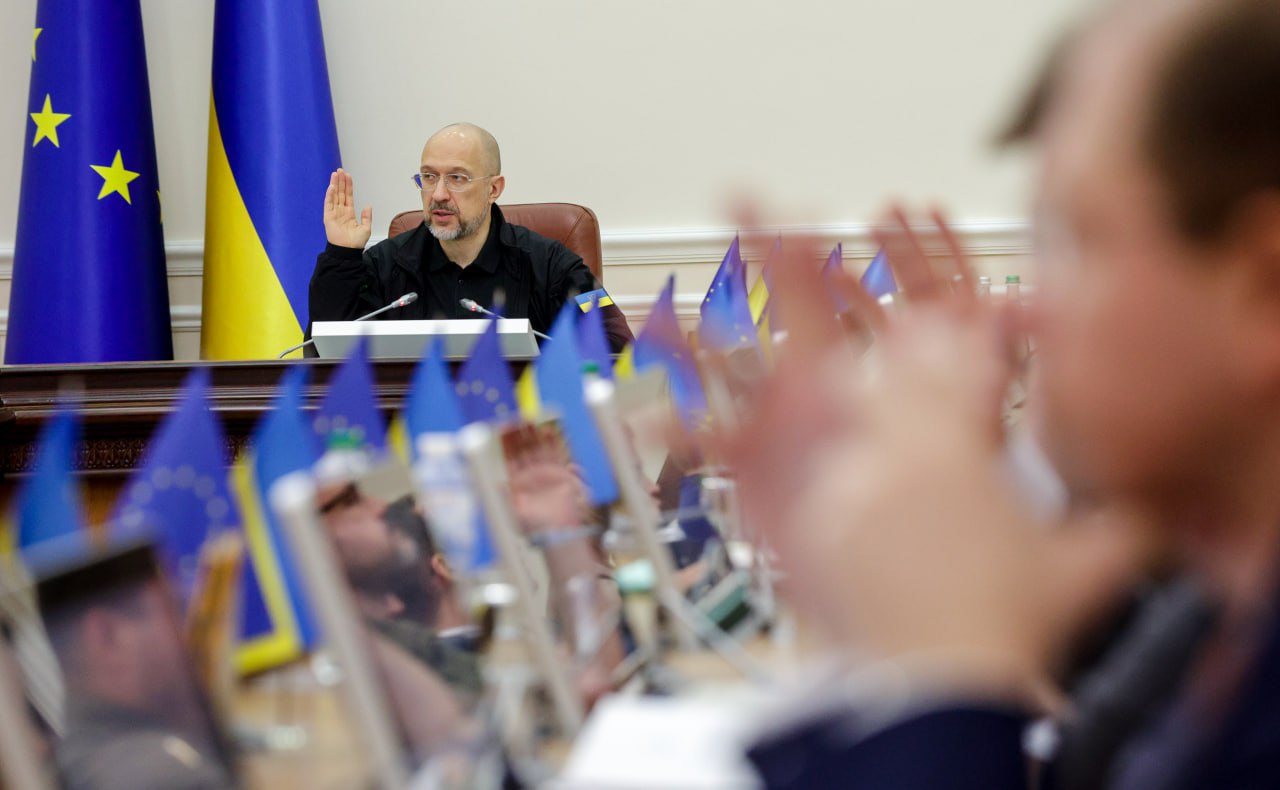
 ANALYSIS
Yesterday, a number of Ukrainian ministers submitted their resignations, including Iryna Vereshchuk, Deputy Prime Minister and Minister for Reintegration of the Temporarily Occupied Territories of Ukraine, Olha Stefanishyna, Deputy Prime Minister for European and Euro-Atlantic Integration, Oleksandr Kamyshyn, Minister for Strategic Industries, Denys Malyuska, Minister of Justice, Ruslan Strilets, Minister of Environmental Protection and Natural Resources, and Dmytro Kuleba, Minister of Foreign Affairs.
Vitaliy Koval, the Head of the State Property Fund of Ukraine , also resigned. Earlier, Rostyslav Shurma, who had been responsible for the economy and energy in the President’s Office since 2021, and the head of Ukrenergo, Volodymyr Kudrytskyi, were dismissed. What is behind such massive dismissals, who will take up new ministerial positions, and what rotations are expected not only in the Government but also in the Presidential Office? "Komersant Ukrainian"
The reason for the dismissal of ministers
According to political scientist Volodymyr Fesenko, Western countries had no influence on the dismissal of ministers. He refutes the claims of other experts that personnel changes take place at the behest of the White House.
“Personnel rotations are definitely not a requirement of the allies. This is a planned reconstruction of the government, which has been postponed several times. Back in February this year, when the Chief of the Armed Forces was being replaced, President of Ukraine Volodymyr Zelenskyy announced structural changes in the Government. At the time, it was planned to reduce the number of ministries and make a number of personnel changes. But this did not happen.
Some personnel decisions were planned long ago. For example, I heard about the possible resignation of Dmytro Kuleba back in September last year. Since then, including the current situation, there have been four waves of rumours about his resignation. Back in February of this year, I was told that they were already looking for a platform for him to go to after the ministry. So this was also planned,”
– said the political scientist.
Why did the dismissals start now and not earlier?
Indeed, there has been talk of possible rotations in the government for a long time.
As political analyst and head of the Centre for Analysis and Strategies Ihor Chalenko explains, such rotations in the government should be a powerful signal for Zelenskyy’s upcoming visit to New York, which is why they are happening now.
“Such rotations in the government should be a powerful signal for Zelenskyy’s upcoming visit to New York, where the UN General Assembly will take place and a meeting with Joe Biden will be held to present a victory plan,”
– chalenko believes that by this time the personnel issue should be completely resolved to ensure the information rear of the President of Ukraine.
According to Volodymyr Fesenko, the personnel rotations took place right now because the head of the government simply had free time.
“Throughout the spring and almost the entire summer, the President and the heads of the Presidential Administration were busy with internal defence issues and had a complicated foreign policy schedule: preparations for the Peace Summit, the EU Summit, the NATO Summit, etc. And in August, as I understand it, there was a window to finally resolve these personnel issues,” Fesenko said,
– fesenko said.
Follow us on Telegram: the main news in a nutshell
Why Prime Minister Shmyhal was not fired
In July of this year , sources in President Volodymyr Zelenskyy’s team claimed that he was “tired of Shmyhal” and was probably planning to fire him. However, the dismissal never took place. As noted by
“Indeed, there were such plans (to replace Shmyhal – ed.). But it quickly became clear that this contradicts the law on martial law, which does not allow the resignation of the government as a whole. And the replacement of the prime minister automatically means the resignation of the government. So we started looking for other options,”
– fesenko said.
Ihor Chalenko adds that a spot change of ministers is the mildest scenario for resetting the government that the authorities considered.
“The government faced several challenges: filling the existing vacancies (5 ministries currently have no current heads, only acting heads – ed.), which were already in the government before the new resignations were submitted. And there was also the question of whether to reboot the entire government with a new prime minister or to do a soft reboot with only half of the government replaced,”
– he said.
According to the political analyst, the leaders chose the second option, which shows the stability and renewal of the government team. This should be a signal to Western countries that the executive branch is now more optimised for the challenges of the times. After all, Rostyslav Shurma had previously caused concern among our Western partners.
“Now, the comprehensive renewal makes it possible to close the existing reputational holes at least in the tactical plane. Although, again, for example, Kudrytskyi’s resignation has only increased the problems. If we are speaking directly for our Western partners,”
– chalenko gave his analysis of the current situation.
He said that there was a real struggle in the government over the possible change of prime minister, and the current First Deputy Prime Minister of Ukraine, Minister of Economy of Ukraine Yulia Svyrydenko, was indeed considered for the post.
“We had a very serious premiership: one part of the parliament was working to keep Shmyhal in place, and the Opposition Platform was betting on replacing the prime minister and appointing Yulia Svyrydenko to the post. They even took her to Washington, but, probably to maintain some coordination in the government, they decided to go the route of keeping Shmyhal in office,”
– he said.
Who will be the new ministers and what awaits those who have submitted their resignations
According to Volodymyr Fesenko, the government is likely to face the following changes:
- The Ministry of Community Development, Territories and Infrastructure of Ukraine will be divided into 2 different ministries.
- The Ministry for Reintegration of the Temporarily Occupied Territories of Ukraine will be reorganised, because “the ministry’s functionality has changed. Previously, it dealt with the reintegration of Donbas in the context of the Minsk agreements,” Fesenko said. According to him, it is likely that some of the functions of this ministry will be transferred to the Ministry of Regional Policy, which will now be restored.
- The head of the Ministry of Reintegration, Iryna Vereshchuk, may become an ambassador, but it is not yet known which country.
- Instead of Dmytro Kuleba, the current First Deputy Foreign Minister Andriy Sybiga will become the head of the Ministry of Foreign Affairs.
- Dmytro Kuleba will either work on regional policy or infrastructure.
- Head of the State Property Fund Vitaliy Koval may become Minister of Agrarian Policy, “although it was planned that Taras Vysotsky, who is currently acting, could become the Minister,” Fesenko said.
- Smetanin or one of his deputies may be appointed Minister for Strategic Industries instead of Oleksandr Kamyshyn.
- Kamyshin will take a position in the Presidential Office.
- Olga Stefanishyna is likely to become Minister of Justice.
Author: Alyona Kaplina
Follow us on Telegram: the main news in a nutshell