Between Sanctions and Diplomacy: How the EU Explains the Possibility of Putin’s Trip to Meet Trump
17 October 2025 17:35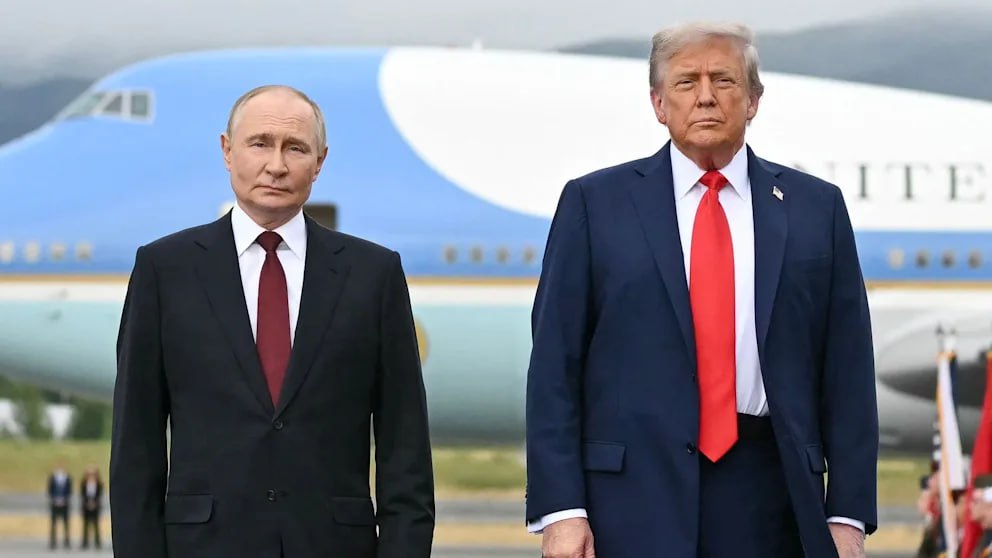
The European Union has long imposed personal sanctions on several dozen Russian individuals, including Russian President Vladimir Putin and Foreign Minister Sergey Lavrov. The sanctions include the freezing of assets in EU member states: if a person has funds or property in these states, access to them is restricted.
However, the ban on entry to the EU for Putin and Lavrov is a myth that appears in the media from time to time. Representatives of the European Commission have explicitly stated that such a ban does not apply to them, as it has never been provided for in the sanctions regime, "Komersant Ukrainian" reports, citing Radio Liberty.
This means that although Putin cannot legally use his assets in the EU, he can theoretically enter the bloc or visit a member state if this decision is supported at the state level. Therefore, his flight to Budapest (Hungary), where the Russian leader plans to meet with his American counterpart Donald Trump next week, is quite realistic and even legal.
Can the plane with the Russian delegation fly over the EU?
Due to the war and sanctions, the EU airspace is effectively closed to Russian civil aviation. However, in the context of a state visit at the diplomatic or political level, the decision to allow a plane with a Russian delegation is made by each individual EU member state.
This means that even if Vladimir Putin or his delegation wants to come to Europe, the route and flight will depend on the concessions of specific countries. Some states may “give a break,” while others may refuse.
In terms of the direction of travel and potential deviations, Member States can grant these deviations, but the decision on this should be taken individually by Member States,” Anitta Hipper, a spokesperson for the European Commission, explained to journalists during a briefing on October 17 .
If a high-level meeting is planned, a potential option is to detour through non-EU countries.
Political rhetoric and the EU’s position
Official Brussels expresses its readiness to support any initiatives that could lead to a “just and sustainable peace” in Ukraine. European Commission President Ursula von der Leyen said that if the meeting between the US and Russian presidents contributes to this, she would welcome it. But this will not mean any specific promises for the Russian side.
In her statements, Ursula von der Leyen emphasized that sanctions are not a tool of revenge, but a restriction of Russia’s ability to wage war: blocking assets, reducing financial flows, and limiting technological access.
In addition, the EU often introduces new criteria to its sanctions programs: for example, it extends bans on assets used in strategic sectors or counteracts proxy sanctions schemes.
Read also: Trump and Putin resume contact: what the leaders talked about for more than 2 hours
Why Hungary? The political logic of the meeting in Budapest
Hungarian Prime Minister Viktor Orban has already stated that preparations for a possible meeting between Putin and Trump in Budapest have begun. One of the motives for choosing the venue is to circumvent the arrest warrant for Putin issued by the International Criminal Court, as Hungary has de facto withdrawn from the jurisdiction of the ICC.
For Russia, this is a logical choice: a country that demonstrates a certain “neutrality” or even hesitation in supporting sanctions can become a springboard for contacts that are difficult to make in the heavily sanctioned EU states.
However, the mere fact that Orban made the statement does not mean that the meeting will definitely take place. As the European Commission said, “if it happens, it is not forbidden,” but so far it is only a theoretical possibility that must be assessed individually by each European state.
Watch us on YouTube: important topics – without censorship
The precedent of Putin’s flight to Hungary: consequences and risks
The upcoming meeting between Vladimir Putin and Donald Trump in Budapest has several nuances. In particular
- risks of legal conflict: if assets are frozen, any attempts to access or manage them may be subject to legal disputes;
- logistics and transit: the route of the plane with the Russian delegation may cross air corridors fully controlled by NATO or EU member states and create additional points of tension;
- pressure on sanctions discipline: those countries that are willing to grant exceptions for Putin and his team may start putting pressure on others. For example, Hungary is already demonstrating its desire to be a “mediator” (or entry point);
- symbolism and image: it is more important for business to show that it operates in accordance with international norms. If the talks with Putin take place next week, their format and the presence of business may be subject to obstruction or scrutiny.
Thus, the EU sanctions impose real restrictions on Putin’s financial assets, but not on his physical movement. This creates flexibility in the political dialog and provides weaknesses that Russia can exploit. If the planned meeting between Trump and Putin does indeed take place in Hungary, it will not only signal diplomatic tolerance, but will also be a test of European sanctions resilience.
Read us on Telegram: important topics – without censorship