Young people want opportunities, not just jobs: how “Silent Migration” jeopardizes Ukraine’s intellectual potential
24 September 2025 17:04
the “quiet migration” of students can turn into a high-profile loss for Ukraine. Every year, thousands of students and researchers go abroad, and universities risk being left without a future. The outflow of young people is becoming one of the key challenges for the state, because without systemic solutions, Ukraine may lose a significant part of its intellectual and professional potential.
Why do young people choose other countries? How to support children returning from studying abroad? And is the NMT able to guarantee fair admission even in wartime? These challenges were discussed by educational experts, government officials, and students during the discussion “Silent Migration: Admission Conditions and the Scale of Student Outflow” organized by "Komersant Ukrainian".
A recent study conducted by the Office of the First Lady showed that only 45% of high school students would like to stay in Ukraine. So we have a really serious situation. This is emphasized by Lilia Hrynevych, Vice-Rector of V.N. Karazin Kharkiv National University, Minister of Education and Science of Ukraine (2016-2019). She also emphasized that some students go abroad for security reasons, especially from the frontline areas.
“People could leave precisely because of the security situation. Perhaps we need to focus our efforts on the prospects that the Ukrainian state sets for its citizens for self-realization,” Lilia Hrynevych
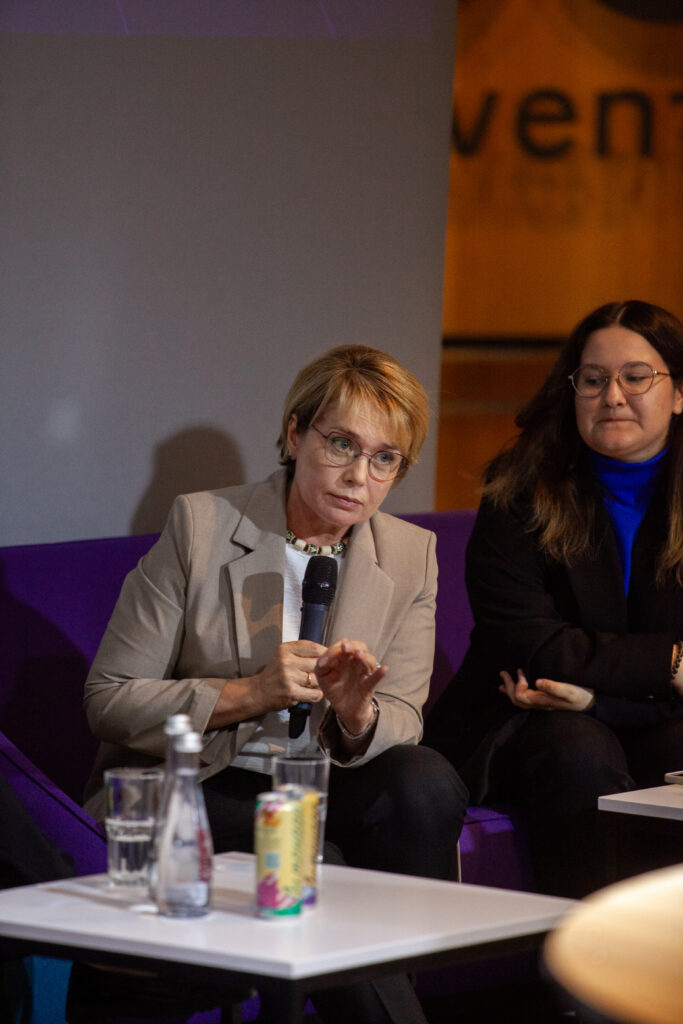
According to Hrynevych, it is important not only to retain students, but also to support researchers and teachers invested by the state. If there is no policy to support the best universities, we will get an outflow of our teachers’ potential abroad, says Hrynevych.
Solving the problem of “silent migration” requires a comprehensive approach, including supporting universities, improving the NMT system, reducing regional disparities in the quality of education, and creating conditions for talented students and researchers to return to Ukraine.
“There are no easy solutions, but to refuse them is to ignore the problem. We must be ready to sweat and blood to support our students and educators,” summarized Lilia Hrynevych.
Supporting children abroad
Violetta Dvornikova, Head of the European Women’s Association of Ukraine, focused on Ukrainian children studying abroad:
“We often think only about those who stayed in Ukraine. But there are children who are studying abroad and want to return home. According to IOM, more than 1 million children have already returned, even to the frontline areas,” Violetta Dvornikova
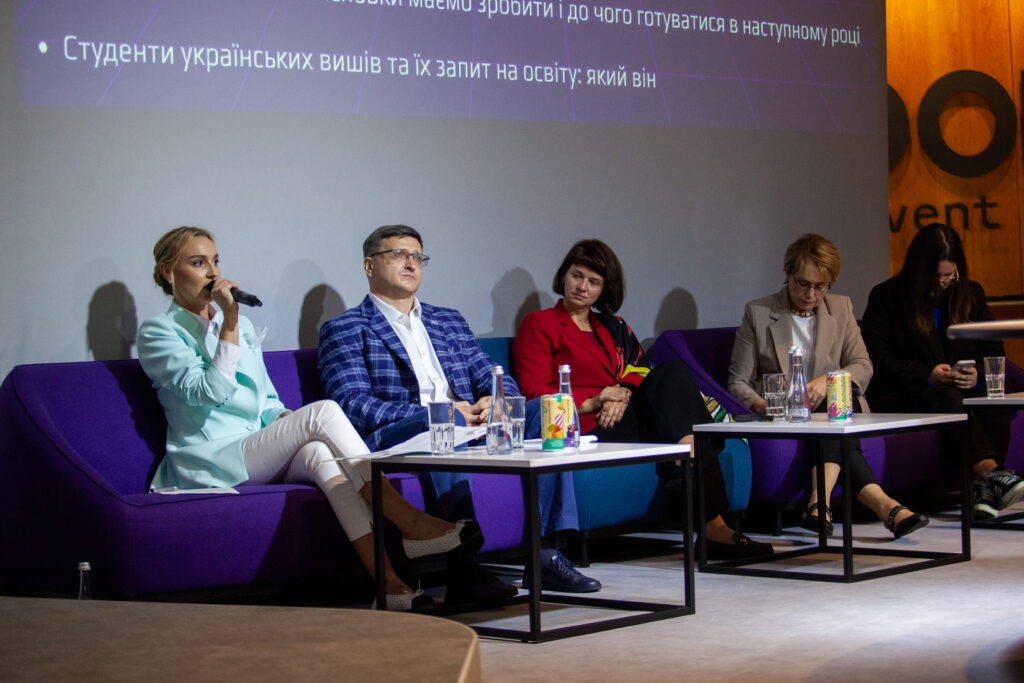
According to her, there is a misconception that children studying abroad do not want to return home. This is not true and a dangerous prejudice, says the head of the European Women’s Association of Ukraine.
At the same time, Dvornikova emphasized that returning home does not eliminate difficulties for children: they face problems in education, adaptation, and even in preserving their native language after a long stay abroad.
Dvornikova called for more comprehensive support for such children so that their experience of studying abroad becomes a resource for Ukraine’s development, rather than a reason for prejudice or discrimination.
Ukraine risks losing a significant part of the younger generation if it does not create competitive conditions for life and self-realization. Vasyl Voskoboinyk, President of the All-Ukrainian Association of International Employment Companies and Head of the Migration Policy Office, is convinced
“Young people already live in a different world: social networks, friends abroad, vivid stories from France or England. For them, the concept of “love for the homeland by default” is a thing of the past century. Today, there are no borders,” said Voskoboynyk.

Geographical challenges and the role of NMT in ensuring fair admission
Tetyana Vakulenko, director of the Ukrainian Center for Educational Quality Assessment, emphasized the importance of the National Multisubject Test (NMT) in fighting corruption and ensuring transparency of admission:
“A talented child is no longer looked back. They come and take the test, and do not think about who will get in with the biggest suitcase,” said Vakulenko
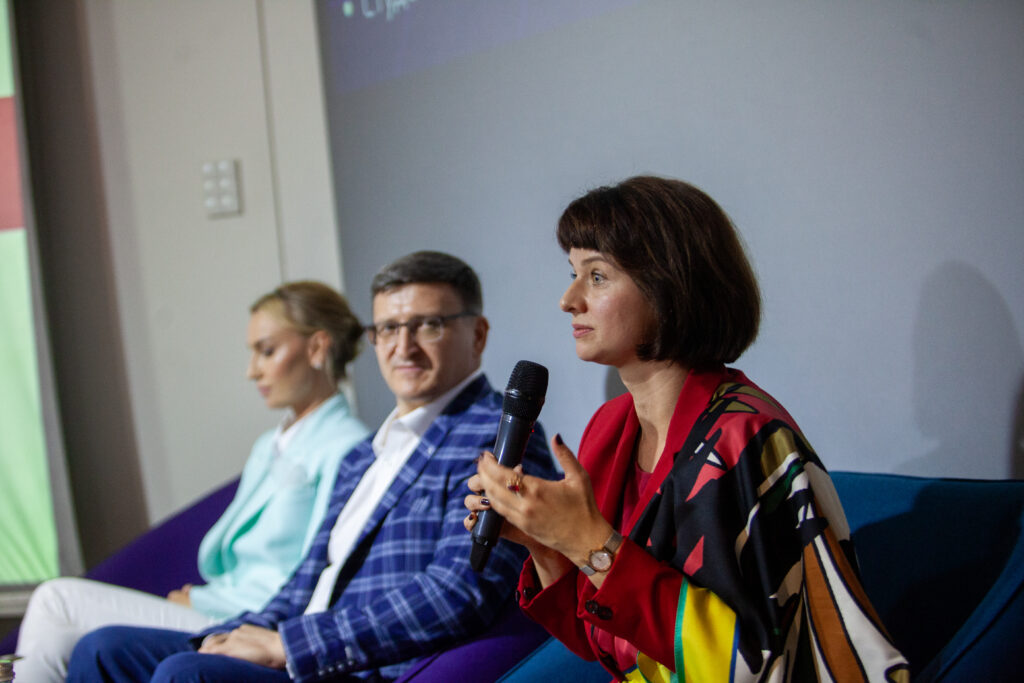
She also gave an example of organizing testing abroad during the war:
“In 2022, we agreed with 33 countries to open temporary exam centers. This allows students who have gone abroad to potentially return to Ukraine and rebuild the country,” – Tetiana Vakulenko
Vakulenko noted that the NMT results show significant differences between regions and types of institutions.
“The rural population has much worse results than the urban population. We need to think about how to provide quality education for everyone, not just for residents of the capital and large cities,” said Vakulenko
Students and the prospects of returning
Solomiya Orlenko, Chair of the Student Parliament of Taras Shevchenko National University of Kyiv, shared her experience and views on the challenges facing Ukrainian education today.
“I am from a small town and entered Kyiv National University only because of the External Independent Testing. If not for this tool, my dream would have remained unattainable. Therefore, I believe it is critically important to maintain fair and transparent admission rules,” Orlenko emphasized.
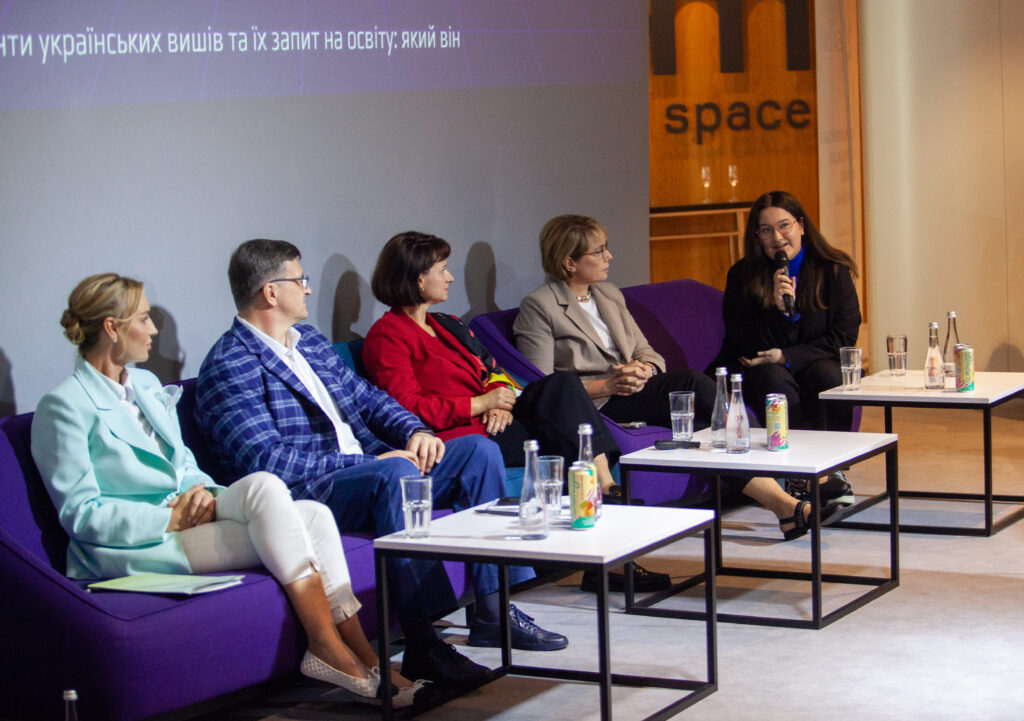
She noted that during her six years of study, she had seen three completely different generations of students – pre-war, “covid” and those who entered after the full-scale invasion. And while the former had proper socialization and understanding of their goals, the current applicants lack basic communication skills that have been lost due to distance learning and the war.
“There are cases when students reach the fourth year of study and only then realize that they have chosen the wrong specialty. But they are afraid to change their major because of parental pressure or fear of judgment,” said Solomiya Orlenko.
Among the main reasons for young people to go abroad, Solomiya Orlenko named not only security factors, but also a persistent stereotype: European or American education is considered more prestigious.
“My education in Ukraine was of high quality, I am proud of my teachers. But, unfortunately, there is still a dominant opinion: if you graduated from a university abroad, you are more successful. It is this trend that needs to be broken,” emphasized the head of the student parliament.
In her opinion, universities should create conditions for different categories of students – scholars, practitioners, those who are looking for themselves, and those who are getting a second degree. If institutions meet the needs of only one group, others will continue to go abroad to study.
“The only way to stop ‘silent migration’ is through opportunities. Young people are not afraid to work and create at home, but they want to have space for development. We want to trust Ukrainian education. The only question is how to make this trust appear,” summarized Solomiya Orlenko.
Thus, the problem of “quiet migration” of students is not only an educational but also a strategic task for the country. It requires a combination of security solutions, university development, investment in teachers, and the creation of attractive opportunities for young people in Ukraine. This is the only way to preserve the educational potential, restore trust in Ukrainian education, and ensure that talented students and scientists build their country, not foreign societies.