Mykolaiv Alumina Plant is being prepared for privatization: what is behind the government’s decision
18 February 21:47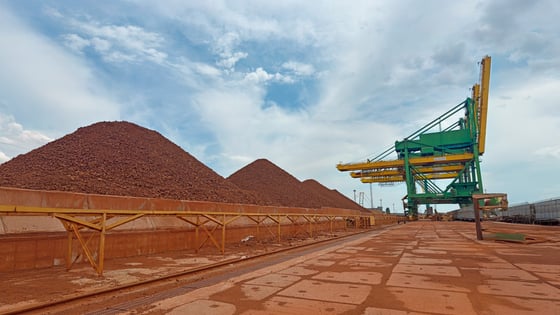
The Mykolaiv Alumina Plant has been officially included in the list of assets that the state plans to put up for sale as part of the resumption of the “Great Privatization” process. This was reported by Intent, according to Komersant.
The decision is part of the government’s broader strategy to sell off sanctioned assets confiscated from Russian owners and raise funds to revive the economy.
The Great Privatization Returns
Prime Minister Yulia Svyrydenko announced preparations for the sale of the first sanctioned assets after a meeting with the head of the State Property Fund of Ukraine, Dmytro Natalukha, and the acting head of the State Geonadra, Leonid Musikus.
The government has already simplified the procedure for selling Russian sanctioned assets confiscated by the state through open auctions, which should speed up the process and make it more transparent.
A plant without production and without “critical” status
MGZ was nationalized in March 2024. Prior to that, the company was part of the RUSAL group, which was controlled by Russian oligarch Oleg Deripaska.
Since the start of the full-scale war in February 2022, the plant has ceased production of alumina, and since June 2022, its corporate rights have been under arrest. After the nationalization was completed, the enterprise was transferred to the management of the State Property Fund of Ukraine, but until the sale, it was effectively “stuck” in a transitional status.
Environmental risk: 48 million tons of sludge
The environmental component is a particular cause for concern. According to MikVisti, MGZ has lost its status as a critical infrastructure facility, which jeopardizes the continuous operation of pumping stations.
Alla Ryazhskikh, chair of the environmental commission of the Mykolaiv Regional Council, said that as of January 1, 2026, the plant will no longer have “critical” status. This means possible prolonged power outages, which will make it impossible to maintain stable service at the two sludge storage facilities.
We are talking about approximately 48 million tons of hazardous sludge covering an area of approximately 400 hectares — a facility that poses a potentially catastrophic environmental risk to the region.
A company without people or ports
According to MGZ director Oleksiy Medvid, only about 400 of the five thousand employees remain. They ensure minimal functioning — security of property and maintenance of sludge storage facilities.
Full restoration of operations is currently impossible due to:
- the blockade of Mykolaiv’s seaports;
- therisk of shelling;
- the lack of a stable power supply.
Who the state sees as an investor
The head of the State Property Fund, Dmytro Natalukha, openly admitted that the MGZ needs an external investor who is capable of working in wartime conditions and “does not pay too much attention to military risks.”
He named the following countries as potential investors:
- the US,
- India,
explaining this by the possibility of guaranteeing the security of the asset with “the flag and citizenship.”
The State Property Fund plans to put MGZ up for sale by July 2026.
The sale of the Mykolaiv Alumina Plant is becoming a test for several state policies at once:
- large-scale privatization in wartime,
- management of environmentally hazardous assets,
- the sale of Russian assets subject to sanctions.
Without an investor, the plant remains a financial and environmental burden. With an investor, the state faces issues of security, control, and public trust in the privatization of strategic assets.