NABU and SAPO joined the drafting of a bill on their independence: details of the document
24 July 2025 21:00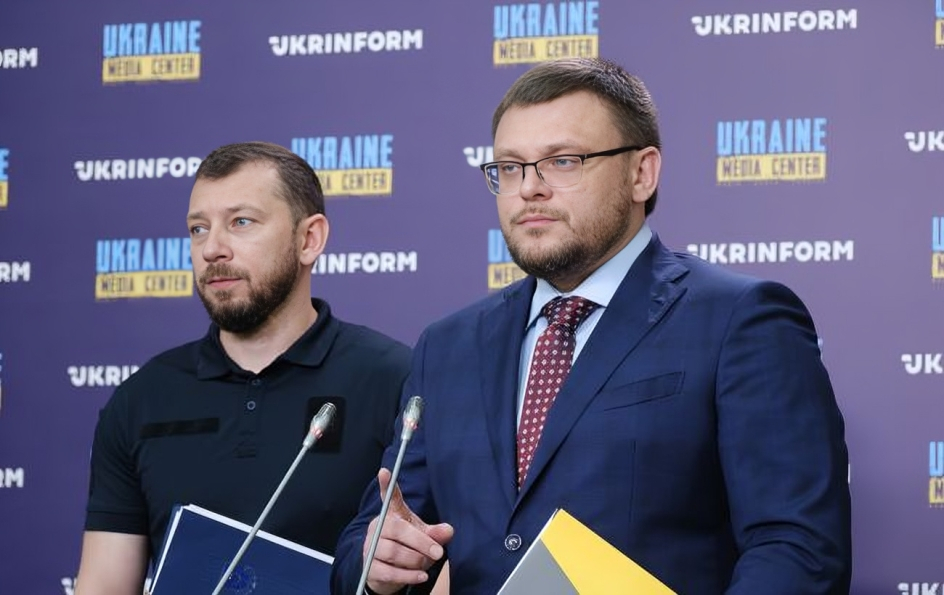
The NABU and the SAPO have supported draft law 13533 (submitted on July 24 by Ukrainian President Volodymyr Zelenskyy as an urgent one), which restores all procedural powers and guarantees of independence of both agencies. This was reported by "Komersant Ukrainian" with reference to the official Facebook page of the National Anti-Corruption Bureau of Ukraine.
Moreover, representatives of the NABU and the SAPO took part in the preparation of the text of the document.
They are now calling on the Verkhovna Rada of Ukraine to adopt the president’s initiative as a basis and as a whole as soon as possible.
This will help prevent threats to criminal proceedings investigated by NABU and SAPO,” the statement said.
Ukraine restores independence of NABU and SAPO: what is stated in the draft law
The text of the draft law, which is currently being considered by the relevant body – the Verkhovna Rada Committee on Law Enforcement – refers to the existence of potential risks in the current version of the Criminal Procedure Code, which, according to the initiator, may affect the effectiveness of the anti-corruption infrastructure and pose threats from the aggressor state.
The draft law provides for amendments to the Criminal Procedure Code of Ukraine and a number of related laws to legally enshrine the institutional independence of the SAPO in procedural management of investigations under the jurisdiction of the NABU.
In addition, the document contains provisions that should strengthen the protection of anti-corruption agencies from external influence, in particular by introducing new counterintelligence and preventive mechanisms aimed at neutralizing threats from foreign intelligence services.
The draft law is aimed not only at legalizing the independence of specialized institutions, but also at restoring public and international partners’ trust in the system of investigating corruption crimes. Particular emphasis in the draft law was placed on strengthening the principle of inevitability of punishment and ensuring transparency of anti-corruption activities.
The explanatory note states that the draft law is based on current legislation, in particular:
- The Constitution of Ukraine,
- The Criminal Code,
- The Criminal Procedure Code,
- the law “On the Prosecutor’s Office”
- the law “On NABU”
- the Law on the Security Service of Ukraine,
- other legal acts regulating the activities of anti-corruption and law enforcement agencies.
The authors of the document emphasize that the implementation of the initiative will not require additional funding from the state budget. The adoption of the law is expected to strengthen the political neutrality of anti-corruption structures, increase their accountability to society and relevant state institutions, and ensure openness to democratic control.
Read also: Draft law to restore independence of NABU and SAPO is ready in the Rada
Why did the draft law No. 13533 appear?
The new draft law was preceded by a conflict situation around draft law No. 12414. It was initiated by MPs Maksym Pavliuk, Viacheslav Medianyk, Oleksandr Bakumov, and Serhii Minko.
The document was registered in the Verkhovna Rada on January 16, 2025. On April 29, the bill was adopted as a basis. On Tuesday, July 22, the law was adopted (263 MPs pressed the green button) and sent to the President of Ukraine for signature.
Officially, the document concerns amendments to the Criminal Procedure Code regarding the investigation of disappearances under special circumstances during martial law. But, according to MP Anastasia Radina, it has been amended to actually subordinate the NABU and the SAPO to the Prosecutor General.
In particular, the law gives the Prosecutor General the following powers
- access to all NABU cases and delegate this access to other prosecutors;
- provide written instructions to NABU detectives and change the jurisdiction of cases;
- to independently resolve disputes over jurisdiction and sign suspicions to top officials;
- exclusively decide who is part of the group of prosecutors, depriving the head of the SAPO of this right;
- to close investigations at the request of the defense.
On the eve of the adoption of the draft law, the SBU and the Prosecutor General’s Office announced that they had exposed Russian influence on the NABU. According to law enforcement officials, some NABU employees are accused of treason, illegal trade with Russia, and working in the interests of oligarchs. In total, at least 70 searches were conducted.
The document adopted and signed in “turbo mode” caused a flurry of criticism from both Ukrainian activists and parliamentarians, as well as from representatives of the European Union, who see dangerous trends related to corruption and authoritarianism in limiting the powers of the NABU and the SAPO.
For example, investigative journalist Yuriy Nikolov suggested that the National Anti-Corruption Bureau of Ukraine may face political pressure due to the investigation into the procurement of drones under defense contracts.
He noted that the NABU is investigating contracts for the supply of drones concluded in secrecy, the amount of which allegedly reaches tens of billions of hryvnias. Some of these contracts, according to the journalist, were awarded to companies associated with business partners of representatives of the Presidential Office. In particular, with the head of the Office of the President Andriy Yermak, the head of the Servant of the People faction David Arakhamia, and MP Mykola Tyshchenko. And one of the defendants, Serhiy Mindich, was even being served with a notice of suspicion, Nikolov writes.
The investigator explained that these are highly profitable defense procurements, which are often hidden behind law firms with opaque ownership structures. For security reasons, information about the real beneficiaries and the amount of funding is not made public.
At the same time, significant funds are directed to the production of so-called “trucker drones,” which, according to experts, are less effective in the current environment than the production of operationally necessary missiles or cheaper analogues of Shahed-type strike UAVs.
Yuriy Nikolov noted that it is currently unknown whether Ukraine’s international partners are aware of the content and scope of these contracts. However, official Kyiv is actively seeking assistance from its allies to develop Ukraine’s military-industrial complex, particularly in the field of drones.
A day earlier, on July 21, Yuriy Nikolov analyzed the situation around the recent searches of the National Anti-Corruption Bureau of Ukraine (NABU) on Kyiv24 TV channel and warned of the potential consequences that these actions could have for the institution’s future existence. According to him, the events of recent weeks threaten to turn the NABU into a formal structure with no real impact or even lead to its destruction.
He drew special attention to the information campaign that is being actively conducted in Telegram channels and the media. According to the investigative journalist, it is aimed at discrediting the NABU as an allegedly ineffective body that only consumes budget funds without producing any noticeable results.
Nikolov emphasized that behind such rhetoric is a political order aimed at undermining the detectives’ credibility, paralyzing their work, and giving grounds for a political decision to reform or liquidate the bureau.
The journalist also noted that the searches allowed the President’s Office to gain access to important internal materials of the NABU. In particular, to unfinished proceedings that detectives were working on. This poses a threat of interference in the course of investigations, as well as the risk of leaking sensitive information that could potentially be used to protect senior political officials.
In the context of martial law and large-scale defense spending, this means that investigations into procurement, contracts, or the use of public resources conducted by the NABU will be suspended or redirected. Such a scenario, Nikolov believes, could ultimately undermine the trust of both Ukrainian citizens and international partners in the independence of anti-corruption agencies.
This could also have serious consequences for Ukraine’s European integration aspirations, as the independence of the anti-corruption infrastructure has been and remains one of the key requirements of the European Union.
Nikolov then concluded that any attempt to dismantle the NABU as an instrument of independent control over the state apparatus would be a step backwards not only for Ukrainian democracy, but also for the reforms for which society has paid a high price.
How society reacted to the abolition of the independence of the NABU and the SAPO
NABU, SAPO, experts and analysts called the law a destruction of the anti-corruption infrastructure. The bureau’s management described SAPO as a “nominal figure” and NABU as a unit of the Prosecutor General’s Office.
NABU acting director Semen Kryvonos said it was a threat to Ukraine’s Euro-Atlantic aspirations and called for a blocking resolution.
In addition, the G7 countries issued a statement expressing “serious concern” over the situation.
We are closely following today’s developments at the NABU… Ukraine and the G7 have a shared commitment to support transparency, independent institutions and good governance,” the statement read.
The European Commission also expressed concern. European Commission spokesperson Guillaume Mercier emphasized that the independent work of the NABU and the SAPO is critical to fighting corruption, providing macro-financial assistance, and moving Ukraine forward on its path to the EU.
“These institutions must operate independently to effectively fight corruption and maintain public trust,” he said.
The international press has harshly assessed the events in Ukraine.
The Financial Times called the law a “step backwards” and warned that it undermines confidence in the reforms. According to the newspaper, G7 diplomats have already conveyed their warnings to the Ukrainian leadership.
The Wall Street Journal emphasizes that the decision to expand the powers of the Prosecutor General’s Office could complicate the receipt of further financial assistance and opens the way to “corruption revenge.”
Politico Europe considers the vote in the Verkhovna Rada to be an alarming signal to the EU on the eve of the possible opening of accession talks. European institutions doubt the sincerity of Ukraine’s reform commitments.
Bloomberg draws attention to the fact that the law was adopted without public discussion – in “turbo mode,” which is typical for authoritarian regimes. The agency notes that this approach could affect investor confidence and slow down the post-war recovery process.
Reuters, citing diplomatic sources, reports that Western partners are “disappointed and shocked.” Of particular concern is the tendency to de-prioritize anti-corruption reforms as the West focuses on supporting the Armed Forces. USAID representatives called these steps by the Ukrainian authorities “unacceptable” and called for adherence to the rule of law.
The last straw was mass protests-the first since the beginning of Russia’s full-scale war with Ukraine-that spread to Kyiv, Lviv, Odesa, and Vinnytsia. In total, Ukrainians from at least 17 cities across the country took part in the civil disobedience actions. People stood with placards even during the curfew, ignoring the demands not to be on the streets at that time.
Читайте нас у Telegram: головні новини коротко