Oil bypasses the blockade of Iran: will gasoline prices drop in Ukraine?
15 March 11:18
The war in the Middle East has led Iran to block the Strait of Hormuz, through which 20% of the world’s oil passes. However, two countries in the region have begun using alternative oil pipelines.
How much oil can be transported out of the Persian Gulf region via these routes, and will this help lower global prices and the cost of fuel in Ukraine? [Komersant] explores these questions in an article, citing RBC-Ukraine.
Launching oil pipelines to bypass the strait
About 20% of global oil and natural gas exports pass through the Strait of Hormuz. As Iran continues to attack tankers attempting to cross it, two countries—Saudi Arabia and the United Arab Emirates (UAE)—have decided to utilize alternative routes to supply oil to the global market, CNBC reported on March 12.
Saudi Arabia has the East-West Pipeline, which runs from the eastern coast of the Arabian Peninsula—where the kingdom’s main oil fields are concentrated—to the western coast, along the Red Sea and to the port in Yanbu. The pipeline’s capacity is 7 million barrels per day. On March 10, Saudi Arabia’s national oil company, Saudi Aramco, announced that it plans to bring the pipeline to full capacity in the coming days.
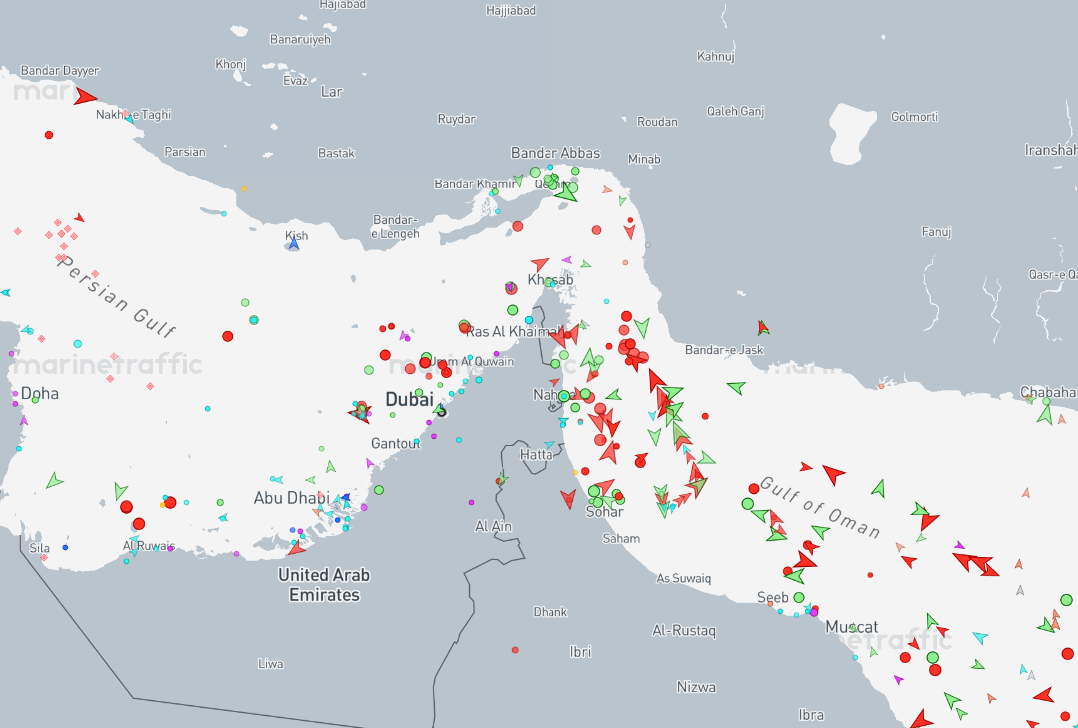 Tanker traffic has effectively come to a halt through the Strait of Hormuz (screenshot from the online vessel tracking service Marine Traffic, as of March 14)
The UAE has another alternative route: the oil pipeline from the city of Khabsan to the city of Fujairah. This route allows oil to be transported parallel to the Strait of Hormuz, but overland across the Arabian Peninsula, from the coast of the Persian Gulf to the shores of the Indian Ocean. Its capacity is 1.5–1.8 million barrels per day, CNBC reported.
“Saudi Arabia and the UAE are already increasing their use ofthese pipelines to bypass the strait,” Navin Das, an analyst at Kpler, a consulting firm that monitors global commodity markets, told the publication.
Risks for new oil routes
Since the combined capacity of the two pipelines is 8.5–8.8 million barrels per day, and about 20 million barrels were passing through the Strait of Hormuz, this means these routes could cover about a third of the shortfall caused by the strait’s closure.
“These oil pipelines will cover about a third of the oil that goes from the Persian Gulf through the Strait of Hormuz,” comments RBC-Ukraine, citing Mikhail Gonchar, president of the Center for Global Studies “Strategy XXI” and an expert on the oil and gas market.
The expert adds that Iran fully understands the importance of these routes and has already begun attacking them. For example, on March 11, Tehran launched a drone strike on a terminal in Fujairah, where one of the alternative oil pipelines to the UAE ends.
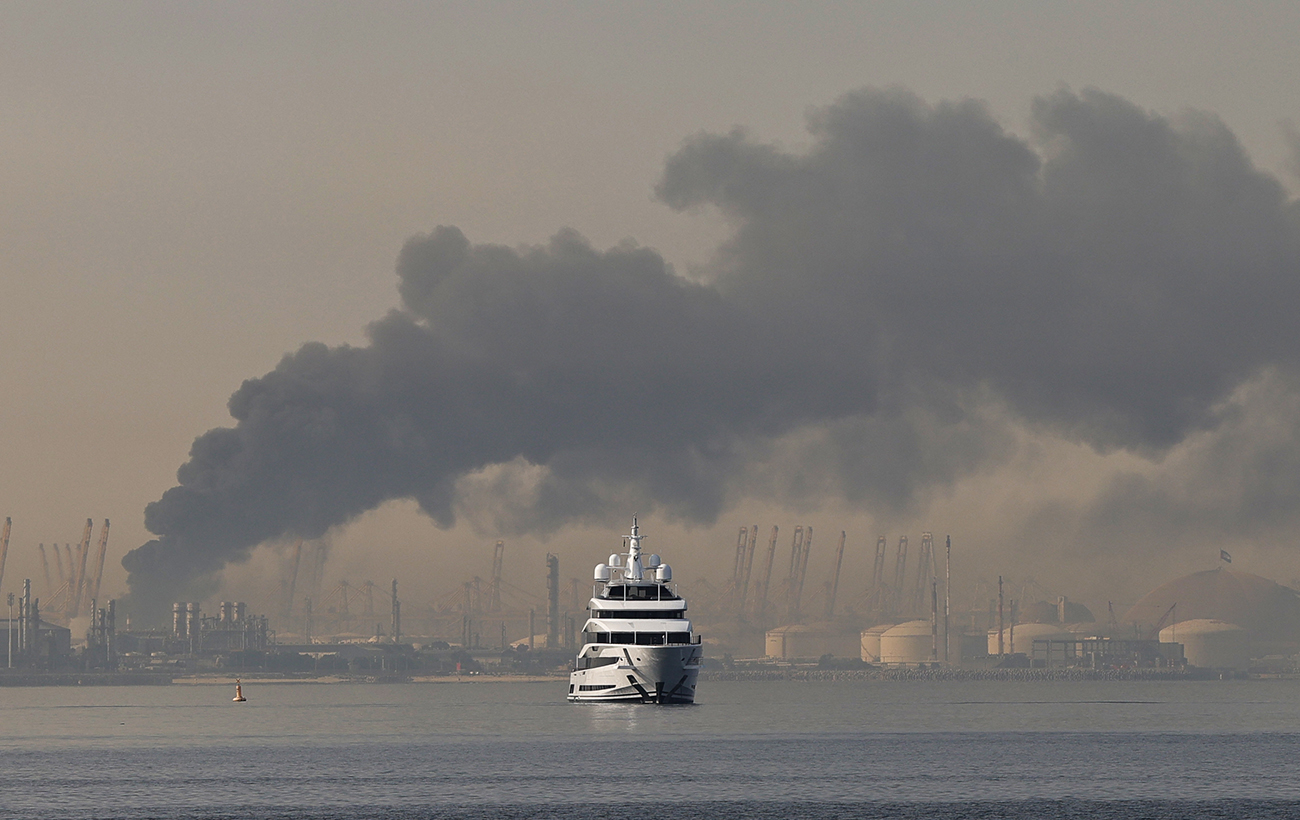 Iran is striking oil infrastructure in neighboring Arab countries, such as the UAE (Getty Images)
“For the East-West pipeline, through which oil can be transported to the Red Sea and on to the Suez Canal, the risks are lower, but Iranian drones can reach there as well,” says the source.
The route in Saudi Arabia could be expanded, a new oil pipeline laid, and oil pumping stations built, but this does not guarantee 100% security.
“The risks of strikes by Iran along these routes are perhaps somewhat lower than in the Strait of Hormuz, but they remain. Certain types of drones can fly a couple of thousand kilometers,” the expert explained.
Using the East-West pipeline involves more complex logistics for Saudi Aramco, as it was much simpler to load oil onto a supertanker at the Rastanura terminal on the Persian Gulf and transport it to consumers on the global market. Iran recently launched a powerful strike with cruise missiles against this terminal, the source added.
Possible reaction of oil prices
Against the backdrop of many countries around the world tapping into their strategic oil reserves, the launch of alternative supply routes for crude from the Middle East will help increase market supply and ease pressure on oil prices.
“Prices will fall, but they won’t return to February levels —below $70 per barrel,” says Mykhailo Honchar.
The expert emphasizes that a temporary drop in oil prices is unlikely to lead to a significant reduction in fuel prices in Ukraine, as Ukrainian importers purchase refined petroleum products from the European market. “It is unlikely that players in Europe will significantly lower wholesale prices. Prices rise easily, but they fall—if at all—only symbolically,” adds the source.
Oil prices fluctuate quite dynamically every day. They may fall for a few days, and then another escalation occurs in the Middle East and they rise again; however, positive news that increases supply also has an impact, comments Oleksandr Sirenko, an analyst at the consulting firm “NaftoRynok,” to RBC-Ukraine.
When asked whether new oil supplies will make it possible to lower fuel prices at Ukrainian gas stations, the expert says that retail prices in Ukraine will certainly have to react. However, for this to happen, oil prices must remain at a low level not just for one day, but, for example, for 3–5 days.
The expert believes that if oil were to cost $66–69 per barrel for three consecutive days, then a drop in prices at gas stations could be expected.
Sirenko notes that the price of petroleum products imported by Ukraine from abroad is influenced by the devaluation of the hryvnia. The effect of lower oil prices could be offset by a drop in the hryvnia’s exchange rate against the dollar. Therefore, at this point, we should not be talking about a factor driving prices down in the retail market, but at least about the conditions for their stabilization.
“We should pause now and not let prices rise further, because today prices at gas stations have gone up again by 1 hryvnia per liter,” adds Oleksandr Sirenko.
Alternatives for gas transportation
The Strait of Hormuz is also a vital route for transporting liquefied natural gas from the Persian Gulf countries, particularly Qatar—the world’s second-largest exporter of liquefied gas. However, there is no alternative route for Qatari gas other than through the Strait of Hormuz, notes Mykhailo Honchar.
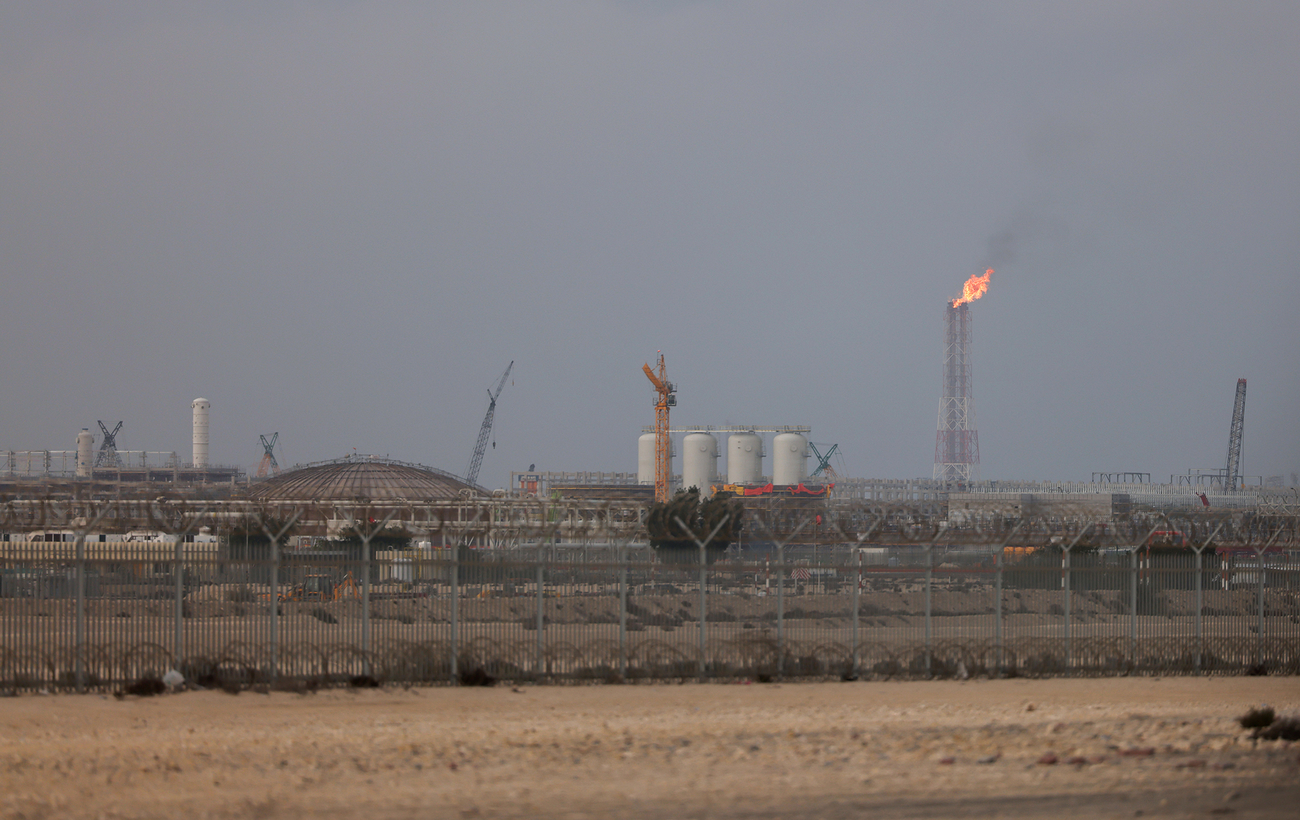 Qatar’s oil and gas infrastructure (Getty Images)
The expert notes that Qatar and Iran previously attempted to implement competing projects—laying gas pipelines to the Mediterranean coast to supply gas to the European market. These routes were to pass through Syria, where a civil war was raging. Qatar’s goal was to prevent Iranian gas from reaching Europe. As a result of this rivalry, neither project was implemented.
As a reminder, on February 28, the U.S. and Israel launched a military operation against Iran, dubbed “Epic Fury.” On the first day of the war, the Supreme Leader of the Islamic Republic, Ayatollah Ali Khamenei, was killed.
Tehran began launching retaliatory strikes; Iranian forces attacked not only U.S. and Israeli bases but also the infrastructure of neighboring countries in the Persian Gulf, which are major exporters of oil and gas to the global market. Iran has also effectively blocked the Strait of Hormuz and continues to attack tankers.
Military actions in the Middle East have already driven oil prices above $100 per barrel and caused a significant increase in gasoline prices in Ukraine.
On March 12, Iran’s new Supreme Leader Mojtaba Khamenei (son of the previous leader, Ali Khamenei) made his first public statement, saying that Iran would continue to block the Strait of Hormuz to put pressure on the U.S. and Israel. On the same day, the price of oil futures on the London ICE exchange jumped back above $100 per barrel.
On March 13, the price of A-95 (standard) gasoline at Ukrainian gas stations rose to 68.99–70.99 hryvnias, and that of diesel fuel (standard) to 71.99–78.99 hryvnias. In response to rising fuel prices, the government is preparing to expand the “National Cashback” program—buyers of petroleum products will receive a portion of the cost of purchased gasoline, diesel, and autogas credited to their cards. At the same time, the government does not plan to lower fuel taxes, as they constitute a significant source of budget revenue.