Russia’s oil and gas revenues rose in March: Is this saving the Russian economy and prolonging the war?
6 April 14:32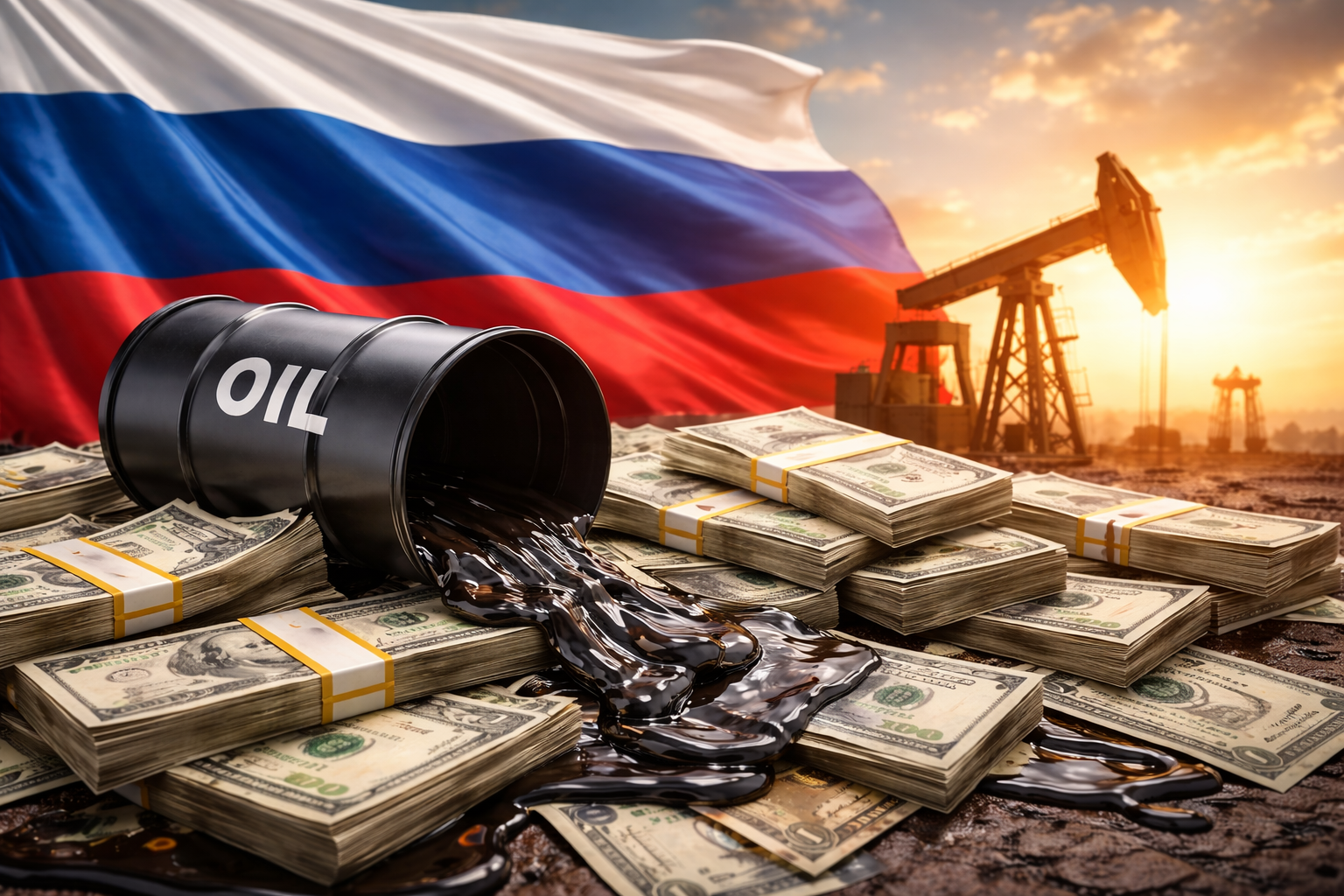 ANALYSIS
In March 2026, Russia’s oil and gas revenues rose by nearly 200 billion rubles compared to February—from 432.3 billion to 617 billion rubles. In total, the Russian budget received 1.443 trillion rubles from the sector in the first quarter of this year. "Komersant Ukrainian" examined what the March figures reveal and whether this will be enough for a protracted war.
Oil revenues in March of this year amounted to 326.8 billion rubles (314.4 billion rubles in February), and gas revenues to 85.5 billion rubles (88.9 billion rubles a month earlier). In total, the sector contributed 1.443 trillion rubles to the budget in the first quarter of this year.
Energy expert Gennady Ryabtsev explains that the interpretationof these figures depends on what they are compared to. If we compare them not to February but to March 2025, the picture is quite different: Russia’s March oil and gas revenues turned out to be lower than a year ago.
“It depends on which figures you compare. If we look at the period from March to February—yes, they’ve increased, but compared to the same period last year, they’ve fallen—by almost half.”
According to the expert, it is the year-over-year comparison that shows the more realistic state of affairs.
“The statistics show a 43% decline compared to the same period last year. Well, that is, there is manipulation of the figures, so it depends on what you compare them to.”
What does Russia’s March revenue growth mean?
Despite the year-over-year decline, the very fact that Russia continues to receive hundreds of billions of rubles from oil and gas means that a significant source of budget revenue remains intact. Oil and gas revenues account for about a quarter of Russia’s total budget revenue and are therefore crucial for financing government spending, particularly military expenditures.
Ryabtsev emphasizes: a sharp collapse that would destroy Russia’s ability to wage war has not yet occurred:
“What these figures indicate is, first, that Russia is generating revenue—that is, there are proceeds from exports—and that there has been no significant reduction in revenue that could in any way affect the conduct of the war in Ukraine.”
Does this save the Russian economy?
The expert believes that the current improvement for Russia is more situational than systemic. Reuters previously reported that by the end of 2025, Russia’s oil and gas revenues had fallen by 24%—to 8.48 trillion rubles—marking the lowest figure since 2020. By comparison, in pre-war 2021, Russia earned about 9.1 trillion rubles from oil and gas.
According to Ryabtsev, without a new external factor, the situation for the Russian economy in 2026 could have been significantly worse.
“But revenues are declining overall, and if not for this Iranian adventure, the Russian Federation’s economy would have faced a serious downturn and a very significant reduction in revenues this year.”
How the war over Iran affected Russia
Following the escalation in the Middle East, global oil prices surged. Reuters reported that it was the war over Iran that prompted Russia to postpone some budget changes, as high energy prices temporarily eased fiscal pressure.
According to the expert, it was this factor that provided the Russian government with additional financial resources.
“In other words, the war in Iran has effectively come to the rescue of the Russian Federation’s economic bloc, because they had already planned, starting in the second quarter of this year, to cut budget spending and, in particular, reduce social benefits.”
Ryabtsev noted that the war in Iran is currently significantly increasing the Russian Federation’s revenues.”
Watch us on YouTube: important topics – without censorship
Does this mean Russia will be able to wage war for a long time?
High oil revenues do indeed give the Kremlin the ability to avoid harsh budget cuts for longer. But this does not mean that the Russian economy has become resilient or that sanctions have ceased to have an effect.
Reuters also reports that Ukrainian strikes on Russian oil infrastructure have already reduced Russia’s export capacity by approximately 1 million barrels per day, or about 20% of its total capacity. This limits Moscow’s ability to fully capitalize on high prices.
Therefore, the current revenue growth can be viewed as temporary relief rather than a long-term solution.
What to Expect in April
Gennady Ryabtsev believes that future trends will depend primarily on how events unfold in the Middle East:
“In April, for example, it is expected that if the situation does not change—that is, if the war does not end—the Russian Federation’s revenues in April will grow by approximately 20% compared to April of last year. In other words, everything will depend on how events unfold in the Middle East.”
Russia’s March growth in oil and gas revenues does not mean an automatic rescue of its economy, but it gives the Kremlin an important financial respite. Compared to February, Russia’s revenues have indeed increased. However, on a year-over-year basis, they remain significantly lower. Thus, Russia has not lost its ability to finance the war, but its economic situation does not appear as strong as a single monthly figure might suggest.
Read us on Telegram: important topics – without censorship