“The coming hours will be decisive for the global economy”: a renowned expert on the Middle East on developments in Iran. UPDATED
7 April 15:30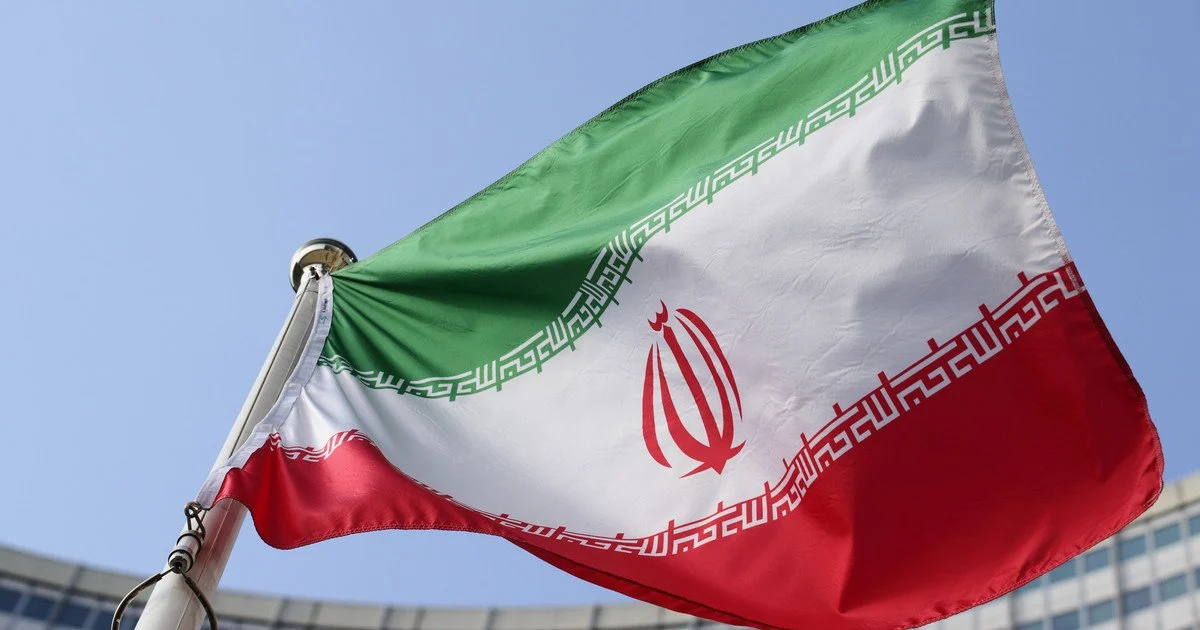 OPINION
The standoff between Iran and the United States has reached a critical point. U.S. President Donald Trump stated that America is capable of destroying Iran “in four hours” and has a plan ready in case Tehran does not reopen the Strait of Hormuz by Tuesday.
The American leader stated that the US could destroy all of Iran’s bridges and power plants within a few hours. According to him, this will happen by midnight on April 8, North American time (7 a.m. Kyiv time—ed.), writes "Komersant Ukrainian".
Against the backdrop of such radical statements from the White House, analysts urge taking into account the specific internal logic of the Iranian leadership, which differs significantly from Western principles of governance.
As noted by Igor Semivolos —a historian, political scientist, and renowned scholar of the Middle East, author of seminal studies in cultural anthropology, history, and the cultures of the Middle Eastern peoples—the coming hours will be decisive not only for the region but also for the entire “fragile architecture” of the global economy.
According to the expert, it is a mistake to assess Tehran’s actions through standard models of state rationalism. At the core of the Iranian system lies the concept of Maslahat—state expediency, which in the political theology of the Islamic Republic takes precedence over any formal law.
“There is a fundamental difference between Dolat (the state as an institution, the economy) and Nizam (the revolutionary project, the regime’s identity). When forced to choose, Islamists sacrifice the former for the sake of the latter—always and without hesitation,” explains the political scientist.
This means that if Tehran decides that “total escalation will save the Nizam,” no economic or humanitarian losses will stop the system from taking that fatal step.
“The danger today lies precisely in the fact that if the logic of ‘total escalation will save the Nizam’ prevails within the system—whether through mobilizing the population around the flag or by forcing the U.S. to retreat—no economic or humanitarian losses will serve as a deterrent,” clarifies the renowned Middle East expert.
At the same time, he recalls one important precedent: in 1988, Ayatollah Khomeini, also appealing to the principle of Maslahat, chose the “cup of poison”—de-escalation—because he calculated that continuing the war would destroy the regime faster than surrender.
However, today the main risk is the information vacuum surrounding Iran’s top leadership. According to Igor Semivolos, if the Islamic Revolutionary Guard Corps presents a distorted picture of reality to Khamenei’s son, the risk of a catastrophic mistake increases. Similarly, the structure of Iran’s so-called current elites is not entirely clear: who within the system has the final say, and are they capable of assessing the consequences of an escalation?
The political scientist expresses hope that the capitals of the coalition countries recognize the complexity of the internal workings of the Iranian government. Whether Tehran can muster the strength for yet another “cup of poison” or chooses the path of mobilization around the flag will determine the global security landscape for decades to come.
Iran’s Position
A senior adviser to Iranian Parliament Speaker Mohammad Baqer Qalibaf signaled Tehran’s tougher stance on ending the war, saying any ceasefire would have to change regional security arrangements.
In an article in the X on April 7, Mahdi Mohammadi described the conflict as already decided in Iran’s favor and set tough conditions for its conclusion.
“Iran has clearly and openly won the war and will only accept an outcome that will consolidate its gains and create a new security order in the region,” he wrote. “The correct wording is: Trump has about 20 hours to either surrender to Iran or his allies will return to the Stone Age. We will not back down!”
The NYT later reported that Iran had pulled out of ceasefire talks with the United States after a new wave of pressure and strikes on its territory. Tehran, through Pakistan, has conveyed that it will no longer participate in negotiations with the US.
Iran allegedly decided to withdraw from the talks after increased military pressure from the US and Israel. According to sources, the parties tried to agree on a cessation of hostilities through intermediaries, including Pakistan.
However, these contacts did not yield results. Instead, the president’s rhetoric became tougher, and the demands more categorical.
At the same time, the Iranian publication Tehran Times refutes the information about the cessation of negotiations
“Diplomatic and indirect channels of negotiations with the US are not closed,” the article in Х.