A bitter pill to swallow: will it be possible to strike a balance between the interests of sugar beet producers and processors?
21 January 16:34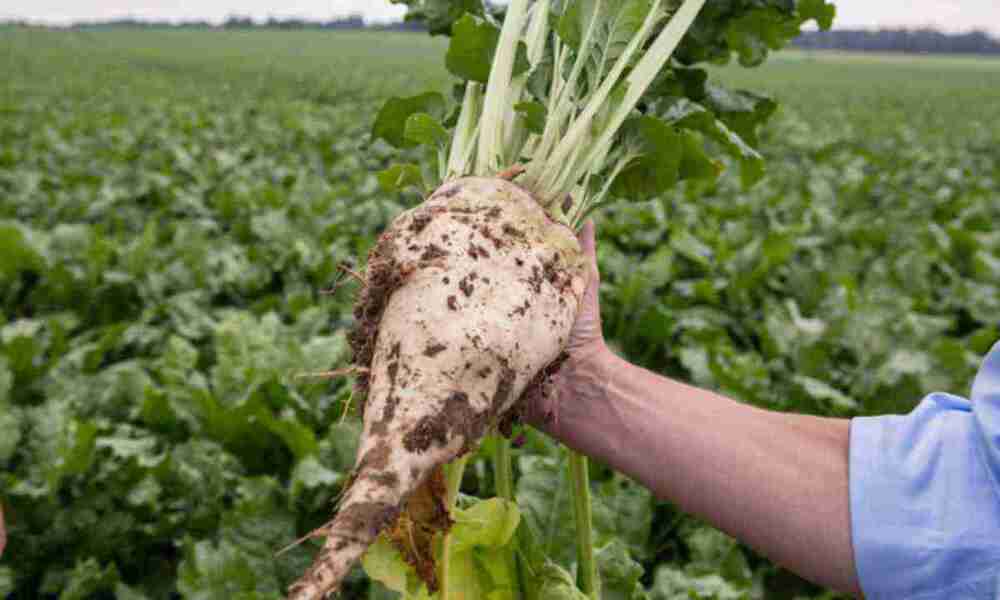
The Ukrainian government considers the development of agricultural product processing to be one of its main areas of activity and regards last year’s introduction of duties on soybean and rapeseed exports, as well as the subsequent record results achieved by processors, as its obvious achievements.
But is everything so clear-cut in this area? Is it possible to balance the interests and capabilities of producers and processors, and if so, how?
The sugar production season is currently coming to an end in Ukraine. Sugar production in the 2025–2026 marketing year is expected to exceed 1.7 million tons. A total of 464,000 tons of sugar were exported, which is 38% less than in the previous year, when Ukraine set an industry record for exports. This is the result of the work of 27 sugar factories that operated in 2025. These data are provided in a report by the National Association of Sugar Producers of Ukraine, Ukrtsukor. The report does not mention those who directly grow sugar beets. This is not only because the association primarily represents the interests of sugar producers, i.e., processors, but also because producers, i.e., those who grow raw materials for sugar production, do not have access to sugar exports. However, there are those in the Ukrainian parliament who propose granting such access to agricultural producers.
“For” exports for agricultural producers
In December last year, members of the parliamentary agricultural committee sent an appeal to the prime minister on the need to improve the mechanism for exporting sugar produced in Ukraine. People’s Deputy Dmytro Solomchuk, who announced this, argued for the deputy initiative as follows:
“Today, only processors (sugar factories) actually have the right to export sugar, although Brussels did not require such a condition during negotiations on increasing opportunities for agricultural exports. It turns out that direct agricultural producers of sugar beets, who invest heavily in the production of raw materials and the final product itself, do not have such a direct opportunity.”
The parliamentarian also outlined the positive consequences of such a decision. According to him, providing sugar beet producers with direct or simplified access to sugar exports (possibly through a quota mechanism) will, in particular, contribute to the creation of a competitive environment between producers and processors and, accordingly, stimulate the overall efficiency of the industry. The possibility of direct exports will also provide producers with financial stability, allowing them to invest in modernization, new technologies, and the expansion of cultivated areas. He also mentioned the creation of stable jobs in rural areas and an increase in the country’s export potential.
However, not everyone supports this proposal.
“Against” exports for agricultural producers
The proposal of the parliamentary agricultural committee to grant sugar beet producers the right to directly export sugar was met with criticism by the National Association of Sugar Producers of Ukraine.Yana Kavushevska, chair of the Ukrtsukor association, began her Facebook post with a non-rhetorical question:
“Why, when something finally works in the country, do we have to break it and create new problems, only to heroically solve them again?”
She continued with several more questions and answers.
“When the Verkhovna Rada’s Committee on Land and Agrarian Policy considers that the approaches to quota distribution and export licensing to the EU proposed by the sugar industry violate the rights of agricultural producers because the latter cannot export sugar directly, has any of the honorable deputies considered how this corresponds to EU practice? Do farmers in Europe participate in the sugar trade at all? The answer is no. They grow beets, and processors are engaged in the production and sale of sugar, investing in processing efficiency, infrastructure, product quality, storage, and logistics. Everyone does their job, and this produces the results we see,” said Yana Kavushevska.
The result is indeed there, and it has already been mentioned above. But there are other questions: “Is the participation of those who grow sugar beets fairly assessed in this final result?” or “What economic results can be expected, when and for whom, if producers start competing with processors in terms of exports?”
Competitive result
Last year’s experiment with the introduction of export duties on soybeans and rapeseed proved to be successful. And this became clear quite quickly. This result was a plus for processors: summarizing the results for September 2025, the Ukroliyaprom Association stated that processing had increased to 250,000 tons, which was the highest monthly figure in history. As for agricultural producers, unfortunately, they lost more than they gained. And we are not only talking about losses in the price of grown products, but also about the problems and additional costs caused by the lengthy development of a mechanism for confirming self-grown products that can be exported without customs duties.
In the event of the possible emergence of new players in the sugar export market, no rapid changes should be expected. This is the opinion of Oleksandr Buyukli, executive director of the First Ukrainian Agricultural Cooperative.
“The sugar market is quite complex and specific. Most agricultural producers who grow sugar beets process this raw material in factories and store sugar there. Further, this sugar is very often sold to the same factory. This initiative is useful and may have a positive impact on the market in a few years. But in the short term, it is unlikely to have a significant impact on the market, as sugar is a rather specific commodity and the number of markets to which we can export is limited,” the expert notes.
From an economic point of view, the more opportunities there are within the country, i.e., the higher the competition, the more reason there is to hope that the efficiency and capacity of the sugar beet industry itself will increase. This is the opinion of Oleg Nivievsky, founder of the Center for Food and Land Use Research at the Kyiv School of Economics.
“I am generally positive about this idea. From an economic point of view, it simply expands opportunities for producers directly. And, roughly speaking, it increases competition in the market. I understand that sugar producers may not like this, because it actually creates additional export opportunities. For them, this means competition and the inability to redirect, for example, raw materials through sugar factories. In other words, for them, the downside is obvious, and that is why they are opposed to it. But overall, this is a positive step for the industry,” the expert believes.
However, there are still unresolved issues that only practice can answer. Oleg Nivievsky continues.
“There is a downside: whether farmers will be able to export on their own or not. But that will be decided by the market. Those who are unable to export will form consortia. Perhaps sugar factories will also be involved in some way and will help with this. As for the impact on the country’s export potential, this will need to be analyzed in more detail,” the expert notes.
The benchmark is processing
Agricultural deputies expect the government to make a fair decision on improving the sugar export mechanism and providing such an opportunity to direct sugar beet producers. Although, as is well known, the government’s priority is the development of processing. This was confirmed in a recent interview with Latifundist.com by Oleksiy Sobolev, Minister of Economy, Environment, and Agriculture of Ukraine.
“In the coming years, we need to increase processing. First of all, because Ukraine, unfortunately, is still largely a raw materials economy. In 2024, exports grew to about $41-42 billion, but more than two-thirds of this volume is provided by agricultural raw materials, ore, and steel, while the processing industry accounts for only about 10% of GDP instead of the 20% typical of developed economies. On the other hand, we must understand that other countries may block the logistics of agricultural raw materials in the future, and not only for purely economic reasons. Therefore, increasing processing seems logical not only for the state but also for agricultural producers,” the minister believes.
In fact, no one doubts the importance of increasing processing in the country. Experts have questions not about the goal, but about the means of achieving it.
Oleg Nivievsky, founder of the Center for Food and Land Use Research at the Kyiv School of Economics, said in an interview with
“On the one hand, no one would argue that processing in the country is a good thing. It adds value and everything else. But the way it is being done now is where I have a lot of critical comments. It seems that the government knows nothing about the tools that can help develop processing other than export restrictions. And from my point of view, this is absolutely the wrong direction for movement and development. All such restrictions do is redistribute all the added value from raw material suppliers, i.e., from agricultural producers to processors. Accordingly, they do not create added value. At least in the medium and long term,” the expert notes.
He believes that this is completely the wrong way to stimulate processing in Ukraine. Oleg Nivievsky continues.
“The market itself decides where it makes sense to stimulate processing. It is important that market participants and businesses directly decide where it is more profitable to invest. They are the ones risking their money, not government officials. And I think it is important to have an environment that stimulates investment in processing. Not through tax breaks or export restrictions, but through access to infrastructure. Then there is the judicial system and impartial tax administration. In other words, everything that is referred to as the investment climate in general. And when it comes to operating in wartime, it’s insurance against military risks. It’s a very complex issue. And taxes and export duties are not the most important thing here, of course. The investment climate is what’s really important,” the expert notes.
It is also important to resolve all fundamental issues through dialogue. Yana Kavushevska, head of the Ukrtsukor association, mentioned this in response to a parliamentary initiative to grant sugar beet producers the right to export sugar directly. Representatives of other agricultural sectors are unlikely to object, given their own previous experience. Soybean and rapeseed producers, when they were “rewarded” with export duties, had virtually no such opportunity, as stated by the relevant agricultural associations.
Author: Serhiy Vasilevich