Five hot spots where war could break out by 2030: from the Baltic to Taiwan
25 August 2025 21:18
Analysts warn that the world may face new large-scale wars in the coming years. The highest risks are in the Baltic States, around Taiwan, on India’s border with Pakistan and China, and on the Korean Peninsula. Each of these conflicts could have global consequences. Politico writes about this, "Komersant Ukrainian" reports.
The Baltic States: a potential test for NATO
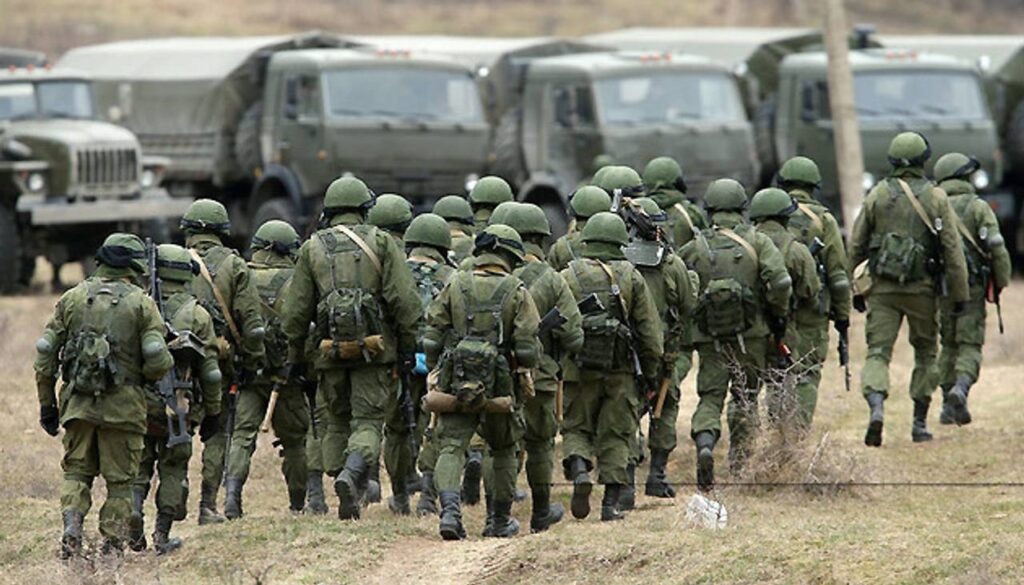
One of the most dangerous areas is the Baltic States: Estonia, Latvia and Lithuania. The scenario described by experts may look like this: a cyberattack, a power outage, a provocation to “protect Russian citizens” and the deployment of troops from Kaliningrad. Moscow may be trying to create a crisis to test NATO’s readiness to fulfill its Article 5 commitments.
The risk is that even “small” hybrid operations could escalate into a large-scale clash between Russia and the Alliance. At the same time, the exhaustion of the Russian army in the war against Ukraine makes large-scale offensives less likely.
China – Taiwan: the worst case scenario of an invasion
Taiwan is Beijing’s main target. Xi Jinping sees the “return of the island” as part of his historic mission and wants to complete it by 2027. The United States says it will support Taipei, but Washington’s real military capabilities are questionable.
China’s possible success in capturing Taiwan could completely change geopolitics in Asia, forcing Japan and South Korea to consider building their own nuclear weapons. However, a large-scale amphibious operation is considered one of the most difficult in the world, and the Chinese army has no combat experience that could deter Beijing from aggression.
India and Pakistan: Nuclear Neighbors
In May 2025, the world was on the brink of disaster when India and Pakistan exchanged missile strikes after a terrorist attack in Kashmir. The countries have approximately 170-180 nuclear warheads each, and their military doctrine allows for rapid escalation.
Although both states realize the catastrophic consequences of a full-scale war, domestic political pressure and the risk of bad decisions make the threat of conflict one of the most dangerous for all of humanity.
India – China: a tense mountain border
Disputes over the border in the Himalayas have been going on since 1962. Despite agreements on “non-violent patrols,” a bloody clash took place in 2020, where the military fought with stones and sticks and wire.
Both countries are nuclear powers and have huge armies, and the lack of effective diplomatic “fuses” increases the risk of accidental escalation. At the same time, a large-scale war contradicts the economic interests of both Beijing and New Delhi, making a major conflict unlikely.
The Korean Peninsula: the war that never ended
The Korean War of the 1950s never ended with a peace agreement. The demilitarized zone remains one of the most fortified in the world, and North Korea possesses nuclear weapons.
The DPRK is suffering from famine and economic crisis, and the nuclear arsenal remains Kim Jong-un’s main trump card. Any sense of threat to the regime could provoke it to aggression. At the same time, the current balance of power, the presence of 30,000 U.S. troops in South Korea, and relative stability make a large-scale war unlikely.
Big picture: the world is closer to war than it seems
Analysts say that the world is approaching a new era of instability. Technologies – from drones to space systems – are making modern wars more unpredictable. The United States, which has traditionally been considered a bastion of stability, is now perceived by its allies as a factor of uncertainty.
Experts have already warned of similar scenarios in 2022-2024
2022: After the outbreak of a full-scale war in Ukraine, NATO updated its Strategic Concept for the first time in a decade, identifying Russia as the “greatest and most direct threat.” Since then, the Baltics have been seen as a potential next target of aggression.
2023: Disputes over Taiwan escalated between China and the United States. The Chinese army conducted large-scale exercises to simulate a blockade of the island, which raised fears of an invasion.
2024: India and China have increased their military presence along the disputed Himalayan border. Tensions also continue between India and Pakistan in Kashmir.
Korean Peninsula: The DPRK sharply increased the number of missile tests, and Seoul and Washington responded with joint exercises, further raising the degree of confrontation.
In their reports,UN experts and the RAND Corporation noted that simultaneous escalation in several regions could create a “domino effect” that would draw major powers into the conflict.