Under pressure: why and who in Poland dislikes Ukraine’s decision to ban scrap metal exports
6 February 16:44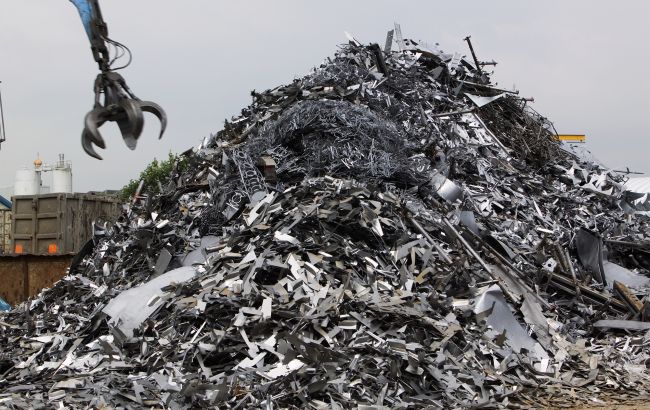
A new conflict is unfolding between Poland and Ukraine. The formal reason for this was the Ukrainian government’s de facto ban on the export of scrap metal, a significant portion of which was destined for Poland. But how justified is the Polish side’s hostility? This is what
With its decision adopted on December 31 last year, the Ukrainian government set zero export quotas for scrap metal exports from Ukraine for this year, thus introducing a de facto ban on its export. On December 18, i.e., before the introduction of these export restrictions, the Polish Ministry of Development and Technology appealed to the Ukrainian side to refrain from implementing the planned measures. However, the request was ignored, and the decision on zero export quotas was adopted. After that, as stated in the ministry’s official response to the Polish publication Business Insider, the agency appealed to the European Commission to urgently intervene in the situation, in which the different interests of the two sides were intertwined.
Between deficit and surplus
According to the results of 2025, Ukrainian scrap metal exporters increased the volume of strategic raw materials exported from Ukraine by 53% compared to 2024, to 448.68 thousand tons. This is confirmed by GMK Center calculations based on data from the State Customs Service. This result is a four-year peak, i.e., the maximum since 2021. Poland remained the main export destination: last year, 343.6 thousand tons of raw materials were sent to the Polish market, which is 76.6% of the total export volume and 38.2% more than in 2024.
These figures, of course, may suggest why the Poles did not like the Ukrainian export initiative so much. Although this explanation is not exhaustive. First and foremost, the above calculations suggest an answer to another question: why did the Ukrainian government take such a radical step as effectively banning exports to ensure that Ukrainian metallurgists were supplied with scrap metal?
Stanislav Zinchenko, CEO of the GMK Center analytical center, recalled in a comment to
“First, our steel production increased in 2025. This means that more scrap metal is needed. However, we see that scrap metal procurement in Ukraine is decreasing due to active hostilities. Also, the existing duty of €180 did not stop scrap exports, as our scrap collection companies tried to circumvent this duty. Therefore, I understand the Ukrainian government’s motivation. They see a 53% increase in scrap exports in 2025 compared to the previous year. They see that the duty does not stop exports, that the budget is losing out, and the economy is losing out. And the government is introducing a de facto ban on exports. More than 50 countries around the world prohibit the export of scrap metal for various reasons. Therefore, I understand both the actions and the motivation of the Ukrainian government. But I do not understand the motivation of the Polish government,” the expert notes.
He suggests that the relevant publicity was provoked by Ukrainian and Polish companies that earned money from re-exporting scrap metal, and notes that “the export of Ukrainian scrap metal to Poland only appeared when Ukraine introduced an export duty of €180.”
“To circumvent this duty, which was to be levied on shipments to Turkey, and to avoid paying the duty to the budget, Ukrainian companies engaged in scrap metal procurement began to export to Poland with zero duty, and then re-exported from Poland to Turkey. In other words, it’s just a scheme…,” Stanislav Zinchenko emphasizes.
Another thing is that there are those in Poland who consider it possible and acceptable to defend Polish interests in such a scheme. The official explanation for such actions is set out in the response of the Polish Ministry of Development and Technology to the Polish edition of Business Insider:
“In recent years, Poland has been the main recipient of Ukrainian scrap exports, and a shortage of raw materials could lead to increased production costs, reduced competitiveness, and a real risk of production cuts and job losses,” the ministry’s official response to the publication states.
However, the argument about a shortage of scrap metal in Poland is refuted by other interlocutors of the publication. For example, Piotr Sikorski, president of the Polish Steel Distributors Association, points out that scrap metal imports to Poland are not very significant.
“In general, we have a surplus of scrap in Poland. We export almost twice as many tons from Poland as we import into the country. For this reason alone, there is no need to fear that this decision will have a profound impact on our market or that scrap will soon run out,” he assures.
In fact, it is this drift in estimates between a shortage and a surplus of raw materials that causes, among other things, misunderstanding and surprise. Stanislav Zinchenko, CEO of the GMK Center analytical center, continues .
“My surprise was caused by the fact that I see no basis, no facts. First of all, the Polish market for steel scrap and ferrous metal scrap is oversupplied. That is, they collect about 6.5-7 million tons of scrap per year. The demand of Polish metallurgical plants is 4-4.5 million tons. That is, without any supplies from Ukraine, supply exceeds demand by 30-40%. It turns out that there is no shortage of scrap in Poland — there is a surplus. Second, all of their metallurgical companies that use scrap have an extensive network of scrap collection points in their system, and their steel production is not based on imported scrap metal. Moreover, they export surplus scrap to Turkey, and these exports from Poland amount to 1.5 to 2 million tons annually. In conclusion, Polish metallurgical companies have no need for Ukrainian scrap,” the expert emphasizes.
But why then does this controversial issue remain a topic of discussion in Poland? Piotr Sikorski, president of the Polish Steel Distributors Association, has his own answer. And this answer, incidentally, to a certain extent adds weight to the Ukrainian government’s decision to ban the export of scrap metal from Ukraine. The Polish expert acknowledges that competition for scrap is becoming decisive in the industry.
“Given the current decarbonization processes, the battle for scrap will undoubtedly intensify, because at some point there simply won’t be enough of it. Everyone will need more and more scrap, including Poland, when we replace the last blast furnaces with electric ones and capacity utilization increases, which we all hope for. In a sense, scrap is becoming a strategic raw material, and the protection of domestic markets from scrap leakage is already noticeable in many regions of the world. In 2027, the EU will ban its export to countries that are not members of the OECD (Organisation for Economic Co-operation and Development),” Piotr Sikorski said in a comment to the Polish edition of Business Insider.
Incidentally, Ukraine currently only has the status of a potential OECD member and is in talks about joining. And one more explanation: the electric arc method of steel production mentioned above is based precisely on the maximum use of scrap metal. It is this technology that is considered more environmentally friendly and, accordingly, more in demand, for example, in Europe.
Not just economics and ecology
The answers to the question “What is fueling the conflict over Ukraine’s ban on scrap metal exports” cannot be limited to references to the interests of suppliers of this raw material, decarbonization requirements, or the intensification of the struggle for scrap metal. The political factor also plays a role. This is easy to see if you pay attention to which Polish political party is fueling interest in this topic.
At the end of last year, Michał Poluboczek, a member of the Polish parliament from the Confederation party, wrote on his social media page:
“Under pressure from oligarchs and steel monopolies, Ukraine is introducing a ban on scrap metal exports, dealing a blow to the Polish and European steel industry.”
Even then, he spoke out in favor of tough protective measures: pressure on the EU, the abolition of trade exemptions for the Ukrainian steel industry, and real anti-dumping mechanisms.
A few days ago, the Deputy Speaker of the Polish Sejm, Krzysztof Bosak, a representative of the same Confederation, expressed his interest in the topic. In his post on X, he recalled that Ukraine had introduced a ban on the export of scrap metal to the European Union, a key source of raw materials for Polish steel mills.
“For Polish producers, this means increased costs, while for Ukrainian producers, it means lower costs and a strengthening of their market advantage over the Polish steel mills with which they compete… To respond to Ukraine’s aggressive actions, we must ask Brussels to intervene. Ukrainian politicians have already managed to outplay us in disputes over grain imports and the issue of transport companies, even without being a member of the European Union,” wrote the Polish politician.
Incidentally, it was he who demanded an embargo on all agricultural products from Ukraine. And how could he not take advantage of yet another opportunity to pit Polish producers against Ukrainian ones, as well as score a few political points? Especially since the topic of Ukrainian steel products is quite promising politically. As is well known, the European Commission is preparing to limit the volume of duty-free steel imports into the EU.
The EU is defending itself
The European Commission has already received Poland’s complaint about the Ukrainian government’s decision to set zero export quotas on scrap metal exports from Ukraine. This was confirmed to Polish media by European Commission spokesman Olof Gill. Moreover, Brussels stated that it had “already expressed its concern to the Ukrainian authorities.” They suggest that the new Ukrainian rules may contradict the Association Agreement with the EU, which does not allow unilateral bans on imports or exports, and do not rule out an appeal to the arbitration court.
Ivan Us, chief consultant at the Center for Foreign Policy Studies at the National Institute for Strategic Studies, advises taking this possibility into account. In his opinion, the decision to effectively ban scrap metal exports could indeed be considered a violation of both the Association Agreement with the EU and the rules of the World Trade Organization.
“I think that there should still be some consultations so as not to escalate the situation, that is, until the case reaches the Arbitration Court. Mediation is needed so that Ukraine and Poland, the two interested parties, can agree on some rules. Perhaps Ukraine could agree to certain restrictions on scrap metal exports. So that we are not talking about a complete ban. World Trade Organization rules prohibit quantitative restrictions. That is, of course, it is possible to increase customs duties, but not to declare that there will be no trade. And we must remember that Poland is still our ally and the country through which we receive military aid, first and foremost. So I would not quarrel with the Poles. Of course, after the blockade of the border by Polish farmers, we have certain questions for Poland, but this is not the place for emotions,” the expert emphasizes.
Moreover, the European Commission is currently considering additional protective measures on steel imports. The European Commission’s International Trade Committee has already approved the updated regulation. This draft not only prohibits all steel imports from Russia and Belarus, but also updates import quotas, limiting duty-free imports to 18.3 million tons per year, which is 47% less than the steel quotas for 2024. It also provides for a 50% duty on imports above the quota and on steel products not covered by the quota.
And European officials have an idea to settle the dispute over Ukrainian scrap metal in the “broader context of steel imports.” Brussels promises to take into account “the special situation in Ukraine caused by the war” when allocating tariff quotas. But the Poles are pushing hard, insisting that the steel quotas allocated to Ukraine should not be excessive and should not be based on special conditions.
Author: Serhiy Vasilevich