Following internet outages and the blocking of Telegram: Putin’s approval rating has plummeted to a record low
27 March 16:20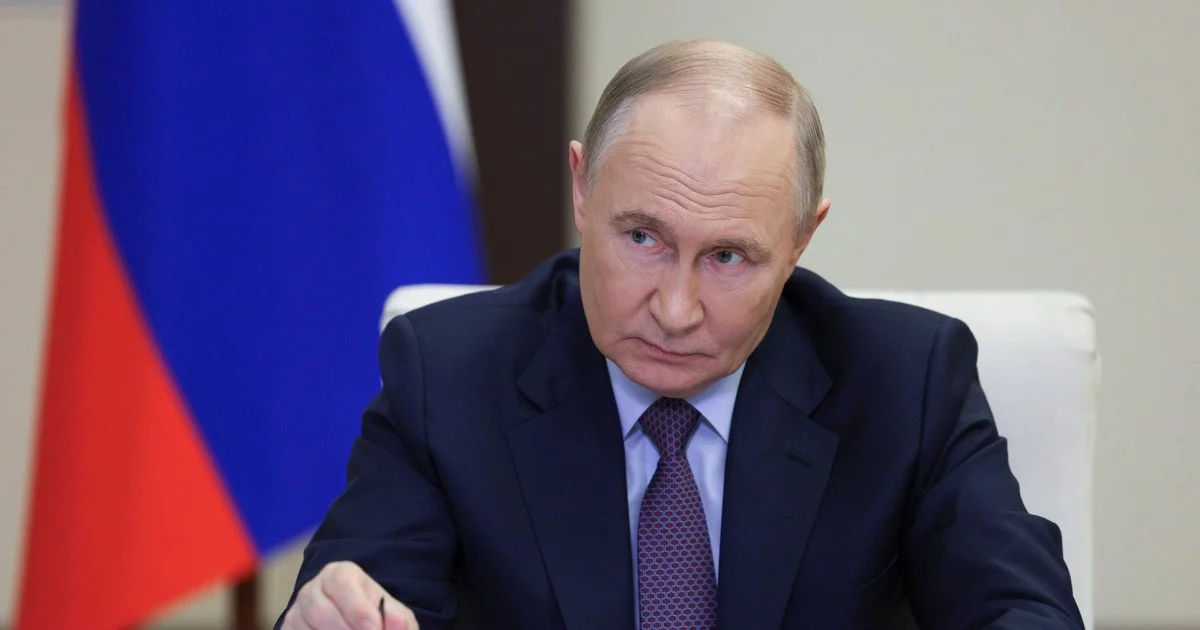
Dictator Vladimir Putin’s approval ratings have dropped amid widespread internet outages and the blocking of Telegram. According to a VTsIOM poll, his approval rating from March 19 to 22 stood at 70.1%, down 1.9 percentage points from the previous week.
This was reported by "Komersant Ukrainian", citing Russian propaganda media.
Meanwhile, from January 12–18, the figure stood at 75.2%, and it had not fallen below the current level since the full-scale invasion of Ukraine on February 20, 2022. At that time, 64.3% of respondents approved of Putin’s performance as president.
At the same time, Putin’s approval rating stood at 75%, having dropped by 1.7 percentage points over the week and by 4.3 percentage points since the start of the year. Prior to this, the figure had last fallen below the current level before the start of the war in February 2022 (67.2%). Additionally, the number of those who openly disapprove of Putin’s actions has increased—in mid-January, this figure was 14.8%, and as of March 22, it stood at 18.3%. In January, 16.1% of Russians expressed distrust, while in March, this figure rose to 20.1%.
Prime Minister Mikhail Mishustin’s approval rating also declined: his approval rating dropped by 0.9 percentage points over the week to 46.1%, and his trust rating fell by 2 percentage points to 55%. The government’s performance is approved by 42.6% of Russians (down 2.8 percentage points). The rating of “United Russia” also fell—to 29.3% compared to 33.8% in mid-January. VTsIOM conducted the survey via telephone interviews with 1,600 adult Russians. In all cases, respondents were asked open-ended questions. For example: “Please tell me, do you trust or not trust Vladimir Putin?”
The approval ratings for Putin and other government officials fell after Roskomnadzor announced restrictions on Telegram in early February and effectively blocked the messaging app by mid-March. As a result, Russians lost their last mass communication tool, which was used by over 90 million people.
Also in March, at the request of the FSB, mobile internet was shut down in Moscow for 19 days, causing businesses to lose up to 1 billion rubles per day. Prior to this, Putin signed a law requiring telecom operators to suspend services at the request of the security services. According to the document, companies are exempt from liability to subscribers for improper fulfillment of obligations in such cases.
In addition, the deterioration of the economic situation may have affected Putin’s approval ratings. Following the increase in the VAT rate from 20% to 22% and taxes on small businesses in January, Russia’s GDP contracted by 2.1%, and industrial production fell by 0.8%. As a result, the budget deficit for January–February amounted to 3.5 trillion rubles. Putin stated that this was not unexpected and called on the government to return the country to a path of sustainable economic growth.